
I Walk the Line (Johnny Cash song)
A 1956 song written and recorded by Johnny Cash. His first No. 1 single and one of his signature tunes, noted for its spare rhythm, vow of fidelity, and enduring cultural influence.
Overview
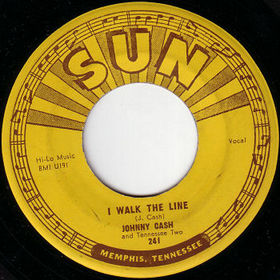
"I Walk the Line" was written and recorded by Johnny Cash in 1956. It became his first chart-topping single and one of the recordings most closely associated with his name. With a plain, rhythmic accompaniment and a concise lyrical pledge, the song brought Cash wide commercial success and helped define his early sound.
Image gallery
3 Images

Composition and recording
The song is built on a simple, steady rhythmic pattern and a sparse arrangement that foregrounds Cash's deep vocal delivery. Early studio versions were recorded with the small backing group that later became known as the Tennessee Two, producing a clean, percussive guitar-and-bass drive that contrasted with heavier orchestration common in other country records of the 1950s.
Lyrics and themes
At its heart, the song is a pledge of fidelity: the narrator vows to remain true to his partner despite temptation and hardship. The repeated refrain and tightly wrought verses give the piece a confessional, declarative quality. Cash himself described the song as born of a personal promise and intended as a statement of devotion.
Reception and legacy
Upon release the single sold in large numbers and eventually exceeded two million copies, establishing Cash as a major figure in country and popular music. Over time the track became a standard in his repertoire, frequently cited as one of his signature works. Its influence extended beyond music: the title and spirit of the song were evoked in the 2005 biographical film about Cash's life, which helped reintroduce the song to new audiences.
Notable facts
- It was Cash's first number-one hit and one of his earliest commercial breakthroughs.
- The recording's uncluttered production helped popularize Cash's trademark rhythmic style.
- The song has been re-recorded and covered widely, appearing in many compilations and performances across genres.
As both a commercial success and a succinct personal statement, "I Walk the Line" remains a central work in Johnny Cash's catalog and an enduring example of mid-20th-century American country music.
Related articles
Author
AlegsaOnline.com I Walk the Line (Johnny Cash song) Leandro Alegsa
URL: https://en.alegsaonline.com/art/46299