
Hurrians: ancient people of northern Mesopotamia and their cultural legacy
The Hurrians were an ancient people of northern Mesopotamia whose language, kingdoms and religious traditions influenced neighboring Bronze Age states and left the earliest known written musical notation.
The Hurrians were a diverse population who lived across parts of northern Mesopotamia and adjacent highlands from the third through the second millennium BCE and beyond. They did not form a single continuous state but appear in archaeological and textual records as city-dwellers, village communities and ruling elites in different regions. Their presence is closely associated with the area often described as northern Mesopotamia and nearby Anatolia and Syria.
Image gallery
8 Images

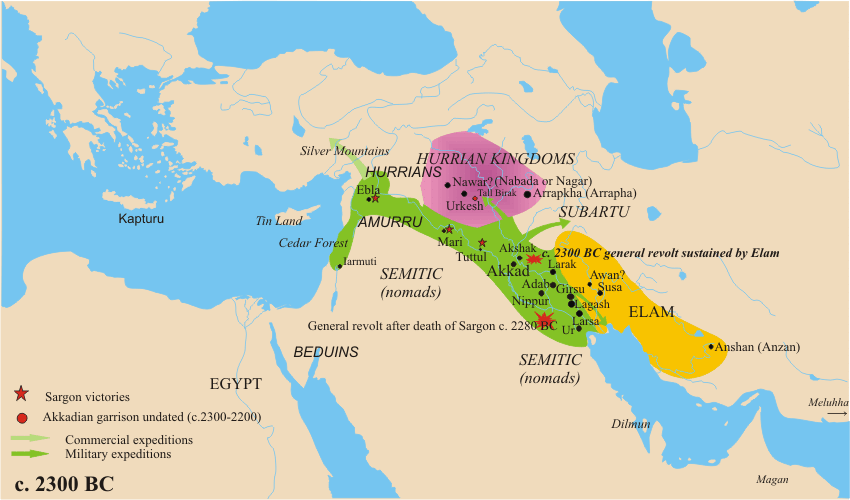


Language and identity
Hurrian is a non-Indo-European, non-Semitic language first attested in cuneiform inscriptions. Linguists commonly group it with the later Urartian language into a small Hurro‑Urartian family, though connections beyond that family remain debated. Because Hurrian speakers lived among many other peoples, the name "Hurrian" covers a range of social and political groups rather than a single ethnic or national identity.
Political and cultural centers
Hurrian-associated sites and polities appear throughout the second millennium BCE. Notable places and political entities include:
- Mitanni – a powerful Hurrian-speaking kingdom that exercised influence in northern Syria and Mesopotamia in the mid-second millennium BCE.
- Kizzuwatna and other Hurrian principalities in southeastern Anatolia, which interacted closely with Hittite states.
- Regional towns and archives such as Nuzi and other sites where administrative and legal texts record Hurrian names and customs.
Religion, literature and artistic exchange
Hurrian religious traditions contributed gods, myths and ritual texts that spread to neighboring cultures. Epic and mythological cycles preserved in Hittite archives—most notably the Kumarbi stories—show clear Hurrian origins and later adaptation by Hittite scribes. Material culture and iconography also display hybrid forms reflecting Hurrian, Mesopotamian and Anatolian interactions.
Music and the Hurrian Hymns
One of the most famous Hurrian artifacts is a set of fragmentary tablets from the site of Ugarit that include the so-called Hurrian Hymn, a musical composition inscribed in cuneiform notation. The best-known fragment, often dated to the second millennium BCE, is the oldest substantial piece of musical notation yet recovered. Its reconstruction is partial and subject to scholarly debate, but it provides unique insight into ancient musical practice.
Legacy and historical significance
Hurrian groups left a lasting imprint on the Bronze Age Near East through language, religious literature and political institutions. Over time many Hurrian communities were absorbed by rising powers or assimilated into local populations, and by the end of the Bronze Age their distinct political prominence diminished. Nevertheless, traces of Hurrian culture survive in texts, myths and archaeological remains that help scholars understand the complex cultural landscape of ancient Mesopotamia and Anatolia.
Related articles
Author
AlegsaOnline.com Hurrians: ancient people of northern Mesopotamia and their cultural legacy Leandro Alegsa
URL: https://en.alegsaonline.com/art/45821