
Inca Empire (Tawantinsuyu): Overview, Society, and Legacy
Concise encyclopedia article on the Inca Empire (Tawantinsuyu): its origins, political organization, economy, culture, expansion, and the Spanish conquest, with notes on legacy and sources.
The Inca Empire, commonly known by its Quechua name Tawantinsuyu, was the largest pre-Columbian polity in the Americas and a highly organized state that developed in the Andean highlands of South America. Centered on the city of Cusco, the empire combined military expansion, administrative integration and extensive infrastructure to govern a diverse set of peoples and ecologies. Its classical period of rapid expansion took place in the 15th and early 16th centuries, until contact and confrontation with Spanish conquistadors brought dramatic change.
Image gallery
10 Images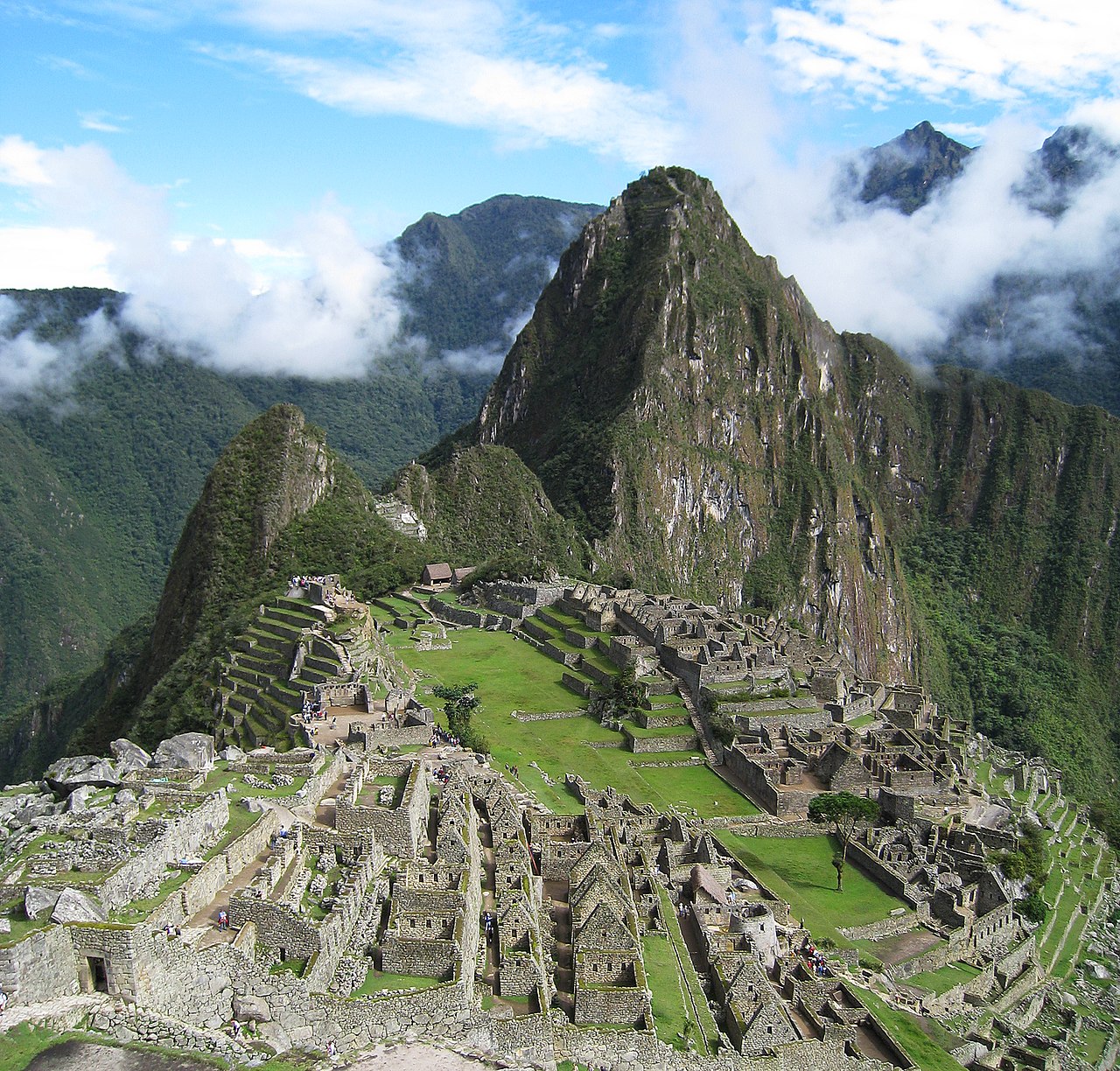




Political structure and administration
The ruler, known as the Sapa Inca, held supreme political and religious authority and was supported by a hierarchical bureaucracy that managed tribute, labor obligations and regional governors. The empire was organized into four major regions, a territorial principle reflected in the Quechua name Tawantinsuyu meaning "the four suyu (regions)." To unify distant communities the state commissioned an extensive network of roads, suspension bridges and storehouses that supported administration, trade and rapid troop movement across mountain, desert and coastal zones.
Economy, labor and production
Inca economic life emphasized collective obligations and state redistribution rather than market exchange as the core organizing principle. Agricultural production relied on terracing, irrigation and crop diversification across ecologically varied zones, enabling staples such as maize, potatoes and quinoa to be cultivated at different altitudes. The state collected labor (mit'a) and goods as tribute and stocked surplus in capacocha and qullqas (storehouses) to buffer famine, outfit armies or support state projects. Textile production, metallurgy, and pottery were specialized crafts often organized under state supervision.
Culture, religion and communication
Religion integrated ancestor worship, veneration of natural phenomena (notably the sun), and ritual specialists who oversaw ceremonies and state cults. The Incas did not have a written script; instead they maintained records and performed accounting with knotted cords called khipu and a system of oral administration. Quechua served as the principal administrative language, while many ethnic groups within the empire continued to speak their own languages and kept local customs.
Architectural and engineering accomplishments include finely worked stone masonry, agricultural terraces, and urban centers adapted to steep terrain—Machu Picchu is a well-known surviving example of Inca urban design. Roads and waystations linked the imperial capital to frontier provinces and coastal enclaves, reflecting both practical needs and ideological integration of the empire.
Expansion, confrontation and legacy
From a regional power emerging near Lake Titicaca and Cusco, the Inca expanded through a combination of conquest and policies of incorporation that offered local elites status in return for loyalty. Rapid expansion in the 1400s brought much of modern Ecuador, Peru, Bolivia, northwest Argentina and northern Chile under Inca control. The arrival of Spanish forces in the early 1530s interrupted imperial continuity: civil war between royal claimants weakened cohesion, and the capture and execution of the last independent Sapa Inca marked the onset of colonial reorganization. Despite the political collapse, many elements of Inca administration, agriculture, and road networks influenced subsequent colonial governance and continue to shape Andean cultures.
Notable distinctions and topics for further reading
- Pre-Columbian civilizations — broader context for Andean development
- Imperial structures — comparisons with contemporaneous empires
- Andes — the mountain environment that shaped Inca society
- South America — geographic overview of the region
- Largest empires — scale and reach of Tawantinsuyu
- Age of exploration — European arrival in the Americas
- Spanish invasion — the military contact that ended Inca autonomy
- Cusco — political and ceremonial capital
- Peru — modern state containing core Inca territory
- Administration — imperial bureaucratic practices
- Quito — northern administrative center after expansion
- Sapa Inca — the title of the emperor
- Inca road system — engineering and communication
- Quechua — language and cultural concept of Tawantinsuyu
- Languages of the empire — multilingual character of Inca rule
- Lake Titicaca — an early cultural and ritual center
- Conquest strategies — military and diplomatic expansion
- Assimilation policies — incorporation of subject communities
- Ecuador — northern reaches of the empire
- Bolivia — central highland provinces
- Argentina — southern frontier zones
- Chile — Pacific coastal and southern extensions
- Atahualpa — last independent Sapa Inca before Spanish domination
- Sovereignty — transition from imperial to colonial rule
- Execution and aftermath — consequences of leadership decapitation
- Conquistadors — agents of Spanish imperial expansion
- Francisco Pizarro — figure associated with the conquest of the Inca
Questions and answers
Q: Who were the Inca?
A: The Inca were a pre-Columbian civilization and empire in the Andes of South America.
Q: What was the largest empire in the Americas?
A: The Inca Empire was the largest empire in the Americas, and was large even by world standards.
Q: When did the Spanish invasion take place?
A: The Spanish invasion took place in the 16th century.
Q: Where was the administrative, political and military center of the Inca Empire located?
A: The administrative, political and military center of the Inca Empire was located around Cusco or Qosqo, which is now southern Peru.
Q: What language did they speak?
A: The main language spoken by the Incas was Quechua; however, as their empire included many different groups there were probably many other languages as well.
Q: When did their reign begin?
A: Their reign began around 1197 at Lake Titicaca.
Q: How long did their reign last for?
A:The reign of the Incas lasted for about 100 years until 1532 AD when they were conquered by Francisco Pizarro and Spanish rule began in South America.
Related articles
Author
AlegsaOnline.com Inca Empire (Tawantinsuyu): Overview, Society, and Legacy Leandro Alegsa
URL: https://en.alegsaonline.com/art/46989
Sources
- 0-web.ebscohost.com.tiger.coloradocollege.edu : How the potato changed the world's history.