
Hurdy-gurdy (wheel fiddle) — medieval and folk string instrument
A stringed instrument sounded by a rosined wheel turned by a crank. Melodies are played with keys, sustained drones supply harmony, and a buzzing bridge adds rhythmic effect. Prominent in European folk and early music.
The hurdy-gurdy is a bowed-string instrument in which a rosined wheel, turned by a crank, acts like a continuous bow across one or more strings. Instead of drawing a hand bow across the strings, the player operates a rotating wheel that produces sustained tones. Melody is produced by pressing wooden keys that bring small tangents into contact with the melody strings, changing their effective vibrating length. Other strings are tuned as drones to sound continuously while the wheel turns.
Image gallery
10 Images


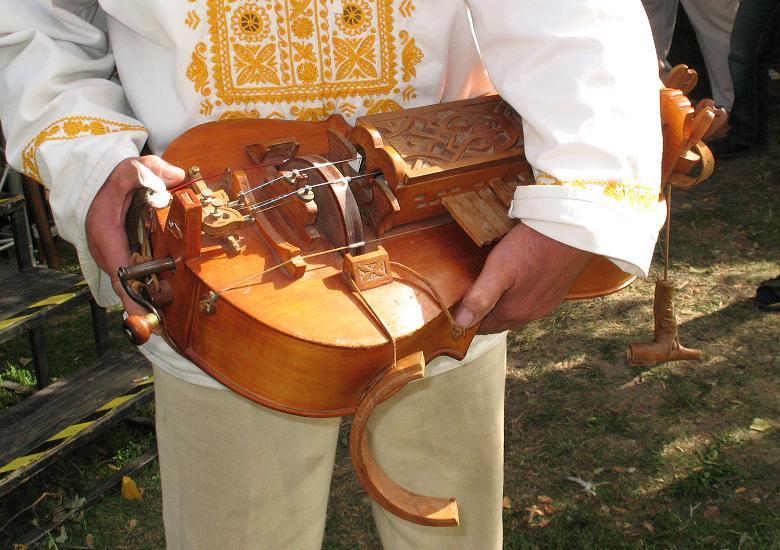
How it works and main parts
Fundamental components include a hollow wooden body that amplifies sound, a rosined wheel mounted on an axle, a hand crank, a keybox containing the keyboard and tangents, several strings (melody and drone), and bridges. Typical parts:
- Wheel and crank - the wheel rubs the strings continuously when turned.
- Keybox and tangents - keys depress small wedges that stop the melody strings at discrete pitches.
- Drone strings - one or more strings tuned to fixed pitches to provide a harmonic backdrop.
- Buzzing bridge - a specialized bridge or loose element that can produce a percussive, rhythmic buzz when the wheel is accelerated or when the mechanism is engaged.
History and development
Variants of wheel-driven string instruments appear in Europe from the medieval period onward. Early large forms such as the organistrum were used in liturgical and court settings; later, smaller, single-player instruments evolved for secular and folk use. Over centuries the hurdy-gurdy diversified regionally, with distinct styles and construction methods emerging across France, Spain, Central and Eastern Europe.
Uses, repertoire and traditions
The instrument has served both dance and narrative functions. Drone strings and the continuous sound are well suited to sustained accompaniment for singing and dancing. In several regional traditions — notably parts of France and Hungary and other continental folk cultures — the hurdy-gurdy is associated with specific dance repertoires and social occasions. Today it is also found in historical-performance ensembles and in contemporary folk, experimental, and popular music contexts.
Variations and notable facts
Hurdy-gurdies range from simple folk models to elaborately built concert instruments. Some include sympathetic or additional strings for richer resonance; others emphasize a pronounced buzzing bridge (sometimes called a "dog" or trompette) used rhythmically. The keyboard action makes the instrument unique among bowed-string instruments because pitch is altered by discrete tangents rather than by stopping strings with fingers on a fingerboard.
For an introductory overview and further references, see further information on the hurdy-gurdy. The instrument remains an active subject for makers, players, and early-music scholars and continues to appear in both traditional and modern musical settings.
Related articles
Author
AlegsaOnline.com Hurdy-gurdy (wheel fiddle) — medieval and folk string instrument Leandro Alegsa
URL: https://en.alegsaonline.com/art/45808