
Houses of the Holy (Led Zeppelin album)
Fifth studio album by Led Zeppelin, released in 1973. Noted for stylistic variety, notable tracks, distinctive artwork, mixed initial reviews and lasting influence on rock and live performance.
Overview
Led Zeppelin's fifth studio album, Houses of the Holy, arrived in spring 1973 and marked a deliberate effort by the band to broaden their sound. Released by Atlantic Records on March 28, 1973, it followed the enormous success of the group's previous releases and presented a compact but adventurous set of songs that the group would draw on during subsequent tours.
Image gallery
2 Images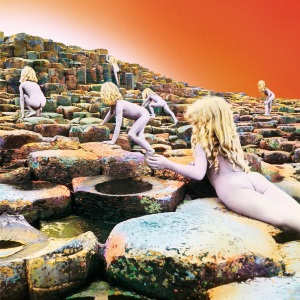

Recording and musical style
The album was recorded during 1972 at a number of sessions and locations. Rather than repeating the heavy-blues approach of earlier records, the band explored varied musical styles. The result mixes rock with elements of reggae-inspired rhythms, funk-influenced grooves, and quieter acoustic and folk-tinged arrangements. Instrumentation and arranging choices—such as layered guitars, synthesizer and electric piano textures, and shifting dynamics—underscore the album's diversity.
Tracks and live performances
Several songs from Houses of the Holy became staples of the band's live set. Notable tracks include:
- "The Song Remains the Same" — a propulsive opener combining fast guitar parts and layered overdubs.
- "The Rain Song" — a reflective, melodic ballad that showcases softer dynamics and broad melodic sweep.
- "Over the Hills and Far Away" — a piece that moves between acoustic intro and electric rock.
- "No Quarter" — known for its moody electric piano and extended live arrangements.
- "D'yer Mak'er" — a playful, reggae-tinged track that surprised some listeners on first hearing.
Many of these songs were performed regularly on tours after the album's release. The title of the opening track later became the name of the band's concert film, The Song Remains the Same, which documented performances from the 1973–74 touring period.
Artwork, release and reception
The album is also remembered for its striking cover art, created by visual designers working with the band; the image and presentation contributed to the record's identity. Upon release, critical response was mixed—some listeners compared it unfavorably with the band's previous album, Led Zeppelin IV—but fans embraced several songs immediately. Over time, many critics and listeners have re-evaluated Houses of the Holy and regard it as a significant—and in some views essential—entry in the band's catalogue.
Legacy and notable facts
Houses of the Holy is often cited for its willingness to experiment within a major rock act's framework: the band took chances with genre blending and studio techniques that expanded their palette. The album influenced subsequent rock artists who sought to combine hard rock energy with broader stylistic touches. Its songs remain part of Led Zeppelin's public profile and continue to receive attention in retrospective assessments of the band's career.
For more contextual reading on the band and the era, consult general sources on 1970s rock and album production practices; for a listening introduction, the tracks listed above provide a representative cross-section of the record's range.
More by Led Zeppelin • Led Zeppelin IV context • musical styles • reggae influence • acoustic work • folk elements
Related articles
Author
AlegsaOnline.com Houses of the Holy (Led Zeppelin album) Leandro Alegsa
URL: https://en.alegsaonline.com/art/45361
Sources
- led-zeppelin.org : Houses of the Holy info