
HMS Victory
18th-century Royal Navy first-rate ship of the line preserved at Portsmouth; Admiral Nelson’s flagship at Trafalgar and the world's oldest commissioned warship, now a museum and memorial.
Overview
HMS Victory is an 18th-century Royal Navy first-rate ship of the line best known as the flagship of Admiral Horatio Nelson at the Battle of Trafalgar. Launched in 1765, she saw active service in the late 18th and early 19th centuries before being retained as a harbour flagship and eventually conserved as a museum ship. Victory is often described as the world's oldest commissioned warship and serves as a national memorial and educational resource.
Image gallery
10 Images


Construction and design
Built to serve in fleet actions, Victory was constructed with three gun decks and originally carried well over 100 guns. Her design reflects the naval architecture of the age of sail: a timber hull, tall masts and extensive rigging. Interior spaces include multiple gun decks, the admiral's and captain's cabins, crew quarters and magazines. Many original timbers and fittings survive alongside later restoration work that aims to stabilise and interpret the fabric for visitors.
Service history
During her service career Victory participated in fleet operations, blockades and convoy duties typical of the period. She came to particular prominence when she was chosen as a flagship for senior admirals. Numerous officers and captains served aboard at different times, and her long career connects several chapters of British naval history.
Trafalgar and Nelson
At the decisive Battle of Trafalgar in 1805, Victory was the command ship for Admiral Horatio Nelson. He was mortally wounded on her deck during the action, and his death aboard Victory contributed strongly to the ship's symbolic status. The association with Nelson has shaped public memory and the ship's role as a site of remembrance.
Preservation and location
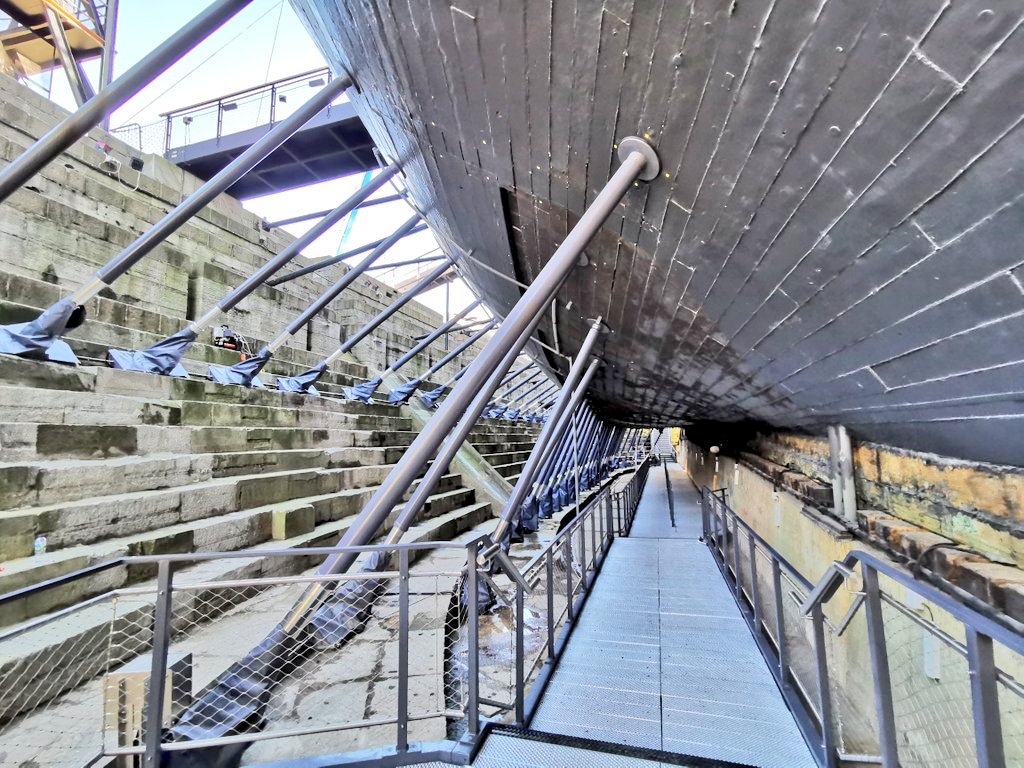
After active duty she remained in commission as a harbour flagship and was later restored and conserved. Today Victory is dry-docked and open to the public at Portsmouth, England, where she forms part of a larger historic maritime complex. Nearby exhibits include the Victorian iron-hulled cruiser HMS Warrior and the conserved remains of the Mary Rose, a Tudor warship associated with Henry VIII.
Significance and visiting today
Victory functions as a museum, educational centre and memorial to those who served at sea. Conservation on the ship is ongoing, and displays interpret naval warfare, daily life aboard and the broader historical context of the Napoleonic wars. Visitors can explore gun decks, cabins and exhibits that explain the ship's construction, service and long cultural legacy.
Legacy
- Associated strongly with Admiral Nelson and the Battle of Trafalgar.
- Part of the historic maritime attractions at Portsmouth, including HMS Warrior and the Mary Rose project (Mary Rose).
- Maintained as a commissioned ship of the Royal Navy and preserved for public education and commemoration.
Related articles
Author
AlegsaOnline.com HMS Victory Leandro Alegsa
URL: https://en.alegsaonline.com/art/44579