
Mary Rose (Tudor warship)
The Mary Rose was King Henry VIII's warship that sank in 1545. Raised in 1982, its conserved hull and thousands of artifacts are displayed at Portsmouth, offering unique insights into Tudor naval life.
Overview
The Mary Rose was a large English warship of the Tudor navy built during the reign of Henry VIII. Launched in the early 16th century, she saw action in naval patrols and amphibious operations before sinking in 1545 during an engagement with a French fleet. The loss of the vessel and many of her crew made the wreck a poignant chapter in Tudor maritime history.
Image gallery
10 Images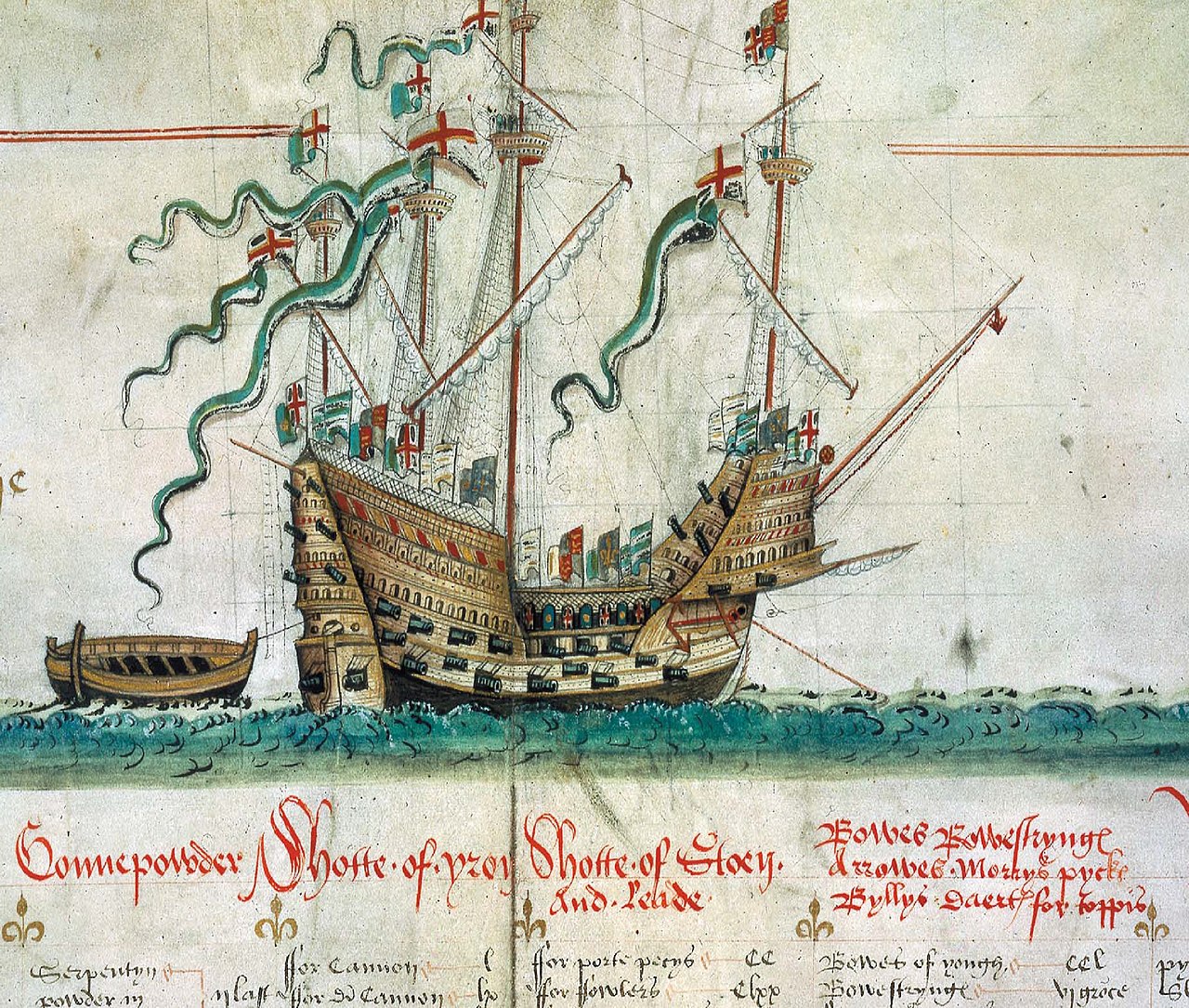


Design and characteristics
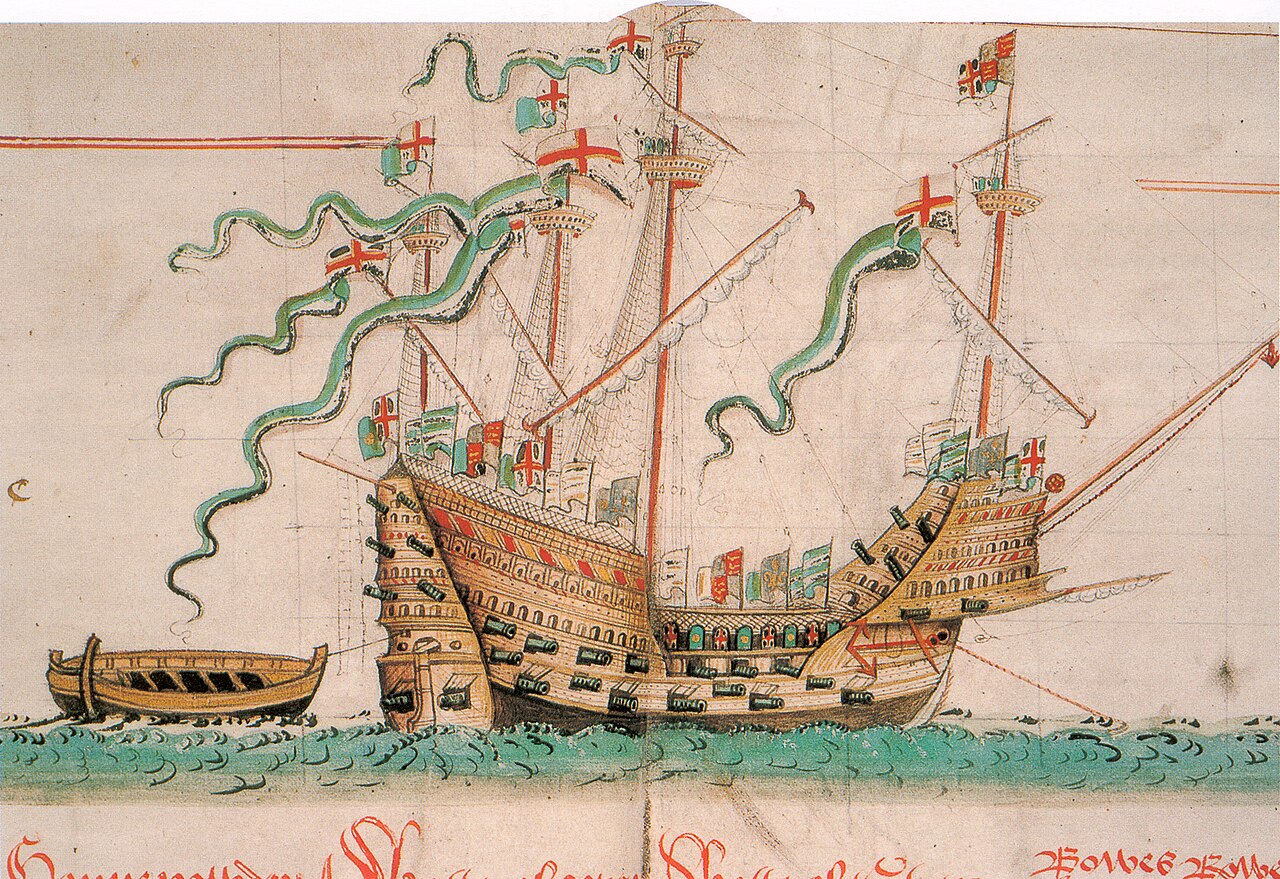
Contemporary records and the recovered timbers show the Mary Rose as a heavily armed 'great ship' designed to carry guns and soldiers. Her structure blended medieval and early modern shipbuilding features: high forecastle and sterncastle, multiple gun decks, and a hull intended for both combat and transport. Her fittings, everyday objects and armaments tell us about life and work aboard a 16th‑century warship.
Sinking and historical context
The Mary Rose sank during fighting in the Solent. Historians and archaeologists have suggested a combination of tactical movements, instability from open gunports, and adverse wind as probable causes. The wreck preserved in cold, sheltered seabed conditions protected organic materials that rarely survive on land, preserving a detailed snapshot of Tudor naval life.
Recovery and conservation
Interest in the wreck grew over centuries; organised recovery began in the late 20th century with the formation of the Mary Rose Trust in 1979. After surveys and excavation, the hull was recovered and raised in 1982. Intensive conservation work continued for decades—conservation programs formally scaled up around 1994—including polyethylene glycol treatment and controlled drying to stabilise the timbers.
Museum, finds and significance
Today the hull and the thousands of associated objects are conserved and displayed in a purpose-built museum at Portsmouth, England. The Mary Rose collection, exhibited near other historic ships such as HMS Victory and HMS Warrior, contains weapons, tools, clothing, personal items and human remains. These finds have transformed understanding of Tudor shipboard technology, crew composition and daily life.
Legacy
- One of the most important maritime archaeological projects of the 20th century.
- Provides unique primary evidence for Tudor naval warfare and society.
- Ongoing research into artifacts and human remains continues to refine knowledge of the period.
Questions and answers
Q: Who did the Mary Rose belong to?
A: The Mary Rose belonged to Henry VIII of England.
Q: When did the Mary Rose sink?
A: The Mary Rose sank in 1545 in battle with a French fleet.
Q: When was the Mary Rose Trust formed?
A: The Mary Rose Trust was formed in 1979.
Q: What did the Mary Rose Trust manage to do in 1982?
A: In 1982, the Mary Rose Trust managed to get the Mary Rose out of the sea.
Q: When did the preservation of the Mary Rose start?
A: The preservation of the Mary Rose started in 1994.
Q: Where can we find the remains of the Mary Rose today?
A: The remains of the Mary Rose are currently in Portsmouth, England with the HMS Victory and HMS Warrior.
Q: Why did the Mary Rose sink in battle with a French fleet?
A: The reason behind the sinking of the Mary Rose in battle with a French fleet is not provided in the given text.
Related articles
Author
AlegsaOnline.com Mary Rose (Tudor warship) Leandro Alegsa
URL: https://en.alegsaonline.com/art/62490