
Utagawa Hiroshige: master of Japanese ukiyo-e landscapes
Utagawa Hiroshige (1797–1858) was a leading Japanese ukiyo-e printmaker known for poetic landscape series such as The Fifty-three Stations of the Tōkaidō and One Hundred Famous Views of Edo.
Overview
Utagawa Hiroshige (Japanese: 歌川広重; 1797–October 12, 1858) is one of the most celebrated makers of woodblock prints in Japan. Commonly known simply as Hiroshige, he became famous for atmospheric landscape scenes that combined human activity with changing weather, seasons and viewpoints. His work exemplifies the later development of the ukiyo-e tradition, shifting attention from courtesans and actors to travel, nature and urban life.
Image gallery
10 Images




Name and early life
In the Japanese naming system the family name comes first; his family name was Utagawa and his given art name was Hiroshige. He trained in the Utagawa school, adopting its style and techniques, and rose to prominence in the early 19th century. Biographical accounts note his apprenticeship, commercial commissions, and later success with series of prints that catered to popular interest in travel and local scenes.
Style and technique
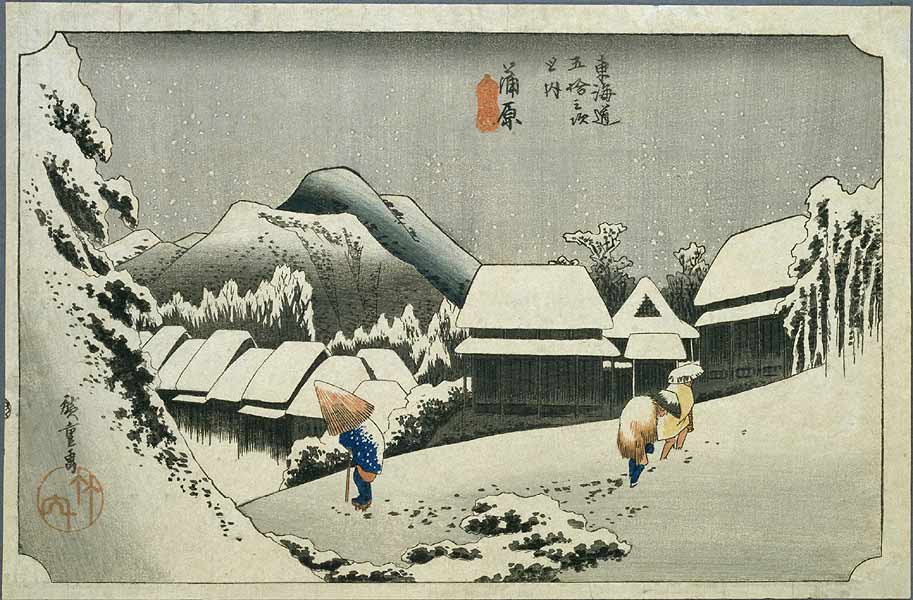
Hiroshige worked as a painter and print designer in the ukiyo-e tradition and is often described as a Japanese artist who reimagined landscape subjects. His compositions use bold diagonals, flattened perspective, subtle gradations of color and careful woodblock carving to suggest mist, rain and distance. He favored transient moods—rainstorms, snowfall, evening glow—rendered with an economy of line and color that influenced perceptions of natural space.
Major series and subjects
Hiroshige produced a number of multi-print series that became widely known. Notable examples include:
- The Fifty-three Stations of the Tōkaidō — scenes along the coastal highway linking Edo and Kyoto.
- One Hundred Famous Views of Edo — views of the capital (Edo) in varied weather and seasons.
- Smaller sets and single-sheet landscapes and bird-and-flower subjects popular with urban collectors.
Influence and legacy
Hiroshige's treatment of light, atmosphere and compositional clipping had a marked effect on later generations, including European painters in the 19th century who encountered Japanese prints. His images remain widely reproduced and studied for their aesthetic clarity and their role in shifting ukiyo-e toward landscape as a major subject. For context on his name and tradition see discussions of Japanese naming and print schools: name conventions, language notes, and general resources on printmaking artists and ukiyo-e.
Notable facts
Hiroshige's prints combine popular appeal with technical refinement. They document travel and urban life in 19th-century Japan while also serving as enduring models of pictorial economy and mood. Collectors and museums continue to preserve and exhibit his work worldwide.
Related articles
Author
AlegsaOnline.com Utagawa Hiroshige: master of Japanese ukiyo-e landscapes Leandro Alegsa
URL: https://en.alegsaonline.com/art/44391
Sources
- books.google.com : "Hiroshige"