
Hill of Howth Tramway
Electric tramway around Howth Head (near Dublin) run by the Great Northern Railway (Ireland) from June 1901 to June 1959, built to connect rail termini with coastal villages, promenades and scenic walking routes.
Overview
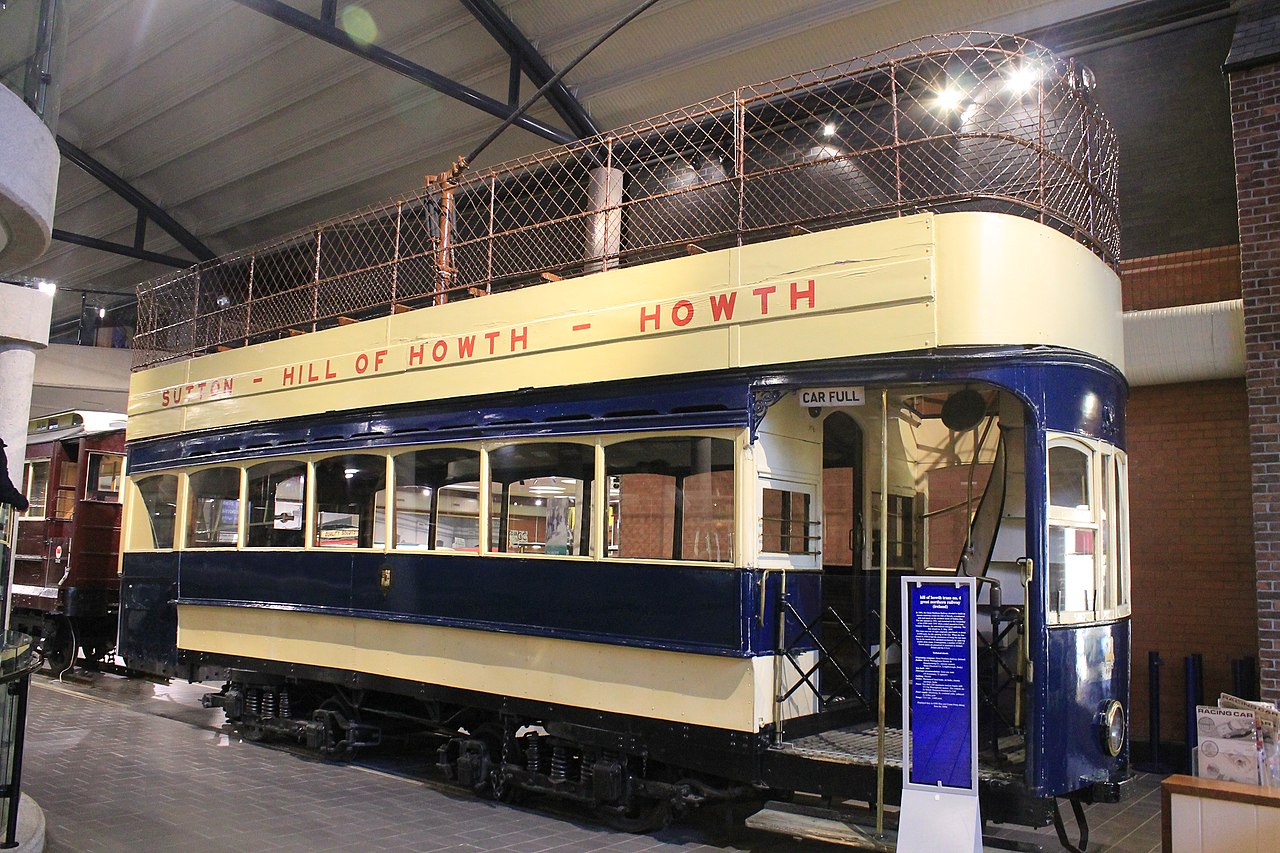
The Hill of Howth Tramway was an electric tram service that operated around Howth Head, a promontory to the north‑east of Dublin, Ireland. Opened in June 1901 and closed in June 1959, the tramway was established and operated by the Great Northern Railway (Ireland) as a feeder and leisure service to bring passengers from the railway termini at Sutton and Howth to coastal attractions, bathing places and cliff walks. The line became well known for its seaside route, dramatic views and frequent short journeys that served both local residents and day‑trippers.
Image gallery
6 Images


Operation and equipment
Services used electric traction supplied by overhead wiring. The tramcars were relatively light and manoeuvrable to cope with narrow roads and tight curves on the headland. Stops were numerous and often informal, reflecting the tramway’s role in providing local access rather than long‑distance travel. Timetables were arranged to meet both weekday local traffic and heavier weekend and holiday excursion demand.
Route and physical characteristics
The line described a roughly circular path around Howth Head, linking the GNR(I) stations at Sutton and Howth and serving small villages, promenades and cliff‑top viewpoints. Much of the track ran at street level, integrated into the narrow coastal roads, with passing places where required. The alignment allowed easy interchange with mainline trains and provided convenient access to piers, promenades and popular walking routes along the headland.
History and decline
The tramway was typical of an era when railway companies developed local electric services to increase patronage on their main lines and to capture leisure traffic. It operated successfully for several decades, contributing to the growth of seaside recreation around Dublin. After the Second World War, however, increased private car ownership, improved bus services and rising operational costs led to declining passenger numbers and financial losses. These wider changes in transport preferences and the general contraction of tram systems in Ireland and Britain resulted in the decision to close the line in June 1959.
Legacy and preservation
Although the tramway itself was dismantled, it remains an important part of local memory and transport history. Photographs, postcards and contemporary accounts preserve its appearance and atmosphere, and parts of the former alignment can still be traced in road layouts and surviving infrastructure. Local historians and transport enthusiasts frequently record and commemorate the tramway’s history, and the story of the Howth Tramway is often cited in studies of suburban and leisure transport development in the early 20th century.
Significance
- Operated by the Great Northern Railway (Ireland) from June 1901 to June 1959.
- Electric tramway serving Howth Head’s coastal attractions and communities.
- Built to feed railway termini and support seaside tourism and local mobility.
- Closed amid postwar transport changes: road competition and rising costs.
The Hill of Howth Tramway is remembered as a vivid example of how early electric street railways extended the reach of mainline companies into leisure and suburban markets, and as a notable feature of Dublin’s coastal transport heritage.
Related articles
Author
AlegsaOnline.com Hill of Howth Tramway Leandro Alegsa
URL: https://en.alegsaonline.com/art/44206