
Heuvelland — a hill municipality in West Flanders, Belgium
Heuvelland is a rural municipality in West Flanders, Flanders, Belgium, known for its rolling hills, World War I sites, cycling climbs and the Dranouter folk festival.
Overview
Heuvelland is a municipality in the Dutch-speaking region of Flanders in Belgium, located within the province of West Flanders. The name literally means "hill country" in Dutch and reflects the municipality's undulating terrain. The locality sits near the coordinates 50°47′N, 02°49′E. In 2007 the recorded population was about 8,177 people, reflecting a small, largely rural community.
Image gallery
6 Images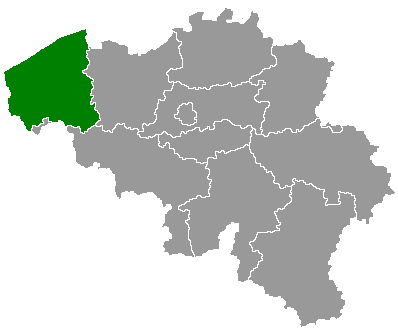


Geography and communities
Heuvelland comprises several villages and former municipalities clustered around prominent hills. Its settlements include De Klijte, Dranouter, Kemmel, Loker, Nieuwkerke, Westouter and Wijtschate. The landscape features short escarpments and open farmland with panoramic viewpoints that draw hikers and cyclists. Mont Kemmel (Kemmelberg) is a locally prominent hill often cited as one of the higher points in the province.
History
The Heuvelland area has a long rural history and was transformed by large-scale events in the early twentieth century. During World War I the rolling ridges nearby formed part of the Western Front; the present countryside contains war cemeteries, memorials and preserved battlefield terrain. The modern municipal structure was established when smaller communes were merged during municipal reorganization in the later twentieth century.
Economy, culture and tourism
The local economy is driven by agriculture, small businesses and tourism. The hills and quiet roads are popular with road cyclists and walkers; the steep slopes of Kemmelberg are a feature of spring cycling classics. Cultural life includes community festivals and the long-running Dranouter Folk Festival, which attracts visitors for folk and roots music. Wartime heritage sites and rural guest accommodations also contribute to visitorship.
Notable facts and distinctions
- Language: Dutch is the official language of administration and daily life.
- Recreation: cycling climbs and walking routes make the area a regional recreation destination.
- Heritage: several First World War cemeteries and memorials lie within or near the municipality.
- Community: the municipality retains a low population density and a largely agricultural character.
For maps, local services and visiting information consult municipal resources or regional tourism guides via the official municipality page and provincial sources.
Related articles
Author
AlegsaOnline.com Heuvelland — a hill municipality in West Flanders, Belgium Leandro Alegsa
URL: https://en.alegsaonline.com/art/43980
Sources
- statbel.fgov.be : Population per municipality as of 1 January 2016
- statbel.fgov.be : Werkelijke bevolking per gemeente op 1 januari 2007 / Population de droit par commune au 1 janvier 2007 (.xls)
- statbel.fgov.be : Geografische coördinaten van de gemeenten (.xls)