
Hellcats of the Navy (1957 film)
A 1957 American World War II–era naval drama starring Ronald Reagan and Nancy Davis, noted today for featuring a future U.S. president and first lady in leading roles.
Hellcats of the Navy is a 1957 American wartime drama that places naval service and personal relationships against a World War II backdrop. The picture is best known for its two leads: Ronald Reagan and Nancy Davis, who later became First Lady. Its combination of service-oriented action and domestic subplots typifies mid‑century studio films that sought to honor military service while appealing to popular tastes for romance and heroism.
Image gallery
1 Image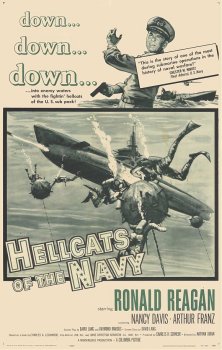
Premise and themes
The film centers on naval officers and the decisions they face during wartime, blending operational scenes with interpersonal drama. Themes include duty, leadership, sacrifice, and the strains that military life places on marriages and friendships. Rather than a documentary account, the story uses dramatized incidents to highlight character and moral choices under pressure.
Cast, production, and style
In addition to its headline stars, the movie features a supporting ensemble typical of 1950s studio casts. Production values emphasize recognizable naval settings and equipment to give the action an authentic feel; this approach was common in American films about the armed forces in that era. The film’s pacing and presentation reflect mid‑decade conventions: straightforward storytelling, clear moral contrasts, and scenes alternating between shipboard operations and quieter personal moments.
Reception and legacy
Contemporary reviews were mixed, with some viewers appreciating the patriotic tone and others regarding the plot as conventional. Over time the film has attracted attention mainly because both leads later assumed prominent roles outside cinema. It is often cited in biographies and retrospectives that trace the cultural trajectories of its stars. For film historians, Hellcats of the Navy is an example of how Hollywood portrayed the military and domestic life in the postwar period.
Notable facts
- Year of release: 1957.
- Genre: World War II–set naval drama.
- Leads: Ronald Reagan and Nancy Davis.
- Remembered today largely for the historical interest in its principal actors rather than for groundbreaking cinematic innovation.
While not among the most celebrated war films of its time, Hellcats of the Navy remains a compact example of 1950s American studio filmmaking about the armed forces and continues to be viewed by those studying the intersection of popular culture and political biography.
Related articles
Author
AlegsaOnline.com Hellcats of the Navy (1957 film) Leandro Alegsa
URL: https://en.alegsaonline.com/art/43383