
Helix: mathematical curve and natural form
A helix is a three-dimensional curve winding around an axis at a constant angle. This article describes its geometric definition, parameters, common types, natural examples, and engineering uses.
Overview
A helix is a space curve that winds around an imaginary straight line called its axis while advancing along that axis, producing a corkscrew-like shape. The term comes from Greek and appears in mathematics, physics, engineering, and biology. For a concise formal statement and variants see a mathematical definition at mathematical resources.
Image gallery
9 Images





Geometric characteristics
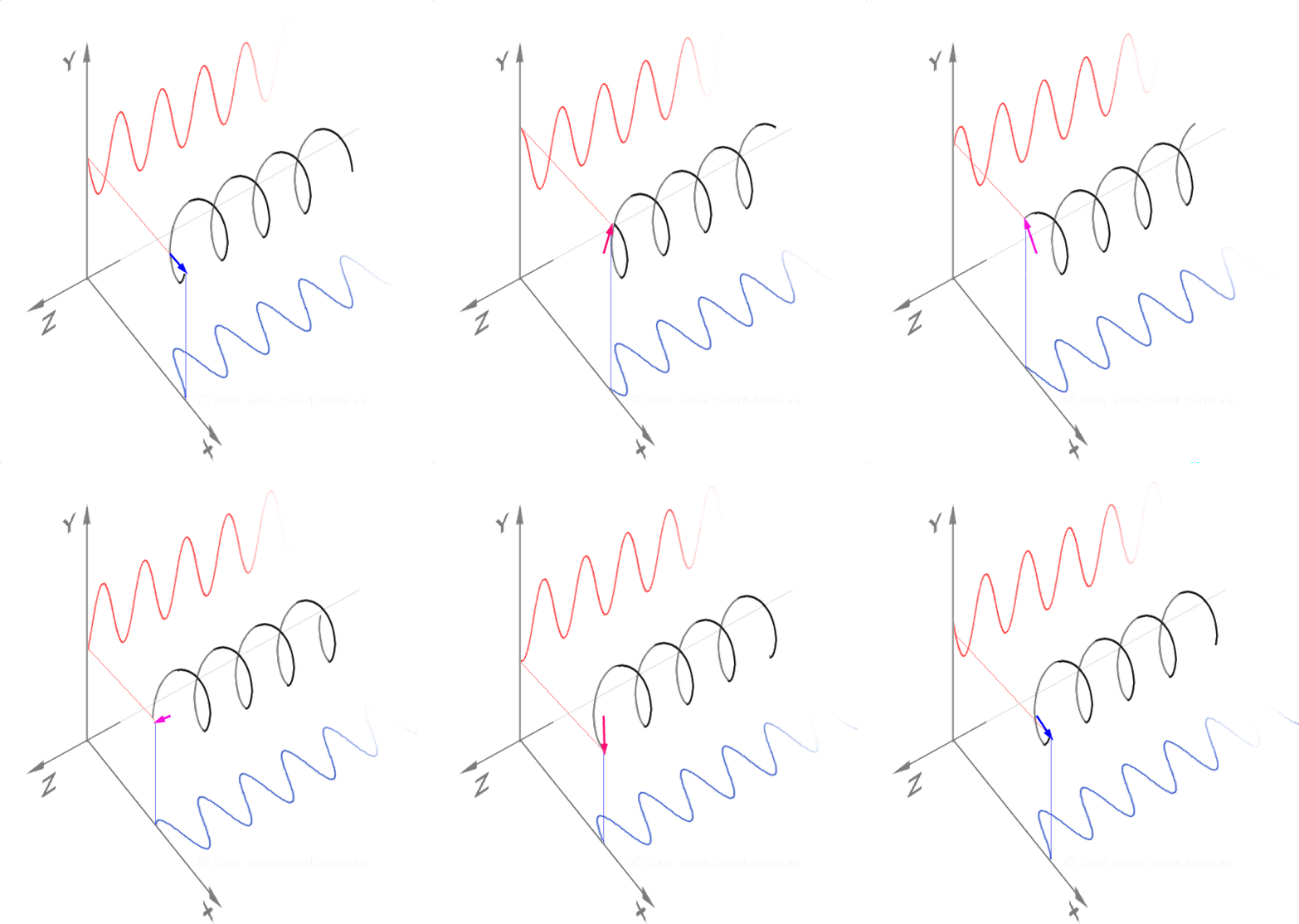
Important parameters are the radius (distance from the axis), the pitch (axial advance per full turn), and the handedness (right- or left-handed). A standard parametrization of the circular or cylindrical helix is r(t) = (R cos t, R sin t, c t), where R is the radius and c controls the pitch. For this form the curve makes a constant angle with the axis. A circular helix has constant curvature and constant torsion; for the parametrization above these may be written in closed form in terms of R and c.
Types and variations
- Cylindrical (circular) helix: constant radius around a straight axis, the simplest and most studied case.
- Conical helix: radius changes roughly linearly with height and the path winds on a cone.
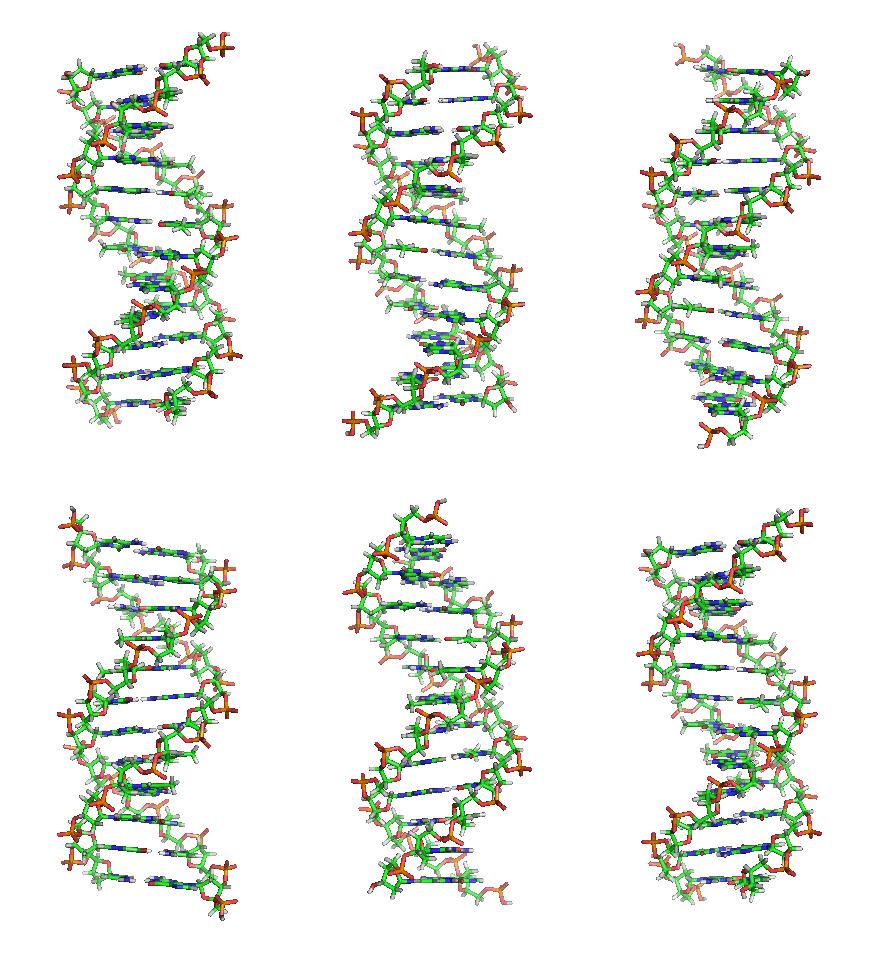
- Helices on other surfaces: curves winding around a torus or other surfaces, and multiple or compound helices such as interlaced strands (for example the familiar double helix of DNA).
Relation to spirals
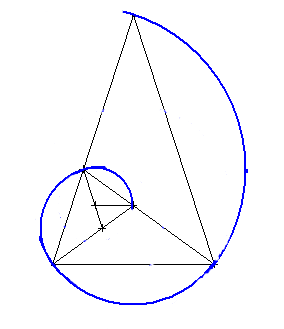
A helix differs from a planar spiral in that the spiral lies in a plane and changes its distance from a center without moving uniformly along a separate axis. By contrast, a helix combines rotation about an axis with translation along that axis. The two shapes are related conceptually but are distinct geometric objects; see further discussion of spirals and planar curves for comparison.
Occurrences in nature and science
Helical forms are widespread. In biology they appear in the double helix of DNA, the helical arrangements of some proteins and collagen, and the flagella of many bacteria. In macroscopic organisms some plant tendrils and growth patterns follow helical paths. Helices also appear in some crystal structures and in the geometry of certain fossils and shells where three-dimensional coiling occurs.
Engineering and practical uses
Engineers exploit helical geometry for springs, screws, helical gears, drill bits, and antennas. Helical heat exchangers and coils provide compact pathways for fluid or electrical conduction. Practical design requires specifying radius, pitch, number of turns and handedness, and assessing mechanical properties such as stiffness and stress distribution.
Mathematical context and further reading
Helices are standard examples in differential geometry and kinematics because their curvature and torsion are simple to compute and because they illustrate the relation between rotation and translation. For introductory treatments of curves and their properties see curve theory resources at curve theory resources, and for applied perspectives consult engineering references at engineering references.
Author
AlegsaOnline.com Helix: mathematical curve and natural form Leandro Alegsa
URL: https://en.alegsaonline.com/art/43373