
Hayabusa (Japanese asteroid sample-return spacecraft)
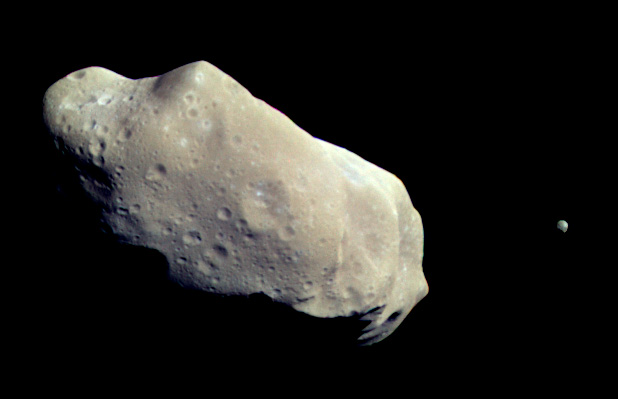
Hayabusa was a Japanese robotic mission that collected and returned samples from near-Earth asteroid 25143 Itokawa. Launched in 2003, it overcame failures and returned material to Earth in 2010.
Overview
Hayabusa (はやぶさ, "Peregrine Falcon") was a Japanese robotic spacecraft designed to rendezvous with a near-Earth asteroid, collect surface material, and return a sealed sample capsule to Earth. The mission targeted asteroid 25143 Itokawa and was managed by the Institute of Space and Astronautical Science (ISAS) associated with the University of Tokyo. The project demonstrated technologies for long-duration deep-space operations, autonomous navigation, and sample-return techniques.
Image gallery
10 Images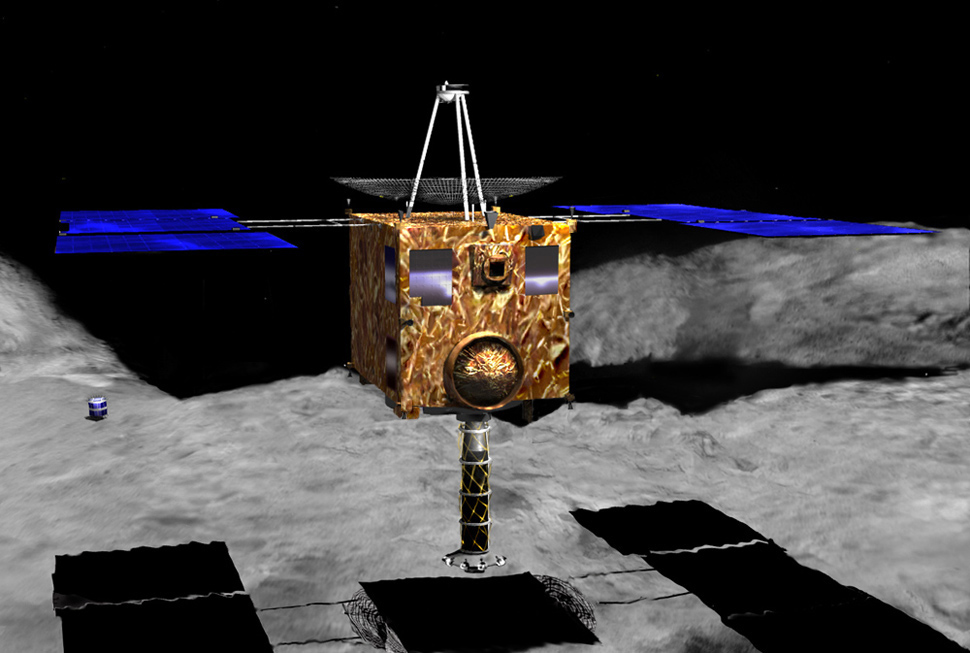





Design and key components
Hayabusa combined solar electric propulsion, attitude-control systems, and a small re-entry capsule to bring specimens home. Principal elements included:
- Ion engines for efficient cruise propulsion;
- Large solar arrays to power instruments and thrusters;
- A sampler mechanism that used a projectile to stir surface material into a collector;
- An autonomous guidance and navigation system for approach and touch-down maneuvers;
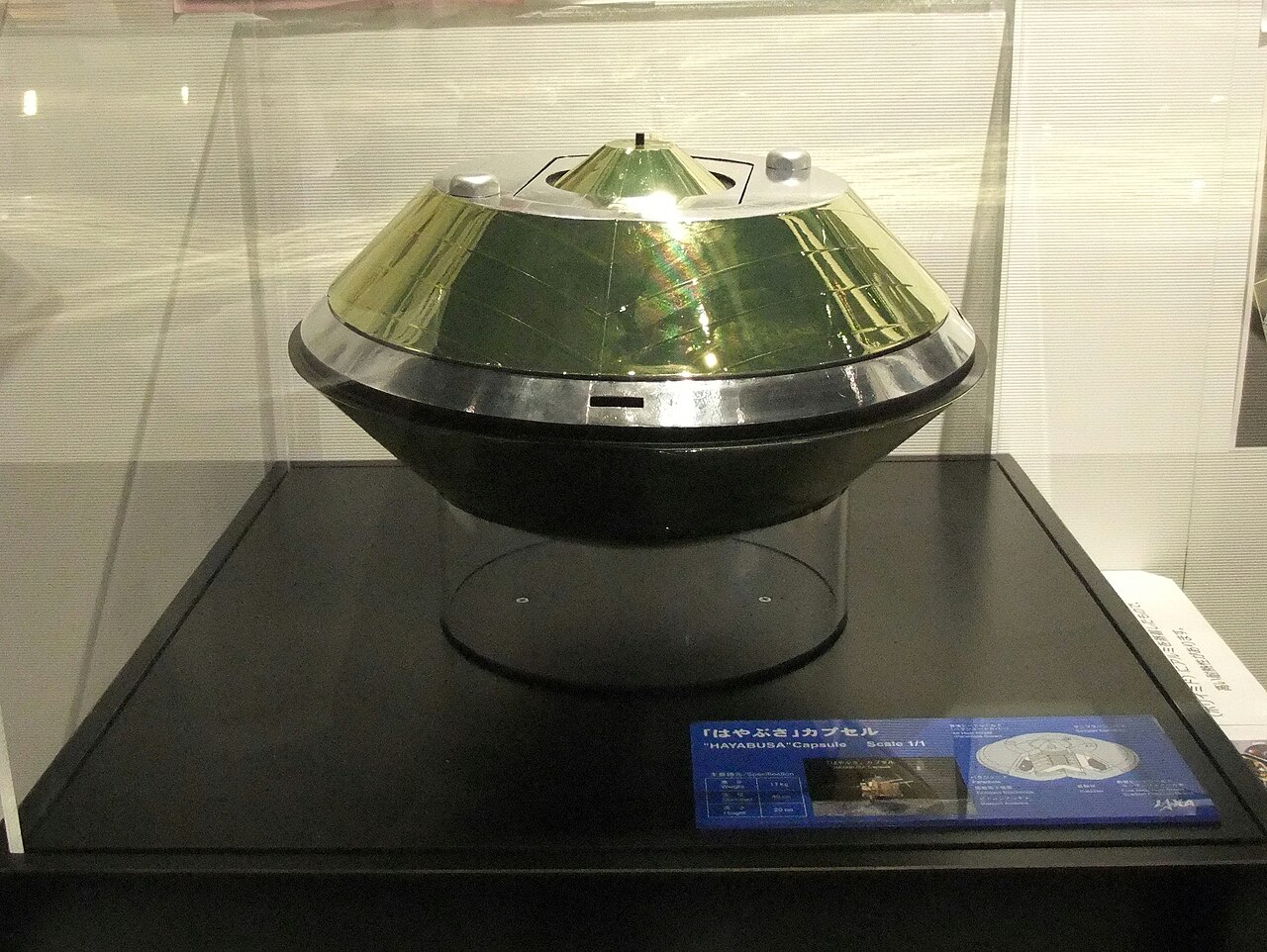
- A heat-shielded sample return capsule to survive atmospheric re-entry.
Mission chronology
Launched in 2003, Hayabusa reached Itokawa in 2005 and performed close observations, touch-down attempts, and sampling operations. After leaving the asteroid, the spacecraft made a long return cruise and delivered its capsule to Earth in June 2010. The mission overcame unexpected technical problems and limited sampling success but nonetheless returned precious material for laboratory study.
Scientific results and legacy
Analysis of the returned grains provided direct evidence linking certain asteroid types to meteorites found on Earth and improved understanding of the internal structure and composition of small, irregular "rubble-pile" bodies. Hayabusa's achievements influenced later missions, such as Hayabusa2 and other international sample-return programs, by validating electric propulsion, autonomous close-proximity operations, and small-body sampling techniques.
Challenges and notable facts
During its mission Hayabusa experienced multiple subsystem anomalies, including propulsion and communication issues, but mission teams recovered critical capabilities through innovative operations. The mission carried a small surface device and several scientific instruments to study Itokawa's geology and environment. Hayabusa remains an important milestone in robotic exploration for being among the first missions to return extraterrestrial samples from an asteroid and for demonstrating that resilient mission design and ground-based problem solving can salvage scientific return from a troubled spacecraft.
For more details on the mission, spacecraft systems, and scientific publications see the mission pages and institutional reports on the project website, the Itokawa data summaries, and archival material from ISAS and the University of Tokyo.
Related articles
Author
AlegsaOnline.com Hayabusa (Japanese asteroid sample-return spacecraft) Leandro Alegsa
URL: https://en.alegsaonline.com/art/42952
Sources
- doi.org : 10.1126/science.312.5778.1327
- pubmed.ncbi.nlm.nih.gov : 16741105
- ui.adsabs.harvard.edu : 2006Natur.443...56H
- doi.org : 10.1038/nature05073
- pubmed.ncbi.nlm.nih.gov : 16957724
- ui.adsabs.harvard.edu : 2010Sci...328..565N
- doi.org : 10.1126/science.328.5978.565
- pubmed.ncbi.nlm.nih.gov : 20430991