
Hawes — village and civil parish in Richmondshire, North Yorkshire
Hawes is a village and civil parish in Richmondshire, North Yorkshire, England. It is a market and tourist centre in the Yorkshire Dales, noted for Wensleydale cheese, scenic roads and walking country.
Overview
Hawes is a small market settlement and civil parish in the district of Richmondshire, within North Yorkshire, England. Set in the upper Wensleydale valley of the Yorkshire Dales, it functions as a local service centre for surrounding farms and as a destination for visitors. In 2001 the civil parish had a population of 1,115.
Image gallery
9 Images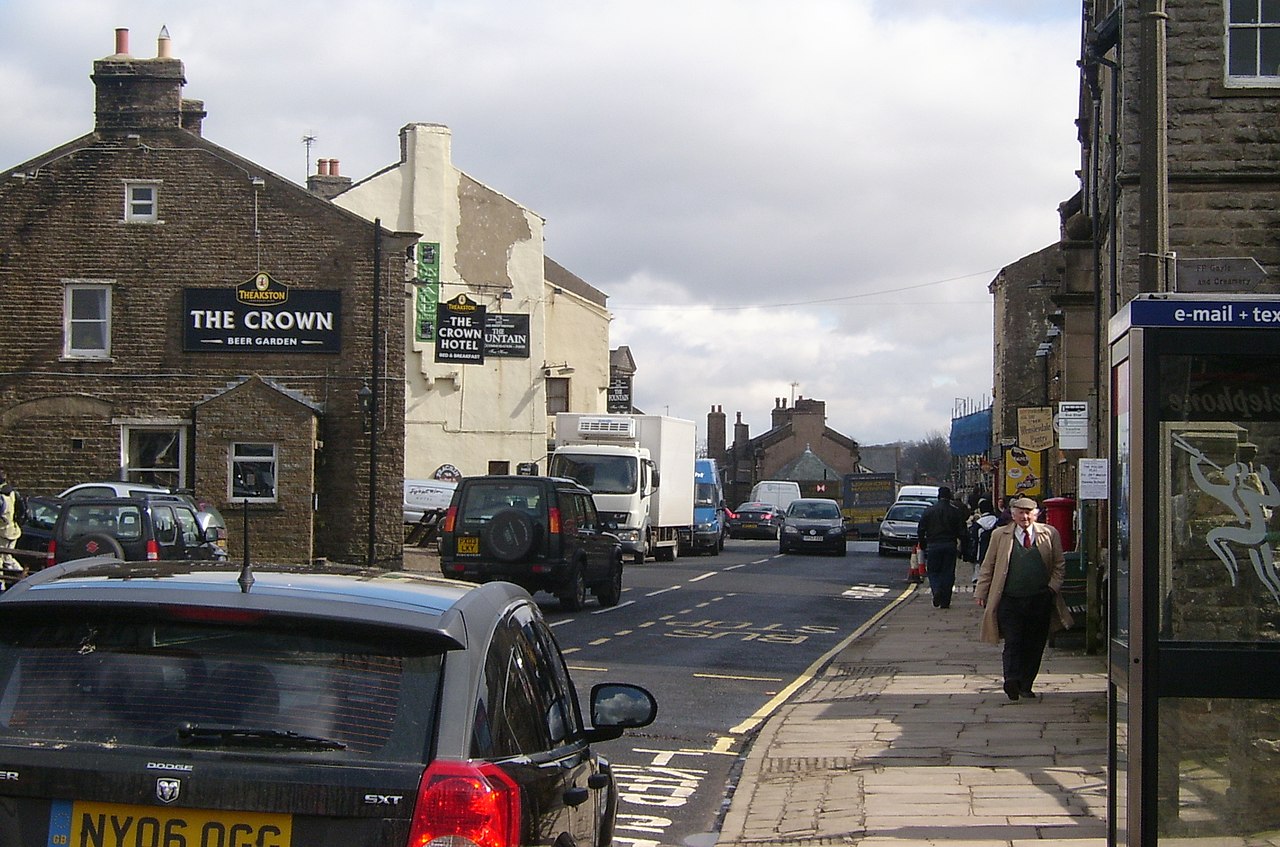


Landscape and environment
The village occupies upland pasture and stone-built streets typical of the Dales, surrounded by drystone walls, sheep country and steep-sided valleys. Several well-known landscape features lie close to Hawes, making it a base for walkers, cyclists and motorists exploring the region.
History and development
Hawes grew as a rural market centre supplying neighbouring farms. Over centuries the local economy has been shaped by sheep farming, small-scale agriculture and rural crafts. The arrival and later loss of rail connections in the 19th and 20th centuries affected trade and travel; in recent decades tourism has become increasingly important.
Economy, culture and attractions
Tourism, dairy production and local retail sustain the village. Hawes is closely associated with Wensleydale cheese and hosts a visitor centre and creamery that interpret that tradition for visitors. Nearby attractions include scenic roads and passes, waterfalls and a network of footpaths through the Dales.
- Food and craft: cheese production and artisan shops
- Scenic routes: high moorland roads and passes popular with drivers and cyclists
- Walking: countryside access and trails for day walkers and longer routes
Transport and practicalities
Hawes is reached by county roads from surrounding towns and supports visitor facilities such as accommodation, shops and small museums. There have been local initiatives and discussion about restoring or improving rail and heritage links to better connect the area, reflecting the continued balance between conservation of landscape and economic opportunity.
Notable facts
Locally Hawes is often described as one of the higher-elevation market settlements in England and serves as a gateway to parts of the Yorkshire Dales National Park. Its combination of rural economy, food heritage and accessible scenery makes it a representative example of a modern Dales market village.
Related articles
Author
AlegsaOnline.com Hawes — village and civil parish in Richmondshire, North Yorkshire Leandro Alegsa
URL: https://en.alegsaonline.com/art/42924
Sources
- ons.gov.uk : "Local statistics - Office for National Statistics"