
Harold & Kumar Escape from Guantanamo Bay (2008) — film overview
2008 stoner comedy sequel following Harold and Kumar as they are mistaken for terrorists, imprisoned at Guantánamo Bay and embark on a chaotic escape; directed by Hurwitz and Schlossberg.
Overview
Harold & Kumar Escape from Guantanamo Bay is a 2008 American stoner comedy film and the second entry in the Harold & Kumar series. Directed and co-written by Jon Hurwitz and Hayden Schlossberg, the movie reunites the central duo after the events of the first picture. It blends gross-out humor and satirical commentary, following the protagonists through a string of improbable situations after an arrest that propels them into international incidents and a notorious detention facility.
Image gallery
1 Image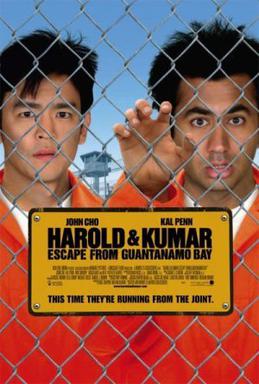
Plot and themes
The story begins with Harold and Kumar attempting to recover from their earlier misadventures and soon deciding to travel abroad. A trip that includes a flight to Amsterdam in the Netherlands goes wrong when the pair are wrongly suspected of being involved in a terrorism-related incident. They are detained and eventually sent to Guantánamo Bay. The core of the plot follows their escape from the facility and a chain of encounters that satirize post-9/11 security practices, racial profiling, and celebrity culture. The film balances slapstick episodes with pointed set pieces that critique paranoia and bureaucracy.
Cast and characters
- John Cho as Harold, the more cautious half of the duo.
- Kal Penn as Kumar, whose impulsive tendencies drive many of the film's gags.
- Paula Garcés returns in a supporting role connected to the protagonists' personal lives.
- Notable cameo and supporting appearances include Neil Patrick Harris, Rob Corddry, Ed Helms, and Jon Reep, among others, several of whom play exaggerated versions of themselves or authority figures.
Production and release
The film was written, produced, and directed by the creative team behind the series and was distributed by Warner Bros.. It opened in the spring of 2008 and was promoted as a comic continuation of the characters' misadventures. The production maintained the anarchic tone of the original while escalating the scale of the jokes and the geopolitical backdrop. Visual gags, music cues, and brisk editing are used to sustain a rapid comedic tempo throughout the runtime.
Reception and legacy
Critics gave the film mixed reviews, praising certain sequences and the chemistry between the leads while criticizing uneven pacing and reliance on crude humor. Audiences responded more warmly, helping the film perform respectably at the box office and securing the franchise enough popularity to continue with later entries. The movie is often discussed for its willingness to address sensitive contemporary topics—such as detention practices and ethnic stereotyping—through satire, and for how it expanded the public profile of its principal actors.
Notable distinctions
As a sequel that moves the protagonists beyond a single-city romp, the film is notable for placing its comic set pieces against a politically charged setting. It also amplified recurring motifs from the original film while introducing celebrity self-parody as a recurring gag. Fans of the series point to its bold mixture of lowbrow humor and pointed social commentary as part of the reason the Harold & Kumar films remain culturally recognizable beyond their immediate comedic beats. For background on the franchise and the preceding film, see Harold & Kumar Go to White Castle.
Author
AlegsaOnline.com Harold & Kumar Escape from Guantanamo Bay (2008) — film overview Leandro Alegsa
URL: https://en.alegsaonline.com/art/42505
Sources
- rottentomatoes.com : "Harold & Kumar Escape from Guantanamo Bay (2008)"