
Harlowton, Montana: small county seat with railroad roots and mountain setting
Harlowton is the county seat of Wheatland County, Montana, founded as a railroad town in 1900. It serves as a local service center surrounded by several mountain ranges and offers outdoor recreation and agricultural economy.
Harlowton is a small municipality in eastern Montana, in the United States. As the administrative center of Wheatland County, Harlowton provides county government services, basic commerce and community institutions for a largely rural region. The town had roughly one thousand residents at the time of the 2010 census, reflecting its role as a modest local hub rather than a large urban center.
Image gallery
4 Images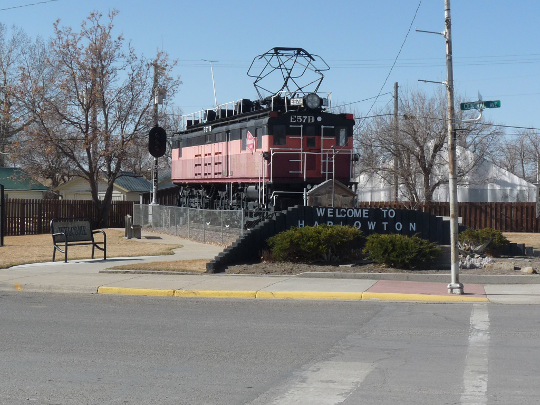


Geography and environment
The town occupies a landscape near the eastern foothills of several mountain ranges. Surrounding summits commonly cited in descriptions include the Crazy, Little Belt and Big Snowy Mountains, foothills that are associated with the greater national forest lands. These nearby public lands contribute to regional opportunities for hiking, hunting, wildlife viewing and other outdoor pursuits. The climate is continental and semi‑arid: winters are cold and can be snowy in higher terrain, while summers are generally warm and dry on the plains.
History and development
Harlowton was established in 1900 as a station on what was then the Montana Railroad, and its early growth was tied to rail transportation and service to surrounding ranches and farms. Over the 20th century the community evolved around agriculture, transportation and local government functions. Railroad activity shaped local identity and is an element of Harlowton's historic narrative; local institutions interpret and preserve aspects of that past.
Economy, services and culture
Today the local economy is anchored by agriculture—cropping and livestock ranching—and by services that support county residents and travelers. As the county seat, Harlowton hosts government offices, schools, a public library and small businesses. Visitors and residents alike use the town as a base for outdoor recreation in nearby national forest and mountain areas.
Attractions and community features
- Public services and county administration centered in town, reflecting its role as the county seat.
- Interpretation of regional railroad history and small local museums or displays that commemorate early transportation routes.
- Access to hunting, fishing, hiking and scenic drives into the nearby mountain ranges and forestlands.
Harlowton's character—combining governmental, agricultural and historical functions in a mountain-foothill setting—illustrates a common pattern for small Montana towns that served as railway stations at the turn of the 20th century. Its continued importance to Wheatland County is more civic and regional than metropolitan, offering a concentrated set of services to a broad rural area.
For more administrative and visitor information, regional resources and historical summaries may be consulted through local government pages and interpretive centers that cover the town's role in the wider landscape and transportation history.
Montana and United States materials provide broader context for the region; county-level details are available via Wheatland County resources and local archives.
Related articles
Author
AlegsaOnline.com Harlowton, Montana: small county seat with railroad roots and mountain setting Leandro Alegsa
URL: https://en.alegsaonline.com/art/42482
Sources
- forest.moscowfsl.wsu.edu : "Lewis & Clark National Forest Geographic Divisions"