
Halloween (2018 film)
A 2018 slasher film directed by David Gordon Green that serves as a direct sequel to John Carpenter's 1978 Halloween, reuniting Jamie Lee Curtis with Michael Myers and restarting the franchise timeline.
Halloween (2018) is an American slasher film directed by David Gordon Green and written by Green, Jeff Fradley and Danny McBride (writers). Conceived as a direct continuation of John Carpenter's 1978 original, it ignores intervening sequels and returns the story to its beginnings with Laurie Strode confronting Michael Myers decades after the events in Haddonfield. The film is the eleventh entry in the long-running franchise and deliberately revisits familiar characters and themes while presenting a modern production and sensibility.
Image gallery
7 Images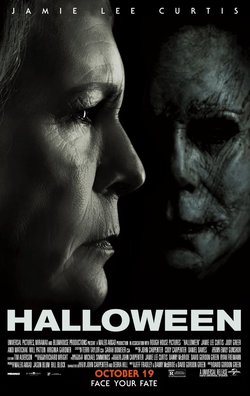


Premise and approach
Rather than retelling the original, the film positions itself as a late chapter in the same narrative: a traumatized Laurie Strode, now living in isolation and preparing for Michael's eventual escape, must face the masked killer once he returns to Haddonfield. This approach restores continuity with the original 1978 picture (John Carpenter's Halloween) and reframes Laurie’s survival as a long-term psychological struggle. The filmmakers emphasized a lean, suspense-driven structure, blending old-school stalking elements with contemporary pacing.
Cast and characters
The movie brought back several key figures from the franchise. Jamie Lee Curtis reprises her role as Laurie Strode, whose decades of trauma and vigilant preparation form the emotional core of the story. Michael Myers is portrayed by Nick Castle (the original 1978 performer) along with other performers for physical sequences, maintaining the character’s iconic presence (Michael Myers). Supporting performances include Judy Greer, Andi Matichak, Will Patton and others who populate the protagonist’s life and the town of Haddonfield.
Production and style
Produced within the contemporary horror marketplace, the film was backed by established genre producers and leaned into practical effects, doorway-to-doorway tension, and a score that references themes from Carpenter’s original music. The creative team aimed to honor the look and feel of the 1978 film while using modern cinematography, editing rhythms and a slightly expanded palette of violent set pieces. The result attempts to balance nostalgia with modern horror expectations.
Release, reception and impact
Released in October 2018, just ahead of the 40th anniversary of the original, the film earned generally positive notices from many critics and audiences who praised Jamie Lee Curtis’s central performance and the decision to return to the original continuity. Critics highlighted the film’s tension and faithful evocation of the franchise’s atmosphere, while some observers noted increased explicit violence compared with the 1978 original. It performed well enough commercially to prompt sequels, continuing the revived timeline with Halloween Kills and subsequent entries.
Notable aspects and legacy
- Direct sequel: Positions itself as the canonical continuation of the 1978 movie, disregarding other sequels and timelines.
- Return of original talent: Jamie Lee Curtis’s comeback to her signature role provided emotional continuity and star focus.
- Blend of eras: Combines the spare suspense of classic slasher films with modern production values and effects.
The 2018 Halloween served both as a tribute to John Carpenter’s original influence on the slasher genre and as a commercial reboot that reignited mainstream interest in the franchise. Its success demonstrated the continuing cultural resonance of the Laurie Strode–Michael Myers dynamic and set the stage for further entries in the franchise’s renewed timeline.
For more details on the filmmakers and principal contributors, see director David Gordon Green, the credited screenwriters, and the reunion with performers such as Jamie Lee Curtis and Nick Castle. The film’s relationship to the 1978 original is central to understanding its choices and reception (1978 Halloween), and its place in the modern franchise line is continued in Halloween Kills.
Related articles
Author
AlegsaOnline.com Halloween (2018 film) Leandro Alegsa
URL: https://en.alegsaonline.com/art/41940