
Hang 'Em High (1968 American Western film)
1968 Western starring Clint Eastwood as a man who survives a lynching and becomes a U.S. marshal. Directed by Ted Post, the film explores justice, vigilantism, and the moral cost of frontier law.
Hang 'Em High is a 1968 American Western that follows Jed Cooper, an innocent man who survives an attempted lynching and later accepts a commission as a United States marshal to bring order to the frontier. The film marked an important early Hollywood leading role for Clint Eastwood and brought traditional Western elements together with sharper moral questions about revenge, law, and vigilantism.
Image gallery
1 Image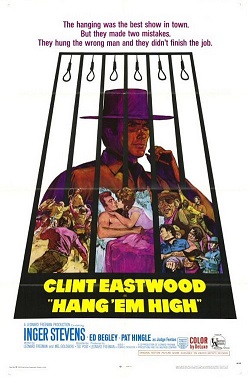
Plot and themes
The central narrative concerns a man wrongly hanged by a mob who survives and tries to reconcile a desire for personal revenge with a new responsibility to enforce the law. The story examines how violence begets violence, the limits of frontier justice, and the tension between private retribution and institutional authority. Rather than celebrate gunplay as spectacle, the film repeatedly returns to the human consequences of punishment and the ambiguities of moral certainty.
Production and principal cast
The picture was directed by Ted Post and produced and co-written by Leonard Freeman. Alongside Clint Eastwood in the lead, the supporting cast includes Inger Stevens as a widow who aids the protagonist, Ed Begley as the outlaw leader implicated in the lynching, and Pat Hingle as the judge who hires the protagonist as a marshal. The film blends conventional Western staging with a more introspective, revisionist sensibility in its moral focus and pacing.
Reception and legacy
On release, the film helped consolidate Eastwood's transition from the European "spaghetti" Westerns that had made him famous into mainstream American cinema. Critics and audiences noted its brisk narrative, moral weight, and the controlled, laconic performance by its star. Over time it has been cited as an example of late-1960s Westerns that begin to question earlier genre certainties while retaining many of the classic genre's visual and structural elements.
Notable aspects
- Combines action set pieces with questions about law, retribution, and the limits of justice on the frontier.
- Features an ensemble of established character actors who embody institutional roles—victims, vigilantes, and officials—rather than romanticized archetypes.
- Served as a career milestone for its star, helping bridge European Western popularity and Hollywood leading roles.
Today the film is often discussed in surveys of American Westerns from the 1960s as a work that keeps familiar genre conventions while pushing the subject matter toward darker, more ambiguous moral territory. For further information on its production, cast biographies, and critical assessments, consult filmographies and historical overviews dedicated to the era and principal contributors.
Related articles
Author
AlegsaOnline.com Hang 'Em High (1968 American Western film) Leandro Alegsa
URL: https://en.alegsaonline.com/art/42196