
Halifax, North Carolina
Halifax is a small town in northeastern North Carolina and the county seat of Halifax County, known for the 1776 Halifax Resolves and its preserved Revolutionary War–era historic district.
Overview
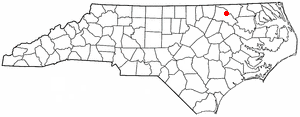
Halifax is a compact town in eastern North Carolina that serves as the county seat of Halifax County. Though its population has been small — recorded as 234 at the 2010 census — the town is prominent for its role in early American history and for a well-preserved historic district. It lies within the broader region of North Carolina and acts as an administrative and cultural center for the surrounding rural area.
Image gallery
3 Images
Historical significance
Halifax is best known as the site where the Provincial Congress of North Carolina adopted the Halifax Resolves on April 12, 1776, a formal statement endorsing independence from Britain. That resolution made Halifax an important symbol in the events that led to the American Revolution. Several 18th- and 19th-century buildings remain, and the town has been the focus of preservation efforts that interpret colonial and early national history.
Characteristics and landmarks
The town’s core contains a collection of historic homes, public buildings, and the Halifax State Historic Site, which interprets the Resolves and colonial life. The historic district preserves architectural examples from different periods, and modest government buildings reflect Halifax’s continuing role as the county seat. The local landscape is rural, historically tied to agriculture and small-scale commerce.
Uses and importance today
Visitors come for heritage tourism, educational programs, and events that commemorate the Halifax Resolves and regional history. As the county seat, Halifax continues to host county offices and legal functions, connecting residents across the county to services and civic life. The town also serves as a gateway for exploring nearby rivers and the rural Piedmont and Coastal Plain transition zone.
Notable facts and distinctions
- Halifax is a county seat despite a notably small municipal population.
- The Halifax Resolves are among the earliest official steps by an American colony toward independence.
- The town is a focus of state and local historic preservation and interpretation.
For additional administrative and historical information see county resources and heritage sites associated with the county seat.
Related articles
Author
AlegsaOnline.com Halifax, North Carolina Leandro Alegsa
URL: https://en.alegsaonline.com/art/41891
Sources
- naco.org : "Find a County"