
GreenLeft (GroenLinks): Dutch green-left political party
GreenLeft (GroenLinks) is a Dutch green-left political party formed in 1989 by a merger of four parties. It combines environmentalism with progressive social policies and participates in national and European politics.
Overview
GreenLeft (Dutch: GroenLinks, often abbreviated GL) is a political party in the Netherlands that brings together environmentalism, progressive social policy and a pro-European outlook. Founded as a distinct formation in 1989, the party positions itself on the left of the political spectrum and emphasizes sustainability, social justice and civil liberties. For official information see GreenLeft.
Image gallery
8 Images




History and formation
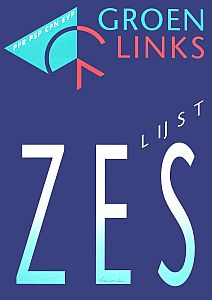
GroenLinks emerged in 1989 through the fusion of four smaller parties: the Communist Party of the Netherlands (CPN), the Pacifist Socialist Party (PSP), the Political Party of Radicals (PPR) and the Evangelical People's Party (EVP). The merger sought to unite fragmented leftist and green forces into a single, more effective political actor. Since its foundation the party has grown into a recognizable voice for combining environmental and social policies in Dutch politics.
Ideology and core positions
GreenLeft advocates policies that aim to reduce environmental harm while promoting equality and individual rights. Its platform typically includes renewable energy and climate action, sustainable transport and land use, and measures to reduce economic and social inequality. The party also supports civil liberties, inclusive education, and humane migration policies. Its orientation can be described as left-green: socially progressive, economically redistributive, and deeply focused on ecological limits. For discussions of leftist political perspectives see left politics resources.
Organization, representation and influence
GroenLinks competes in national parliamentary elections, municipal councils and European elections. In the 2021 Dutch general election the party won eight seats in the House of Representatives. It is active in coalition negotiations at local and national levels and works with other progressive and green parties on shared priorities. At the European level GroenLinks cooperates with other green parties and movements to advance transnational environmental and social goals.
Policy areas and public role
Key policy areas include climate and energy transition, sustainable urban planning, social welfare and anti-discrimination measures. The party emphasizes evidence-based environmental policy, an economy that reduces carbon dependence, and social programs that protect vulnerable groups. It often seeks to influence public debate on the intersection of ecology and social policy, arguing that long-term prosperity depends on both a healthy environment and fair distribution of resources. For more on its environmental stance see environmental policy resources.
Notable distinctions
- Origin: created by the 1989 merger of multiple leftist and green parties.
- Identity: combines green politics with social progressivism rather than fitting solely into traditional left-right labels.
- Role: active both in national policymaking and in building cross-border green collaborations.
As with many Green parties across Europe, GreenLeft plays a dual role: shaping practical environmental legislation and framing longer-term debates about sustainable, equitable societies.
Related articles
Author
AlegsaOnline.com GreenLeft (GroenLinks): Dutch green-left political party Leandro Alegsa
URL: https://en.alegsaonline.com/art/40751