
Green Cove Springs, Florida
County seat of Clay County, Florida, centered on a historic spring and riverfront park. A small city (2010 pop. 6,908) known for its downtown historic district, St. Johns River access, and waterfront recreation.
Green Cove Springs is a small city in northeastern Florida, United States (U.S.). It serves as the county seat of Clay County and is sited on the west bank of the St. Johns River. According to the U.S. Census, the recorded population was 6,908 in 2010; more recent counts and estimates are available from municipal and federal sources linked below.
Image gallery
8 Images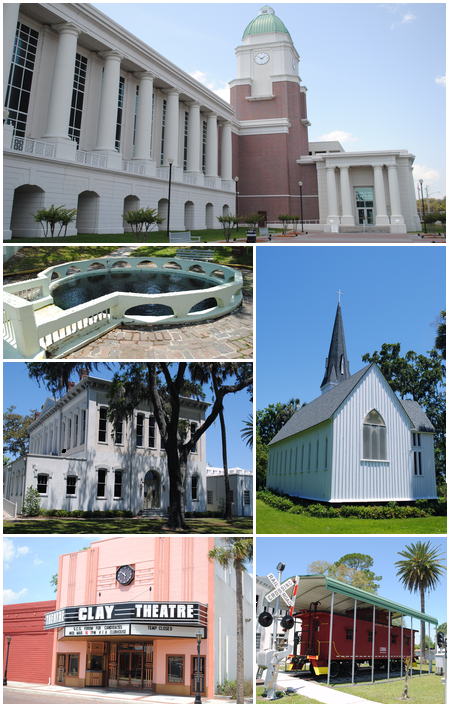


Geography and character
The city centers on a riverfront public area built around a natural mineral spring, historically known as Spring Park. Its riverfront setting, temperate humidity, and mix of historic commercial streets and residential neighborhoods create a compact small‑town character. River access supports boating and fishing, while parks and trails provide recreational space for residents and visitors.
History
Green Cove Springs developed in the 19th century as a leisure and health destination because of the spring. Over time it evolved into the county's administrative center and developed a recognizable historic district of civic and commercial buildings. In the mid‑20th century the waterfront area saw naval and maritime activity that influenced local infrastructure and employment.
Economy, government and community life
The local economy combines county government services, small businesses, tourism related to the riverfront and historic district, and light professional services. Civic life often focuses on downtown events, preservation of historic architecture, and public festivals held in Spring Park and adjacent public spaces. The county courthouse and municipal offices anchor government functions in the city.
Notable places and recreation
- Spring Park and the spring overlook, a focal point for visitors and local gatherings.
- Historic downtown streets with period architecture, shops, and civic landmarks.
- Access to the St. Johns River for boating, fishing, and riverside walking areas.
- Community parks, recreational facilities, and seasonal public events.
For official and up‑to‑date information consult municipal resources, county offices, or federal demographic material via the links above. Local historical societies and preservation organizations provide additional context on the city's development and architectural heritage.
Related articles
Author
AlegsaOnline.com Green Cove Springs, Florida Leandro Alegsa
URL: https://en.alegsaonline.com/art/40666
Sources
- www2.census.gov : "2016 U.S. Gazetteer Files"
- census.gov : "Population and Housing Unit Estimates"
- factfinder2.census.gov : "American FactFinder" · web.archive.org
- geonames.usgs.gov : "US Board on Geographic Names"
- naco.org : "Find a County" · web.archive.org
- factfinder2.census.gov : "Geographic Identifiers: 2010 Demographic Profile Data (G001): Green Cove Springs city, Florida"