
Clay County, Florida
County in northeastern Florida whose seat is Green Cove Springs; part of the Jacksonville metropolitan area with a mix of suburban communities, riverine landscapes and military training sites.
Overview
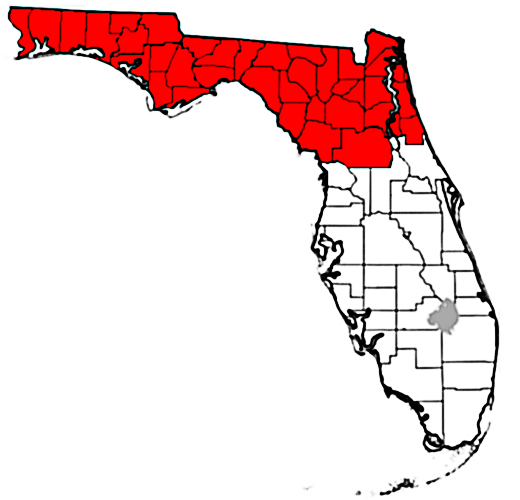
Clay County is a county in northeastern Florida, often described as part of the Jacksonville metropolitan area. Its government center and administrative hub is the county seat, Green Cove Springs. The county combines suburban neighborhoods, small towns and rural tracts along several significant waterways.
Image gallery
8 Images



History
The area now called Clay County has a long human history, with indigenous peoples occupying the region before European contact. Over time it fell under Spanish and then American control. The county was created in the 19th century and was named for the prominent statesman Henry Clay. In the decades that followed it developed through agriculture, timber and transportation links that tied it to nearby port cities.
Geography and communities
Clay County features river corridors and low-lying wetlands characteristic of northeastern Florida. The St. Johns River and several creeks shape local landscapes and recreational life. Communities range from historic Green Cove Springs to suburban centers that serve commuters to Jacksonville.
- Green Cove Springs (county seat)
- Orange Park
- Fleming Island and Middleburg
- Smaller towns and rural neighborhoods
Economy, culture and attractions
The county's economy mixes residential development, light industry and service sectors. Outdoor recreation is important locally: boating, fishing and parks on riverfront lands attract residents and visitors. Green Cove Springs has a historic role as a spa and riverside destination because of mineral springs, and local fairs, festivals and parks contribute to community life.
Notable facts and governance
Clay County is governed by elected county officials and provides typical local services such as public safety, schools and infrastructure. It is also home to military training facilities used by the state and nation. Its proximity to Jacksonville has influenced its growth, making it both a distinct county with historical towns and part of a larger metropolitan region.
Related articles
Author
AlegsaOnline.com Clay County, Florida Leandro Alegsa
URL: https://en.alegsaonline.com/art/20840