
Good Riddance (Time of Your Life) (Green Day song)
Acoustic ballad by Green Day, released 1997 on Nimrod. Written earlier by Billie Joe Armstrong, it became a popular anthem at graduations and won an MTV Video Music Award in 1998.
Overview
"Good Riddance (Time of Your Life)" is an acoustic-leaning song by American rock band Green Day, issued as the second single from their fifth studio album, Nimrod, in October 1997. Unlike the band’s earlier fast-paced punk singles, this track features a stripped-back arrangement and reflective lyrics that examine change, parting and memory.
Image gallery
1 Image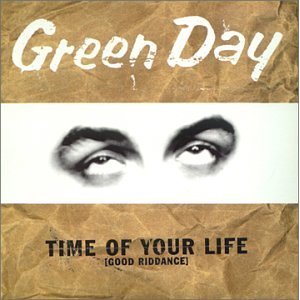
Writing and composition
The song was written by lead singer Billie Joe Armstrong before the release of Green Day’s breakthrough album Dookie (1994) but was not released until Nimrod (1997). It is built around acoustic guitar and a simple melodic structure, with lyrics that many listeners interpret as bittersweet and ambivalent—both a farewell and a moment of gratitude for what has passed.
Release and recognition
Released on October 17, 1997, the single marked a stylistic departure for the band and received widespread radio play. In 1998 the band won an MTV Video Music Award for Best Alternative Video and the song was also nominated in the Viewer's Choice category, raising its profile beyond Green Day’s core punk audience. The record helped broaden perceptions of the group’s musical range.
Uses and cultural impact
Over time the song became an unexpected staple at graduations, proms and other rites of passage, where its mix of nostalgia and resolve resonated with large audiences. It has been used in television and film soundtracks, covered by other artists, and frequently appears at public ceremonies and memorials. Its parenthetical subtitle, "Time of Your Life," is often taken as shorthand for the song itself.
Performance and notable facts
On stage, the song is commonly performed solo by the songwriter or with minimal accompaniment, serving as a concert closer or an intimate moment amid louder material. Its acoustic approach and candid tone helped redefine expectations for mainstream punk bands at the time, showing how a simple song could achieve broad emotional reach without dramatic production.
Summary
"Good Riddance (Time of Your Life)" stands as one of Green Day’s most widely recognized songs, notable for its departure from punk conventions and for the cultural role it assumed after release. The track remains a touchstone for transitions and endings, and a frequently cited example of how a single composition can alter a band’s public image. More on the song’s credits, videos and legacy can be found via resources such as the MTV Video Music Awards archives and dedicated band histories.
- Album: Nimrod
- Writer: Billie Joe Armstrong
- Notable award: MTV VMA for Best Alternative Video (1998)
Related articles
Author
AlegsaOnline.com Good Riddance (Time of Your Life) (Green Day song) Leandro Alegsa
URL: https://en.alegsaonline.com/art/39645
Sources
- rockonthenet.com : "MTV Video Music Awards History: Best Alternative Video"
- rockonthenet.com : "MTV Video Music Awards History: Viewer's Choice"
- kyxy.cbslocal.com : "Top 10 Prom Songs"