
Gianluca Buonanno (1966–2016)
Italian politician known for right‑wing activism and service in local, national and European institutions; member of MSI, National Alliance, then Lega Nord; died in a 2016 car accident.
Overview
Gianluca Buonanno (15 May 1966 – 5 June 2016) was an Italian politician active at municipal, national and European levels. Born in Borgosesia in the Piedmont region, he spent much of his career in right‑of‑centre parties and became a prominent, sometimes controversial, public figure in Italy during the 1990s and 2000s. He served in the Italian Parliament for two legislatures and was elected to the European Parliament in 2014.
Image gallery
2 Images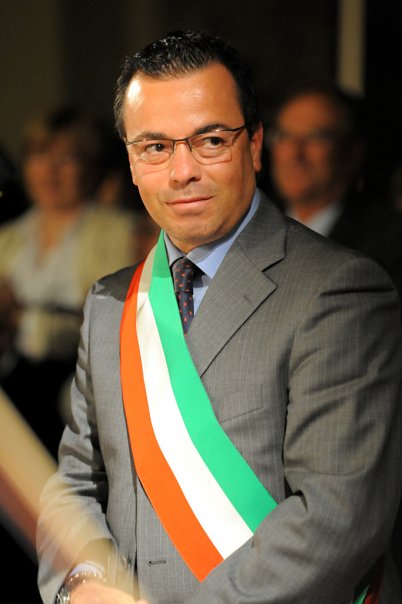

Political career and party affiliations
Buonanno began his political activity in the early 1980s with the Italian Social Movement (Movimento Sociale Italiano, MSI), a party rooted in the post‑war right. In the mid‑1990s he joined the National Alliance (Alleanza Nazionale), a successor organization that sought to broaden the conservative vote. In 2002 he moved to Lega Nord, a regionalist, populist formation with a strong presence in northern Italy; this association shaped his later work in Rome and Brussels. For information on Lega Nord see Lega Nord.
Positions held and parliamentary service
At the national level Buonanno was elected to the Italian Parliament for the XVI and XVII legislatures, representing his constituency in the Chamber of Deputies. In 2014 he won a seat in the European Parliament where he initially sat as a Non‑Inscrit (unaffiliated) member before joining the Europe of Nations and Freedom grouping, a eurosceptic and nationalist coalition. Details about his tenure in Brussels and the institution are available at European Parliament.
Public image, themes and controversies
Throughout his career Buonanno was noted for outspoken rhetoric and a populist style aimed at law‑and‑order, regional autonomy, and immigration controls. He cultivated visibility through local initiatives and media appearances. His manner attracted both supporters who valued his directness and critics who accused him of provocative or divisive statements. As with many politicians of the period, his profile reflected broader debates in Italy about identity, regionalism and relations with the European Union.
Death and legacy
Buonanno died on 5 June 2016 in a road traffic accident near Varese. His sudden death at age 50 prompted tributes from colleagues and debate about his political legacy. Locally he is remembered for his long association with Borgosesia and for the role he played in promoting the priorities of his parties in both national and European institutions. The crash location is in the province of Varese; contemporary reports referenced the site near that city Varese.
Context and significance
Buonanno's trajectory—from a militant youth in a post‑war right party, through the transitions of the 1990s, to membership of a regionalist populist group—illustrates the reconfiguration of Italy's right in recent decades. His move to the European Parliament reflected a pattern in which national figures used the supranational stage to amplify domestic messages. His career is one example among several that show how local politics, nationalist themes and European debates intersected in early‑21st‑century Italy.
Related articles
Author
AlegsaOnline.com Gianluca Buonanno (1966–2016) Leandro Alegsa
URL: https://en.alegsaonline.com/art/38693
Sources
- milano.repubblica.it : "E' morto Gianluca Buonanno: l'eurodeputato della Lega vittima di un incidente stradale"