
And did those feet in ancient time — Blake's poem and the hymn 'Jerusalem'
Short poem by William Blake that prefaces Milton: a Poem (1804). Later set to music by C. Hubert H. Parry in 1916 as the hymn 'Jerusalem'. Covers text, themes, musical setting and cultural legacy.
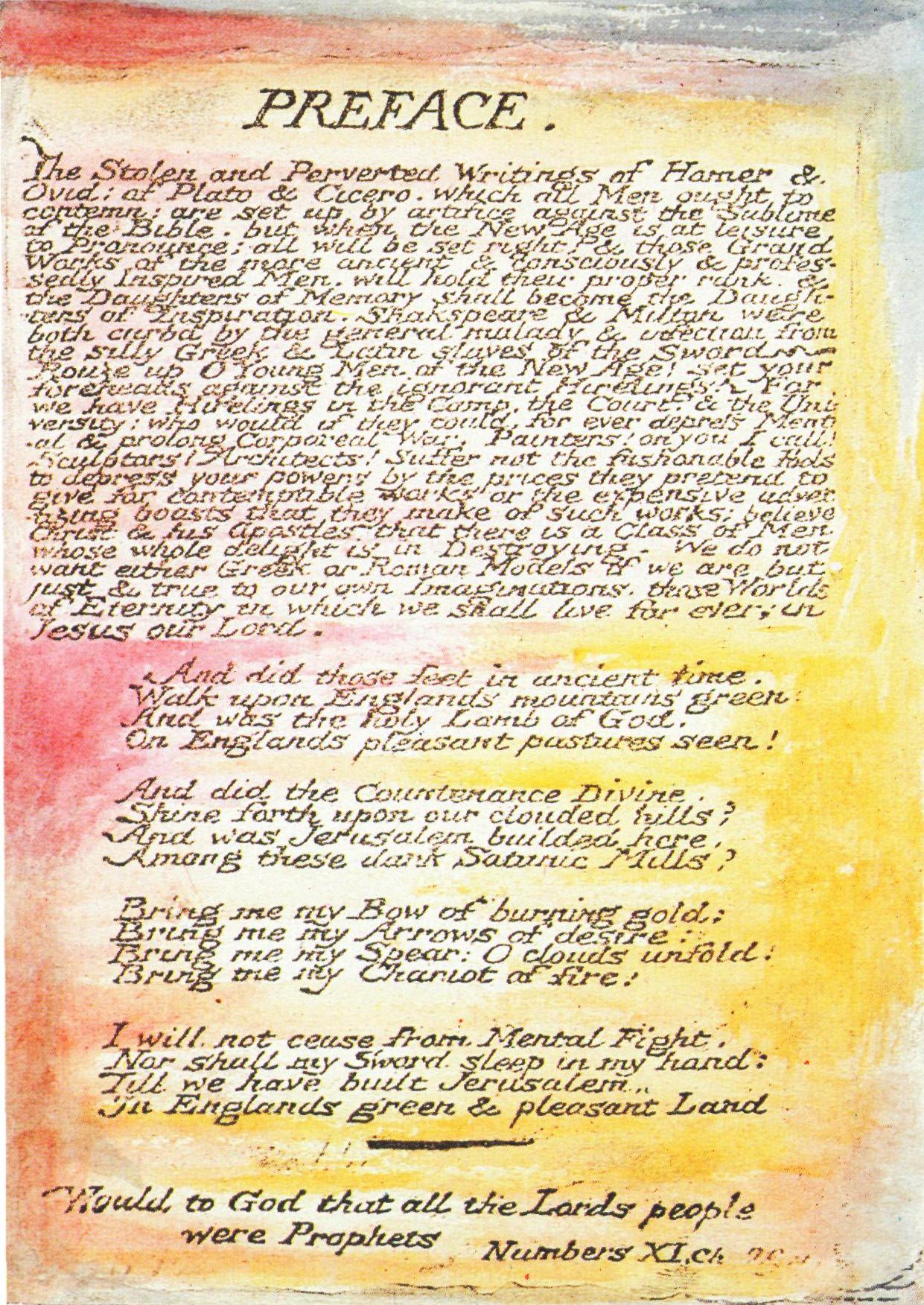
"And did those feet in ancient time" is a compact but influential lyric by William Blake. It appears as a prefatory passage to his longer work Milton: a Poem (1804). Though brief, its opening question and later imperative have given the piece a life far beyond Blake's original manuscript: in 1916 the poem was paired with a stirring melody by C. Hubert H. Parry and published as the hymn often known simply as Jerusalem.
Image gallery
5 Images


Form and central lines
The poem is notable for its concentrated imagery and refrain-like rhetoric. It juxtaposes pastoral images — "green and pleasant land" — with the disruptive phrase "dark satanic mills." These short, memorable lines have invited many readings: devotional, nationalistic, radical and Romantic. The voice moves from a speculative opening to a direct summons to "build Jerusalem," an exhortation that has been interpreted variously as spiritual renewal or social transformation.
Publication and Blake's technique
Blake presented many of his writings in artistically engraved and hand-coloured editions, mixing text and illustration. The prefatory lyric belongs to that context of imaginative visual and verbal work. Its economy of language and evocative juxtapositions reflect Blake's larger poetic concerns: prophetic voice, visionary history and a desire to confront what he saw as spiritual or cultural decline.
Musical setting and public life
Parry's early twentieth-century tune transformed the poem into a hymn-like anthem. Since then it has been widely used at religious services, public commemorations and musical events; in Britain it has a special place in choral repertoires and popular performance traditions. The fusion of Blake's words with Parry's melody helped the text move from literary circulation into communal singing and public ritual.
Themes, debates and legacy
Readers still debate key phrases and meanings: scholars and commentators discuss whether the "dark satanic mills" refer to industrial factories, corrupt institutions, or metaphorical spiritual decay. Equally, the call to "build Jerusalem" has been adopted by varied groups across the political spectrum, who find in the image either national pride, social reform, or religious aspiration. The poem's lasting power lies in its memorable lines, moral energy and adaptability: a short lyric that continues to be quoted, sung and reinterpreted.
- Notable phrases: "And did those feet in ancient time" — an opening that frames the poem as a question of origins and visitation.
- Imagery: "green and pleasant land" vs. "dark satanic mills" — pastoral and industrial contrasts.
- Musical life: the Parry setting (1916) made the poem an enduring communal hymn.
- Legacy: frequently performed and invoked in religious, cultural and national contexts.
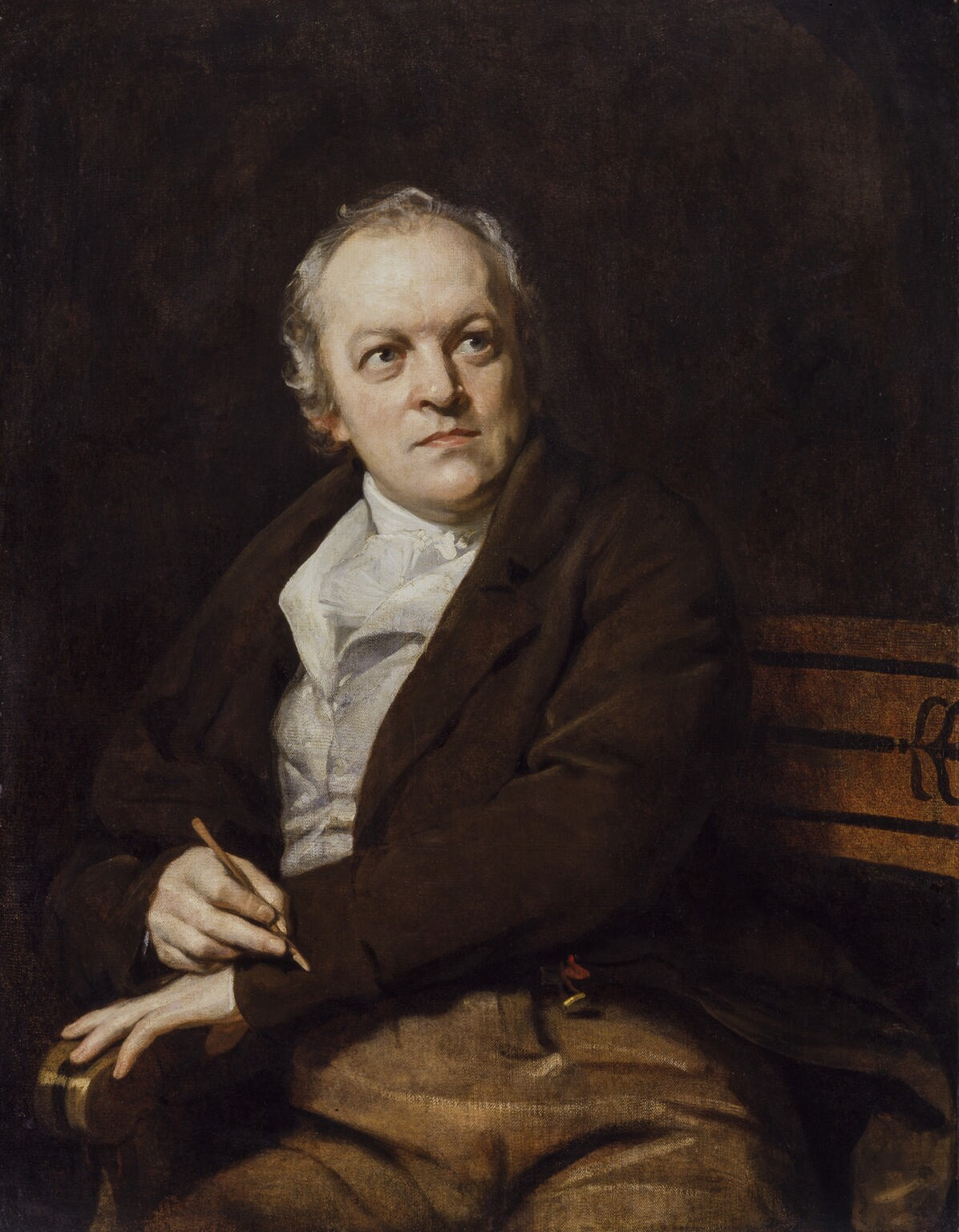
For readers seeking more background on the poet, the text and settings that followed, see links to primary resources and musical editions: William Blake, the hymn Jerusalem, and the composer C. H. H. Parry.
Related articles
Author
AlegsaOnline.com And did those feet in ancient time — Blake's poem and the hymn 'Jerusalem' Leandro Alegsa
URL: https://en.alegsaonline.com/art/3866
Sources
- poemhunter.com : "And Did Those Feet In Ancient Time"