
William Blake: English poet, artist and visionary (1757–1827)
William Blake was an English poet, printmaker and painter whose experimental texts and engraved pictures created a personal visionary mythology and influenced Romantic and later art and literature.
Overview
William Blake is remembered as an English poet, visionary, painter and printmaker who worked in London for his entire life. He produced a small but distinctive body of work that combined writing and image into hand-engraved “illuminated” books. Although little appreciated while he was alive, his fusion of word and image and his unconventional religious and political ideas later made him a central figure in discussions of poetry and the visual arts.
Image gallery
10 Images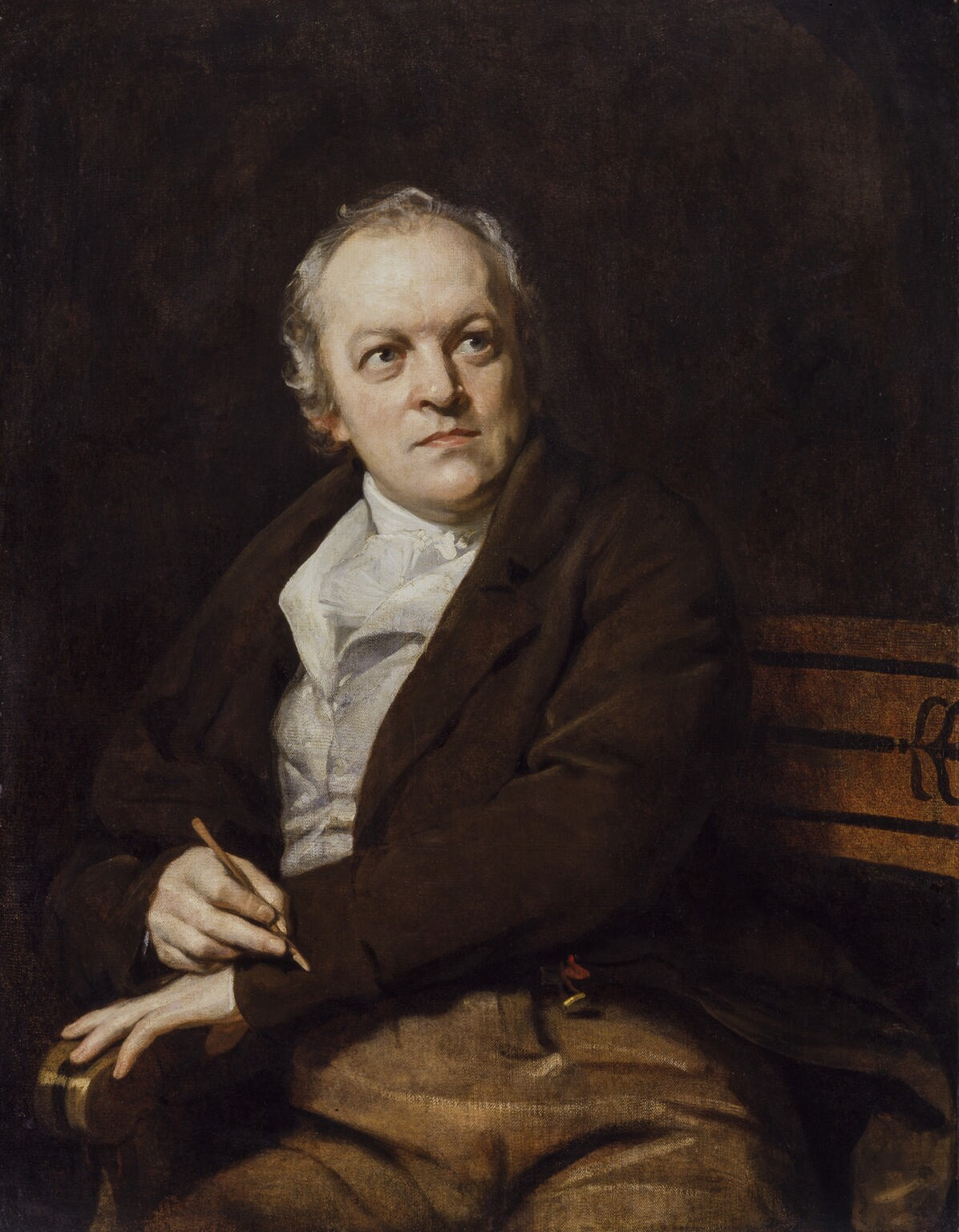


Life and major works
Blake trained as an engraver and began publishing in the 1780s. His early volume Poetical Sketches introduced a distinctive voice, and he went on to create companion pieces that mixed verse with hand-colored engravings. Notable works include:
- Songs of Innocence and of Experience — short lyrics contrasting naive and corrupted states of being.
- The Marriage of Heaven and Hell — a provocative prose-poem challenging orthodox moral categories.
- Jerusalem and other poems — the lines beginning “And did those feet in ancient time” were later set to music as a hymn often called "Jerusalem" by the composer Hubert Parry.
Techniques and style
Blake developed a method of illuminated printing that allowed him to print text and image from the same engraved plate and then color each impression by hand. His visual style ranges from delicate, linear etchings to dramatic, symbolic scenes that illustrate or comment on his poetry. He also produced separate paintings and prints: both the technical skill of an engraver and a persistent interest in spiritual and mythic subject matter are evident throughout his output.
Themes and imaginative system
Central to Blake's work are themes of imagination, personal vision, and resistance to oppressive institutions. He composed a sequence of prophetic books that develop a private mythology of archetypal figures and cosmic conflicts; names such as Urizen and Los appear in that system as personified principles. Across his poems and plates, Blake explored innocence and experience, freedom and constraint, and the relation of the individual soul to society and authority.
Reception and legacy
During his lifetime Blake earned little public recognition and supported himself through occasional commissions and print work. Over the nineteenth and twentieth centuries his reputation grew; critics and artists celebrated his originality and moral intensity. As a sign of later esteem he was included in popular rankings of influential Britons—he was voted 38th in a broad public poll of the "100 Greatest Britons" organized by the BBC (BBC) in 2002. Today Blake is studied both for his poetry and for the radical integration of text and image that makes his books distinctive.
Further reading and examples
Readers often begin with the paired poems "The Lamb" and "The Tyger" from Songs, the prose-poem The Marriage of Heaven and Hell, and the illuminated plates collected under titles such as Jerusalem. Collections, facsimiles and modern editions make Blake’s plates and poems accessible to readers interested in the interplay of visual art and poetic invention.
Questions and answers
Q: Who was William Blake?
A: William Blake was an English poet, visionary, painter, and printmaker who lived from 1757 to 1827.
Q: Where was he born and died?
A: He was born and died in London.
Q: How well-known was he during his lifetime?
A: During his lifetime he wasn't very well known.
Q: What is Blake's most famous poem?
A: His most famous poem is "And did those feet in ancient time".
Q: Who put the poem to music over 100 years later?
A: Hubert Parry put the poem to music over 100 years later.
Q: What is the hymn called that resulted from this collaboration?
A: The hymn resulting from this collaboration is called "Jerusalem".
Q: In what year did a poll of the 100 Greatest Britons rank William Blake as 38th greatest Briton? A:William Blake was ranked 38th in a poll of the 100 Greatest Britons organised by the BBC in 2002.
Related articles
Author
AlegsaOnline.com William Blake: English poet, artist and visionary (1757–1827) Leandro Alegsa
URL: https://en.alegsaonline.com/art/108193
Sources
- blakesociety.org : "Blake & London"