
Georgetown, Connecticut
Georgetown is a small village and census-designated place in Fairfield County, Connecticut, known for its historic mill village character, multi-town boundaries, and mix of rural and suburban features.
Georgetown is a village and census-designated place in Fairfield County, Connecticut, United States. It is a compact community with a population recorded as 1,805 at the 2010 census. Georgetown is often described as a mill village and residential neighborhood that serves as a local center for several surrounding towns.
Image gallery
4 Images

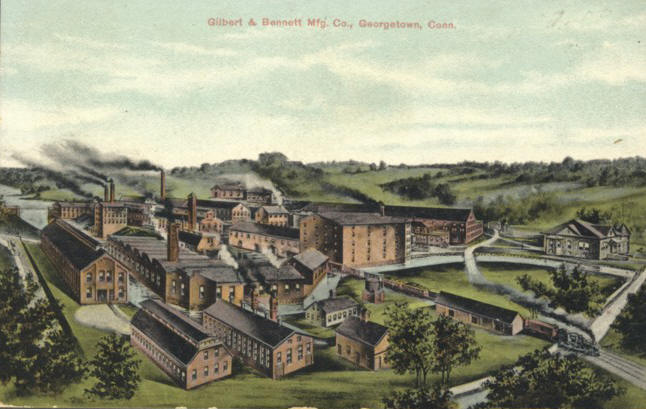

Geographic setting and boundaries
Georgetown lies in the western part of Connecticut and is notable for spanning the municipal borders of more than one town. The settlement has a mixed landscape of small commercial blocks, residential streets, ponds, and former mill properties. Its location places it within commuting distance of larger Connecticut towns and the New York metropolitan area, giving it both rural and suburban influences.
Characteristics and community
- Scale: a small, close-knit village with population and services sized for local needs.
- Built environment: a concentration of 19th- and early 20th-century buildings associated with village and mill life.
- Land use: residential neighborhoods, local shops, and former industrial sites that shape the village’s character.
History and development
The village developed around water-powered industry and small-scale manufacturing that used local streams and ponds. Over time, those industrial activities diminished and many mill properties were repurposed or conserved. Historic architecture and the layout of the village reflect its industrial past and subsequent evolution into a residential and service center for the surrounding towns.
Today and significance
Today Georgetown is valued for its historic village atmosphere, scenic setting, and community institutions. Local planning and preservation efforts have focused on maintaining the character of the village while accommodating modern uses. Residents and visitors appreciate the small-scale commercial areas, access to nearby open space, and the sense of history visible in the built environment.
Notable facts and distinctions
- Georgetown functions as a shared village spanning municipal lines, which is less common among Connecticut villages.
- The community’s identity is shaped by its mill-village past and subsequent preservation and redevelopment activity.
- As a census-designated place, Georgetown is defined for statistical purposes but remains part of the towns that contain it.
For more localized information about Georgetown’s geography, history, and community resources, consult municipal or regional planning documents and local historical organizations. Additional references and maps are available through official town pages and regional archives.
Census-designated place details • County overview • State information • National context • Census data
Related articles
Author
AlegsaOnline.com Georgetown, Connecticut Leandro Alegsa
URL: https://en.alegsaonline.com/art/38330