
Generation (family, social cohort, and technological waves)
A generation groups individuals or creations by the time they originate. Covers family-line generations, demographic cohorts, biological replacement, and successive versions in technology and products.
Overview
A generation is a grouping based on time of origin. The term is commonly used in family trees to indicate one level of descent, in social science to describe cohorts of people born in a similar span of years, in biology to denote successive reproductive cycles, and in industry to mark successive versions or waves of products. Although the basic idea is chronological grouping, how a generation is defined and measured depends on context and purpose.
Image gallery
4 Images


Definitions and contexts
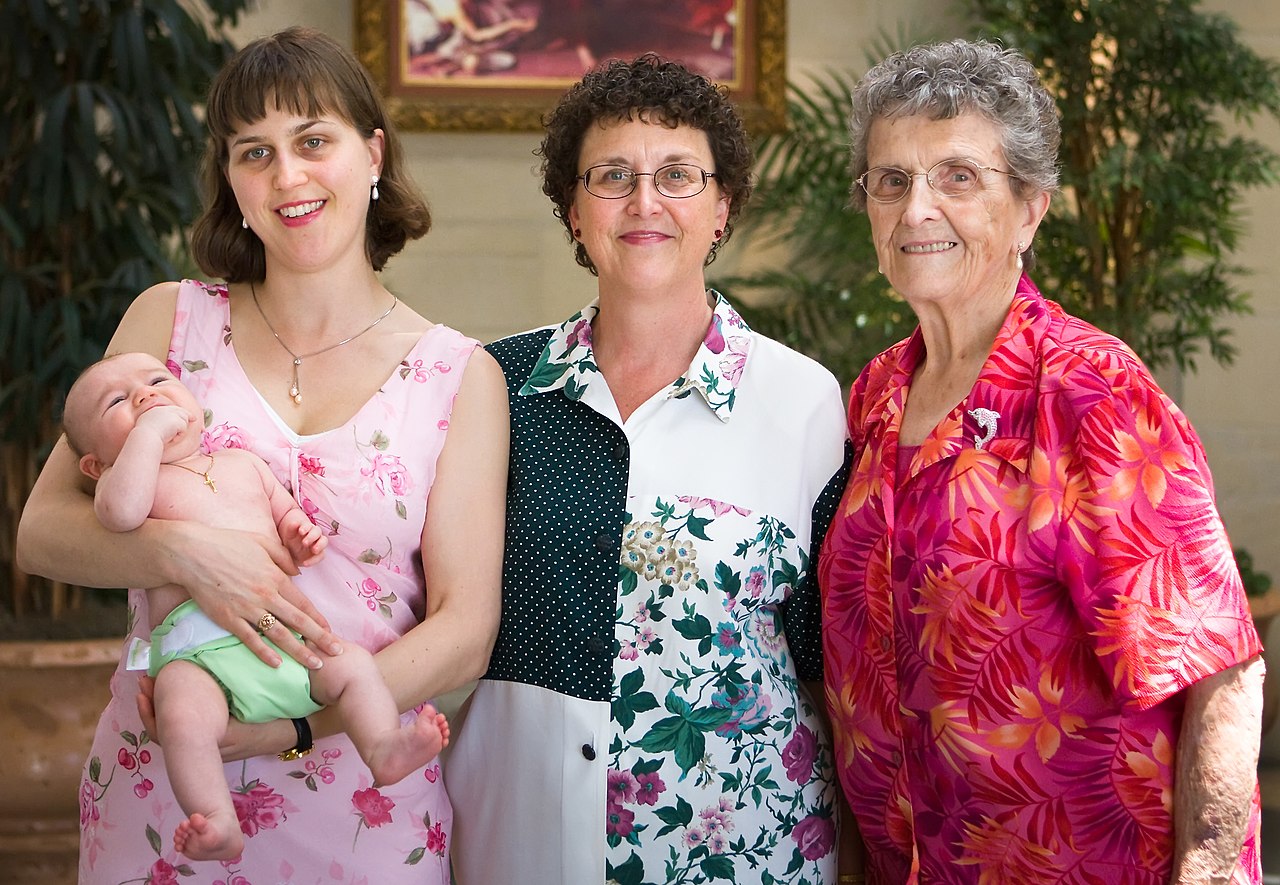
- Familial generation: all individuals at a single level of descent in a family tree, such as siblings and cousins; genealogical charts often label these levels to show relationships and inheritance (family tree).
- Demographic generation: a cohort of people born during a specific period, often spanning roughly 15–30 years; these cohorts are used in sociology, history, and marketing to study attitudes, behaviors, and population change.
- Biological generation: one reproductive cycle from parent to offspring; in ecology and genetics it helps measure population turnover and evolutionary rates.
- Technological or product generation: successive models or editions of a product, where each generation represents an update, redesign, or new architecture.
Characteristics and measurement
In demographic work, a generation is rarely a precise interval; researchers choose boundaries that best illuminate social change, such as periods associated with major events, economic shifts, or cultural movements. The average time between parent and child—often called the generational interval—affects how quickly a population ages and how cultural traits pass on. In technology, generations are defined by technical specifications or design milestones rather than biological timing.
History and development of the concept
The word has long roots in language and genealogy; historically it referred to birth and descent. Over the 20th century, social scientists formalized generational analysis to explain differences between cohorts shaped by shared experiences (wars, economic crises, technological change). At the same time, marketers and product developers adopted the term to communicate major product updates as new "generations."
Uses and importance
Understanding generations helps in fields as varied as public policy, education, workforce planning, and product strategy. Demographers use cohort analysis to forecast population needs; businesses segment customers by generation to tailor products; geneticists track generational intervals when studying inheritance patterns. Recognizing generation boundaries can clarify how attitudes and behaviors shift over time.
Distinctions and common confusions
- Generational labels (for example, those applied to groups of people) are heuristic, not scientific absolutes; they vary by country and researcher.
- Family generation is a matter of lineage position, whereas demographic generation is defined by birth years or shared experiences.
- Technological "generations" are marketing or engineering classifications and do not map directly to human generational spans.
For practical genealogy resources and explanations of family-level usage, see family tree materials. For social and demographic discussions that compare cohorts such as siblings and cousins, see related overviews and studies (generational studies).
Related articles
Author
AlegsaOnline.com Generation (family, social cohort, and technological waves) Leandro Alegsa
URL: https://en.alegsaonline.com/art/37971