
Gosei (fifth-generation Nikkei)
Gosei refers to fifth-generation descendants of Japanese emigrants (Nikkei), primarily in the Americas, and denotes patterns of cultural change, language, identity and demographic development among these communities.
Overview
Gosei (Japanese: 五世, "fifth generation") is a term used in Japanese and Nikkei communities to identify people whose ancestry traces to immigrants born in Japan but who themselves are of the fifth generation born outside Japan. The label is most commonly applied in countries of North America and South America, where large waves of Japanese migration produced multi‑generational communities. The concept is both genealogical and cultural: it maps family lineage and also signals a stage in assimilation, cultural change, and identity formation.
Image gallery
1 Image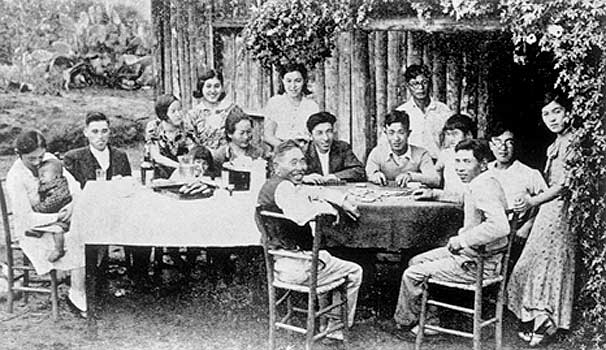
Generational terms and meaning
Public and academic use of generational labels follows a sequence: the first immigrants are called Issei, their children born abroad are Nisei (second generation), grandchildren are Sansei, great‑grandchildren are Yonsei, and the next generation are Gosei. These terms are shorthand in studies of ethnicity, immigration history, and community life, and are used in community organizations, genealogies and cultural programming. For related variants and other uses, see other entries.
Characteristics and identity
As a rule, Gosei tend to be more linguistically and culturally distant from Japan than earlier generations. Many Gosei grow up speaking the dominant language of their birth country rather than Japanese, experience higher rates of intermarriage, and inherit cultural knowledge mediated through several generations. Nevertheless, levels of cultural retention vary widely: some Gosei maintain traditions, language study, religious practices, or community ties, while others identify mainly with the national culture where they live. Scholars and community leaders often emphasize that labels like Gosei describe tendencies, not uniform experiences.
History and demographics
Large Japanese migrations to the Americas began in the late 19th and early 20th centuries, producing established Nikkei populations in countries such as the United States, Canada, Brazil, and Peru. Over time these communities have produced successive generations. The presence of Gosei reflects both the passage of time since initial migration and demographic processes—birth rates, migration patterns, and assimilation. Researchers in both the origin country and host societies have documented changes in language use, occupational patterns, and social integration among later generations; see studies conducted in Japan and elsewhere for comparative perspectives (Japan research, United States research).
Cultural significance and examples
Gosei figures appear in many arenas: civic life, arts, business, and the institutions of diaspora communities. Cultural festivals, language programs, and alumni associations sometimes offer targeted activities for younger Nikkei generations to explore ancestry. In countries with strong Nikkei presence, such as Brazil or the United States, Gosei may participate in hybrid cultural practices that blend elements inherited from older generations with the mainstream culture of their home country. Their experiences can illuminate broader questions about immigrant incorporation, identity transmission, and multiculturalism.
Distinctions and ongoing study
It is important to distinguish genealogical generation from cultural affinity: someone labeled Gosei by descent may nonetheless feel a close connection to Japanese culture, while another person with the same ancestry may not. Academic interest in Gosei focuses on language maintenance, generational transmission of memory (for example, wartime or migration stories), and intergenerational social networks. Comparative work across countries highlights how national policies, local community size, and historical circumstances shape the Gosei experience.
Related topics and further reading
- Terminology and transliteration
- Patterns of immigration
- Emigrant communities and institutions
- Issei — first generation
- Sansei — third generation
- Family lineage and genealogy
- Nikkei in South America
- Nikkei in North America
- Academic studies in the United States
- Other uses of the term
For community organizations, cultural centers, and academic projects that focus on later generations of Nikkei, local and national archives often provide oral histories and genealogical resources to better understand how the Gosei identity has developed over time.
Questions and answers
Q: What does the term Gosei mean?
A: Gosei (五世, literally, "fifth generation") is a Japanese language term used to name the children born to Japanese people who immigrated.
Q: Who are Issei and Nisei?
A: The emigrants or immigrants who were born in Japan are called Issei; and their children born in the new country are called Nisei (second generation).
Q: What do you call the grandchildren of Issei?
A: The grandchildren of Issei are called Sansei (third generation).
Q: How about great-grandchildren of Issei?
A: The great-grandchildren of Issei are called Yonsei.
Q: Who are Gosei?
A: The children of at least one Yonsei parent are called Gosei.
Q: What is recognized about the character and uniqueness of Gosei? A: The character and uniqueness of the Gosei is recognized in its social history.
Q: Where is academic research being conducted on Gosei? A: Academic research on Gosei is being conducted in both the United States and Japan.
Related articles
Author
AlegsaOnline.com Gosei (fifth-generation Nikkei) Leandro Alegsa
URL: https://en.alegsaonline.com/art/39808
Sources
- books.google.com : "Japanese American Women"
- books.google.com : The Japanese in Latin America, p. 291
- books.google.com : American Buddhists in Social Context, p. 110
- u-gakugei.ac.jp : "Socioeconomic Status, Acculturation, Discrimination, and Health of Japanese Americans: Generational Differences"
- mofa.go.jp : Japan-Mexico Foreign Relations
- mofa.go.jp : "Japan-Brazil Relations"
- books.google.com : Many Petals of the Lotus: Five Asian Buddhist Communities in Toronto, p. 36.
- news.bbc.co.uk : "Fujimori Secures Japanese Haven,"
- discovernikkei.org : "What is Nikkei?"
- americanart.si.edu : "The Art of Gaman: Arts and Crafts from the Japanese American Internment Camps, 1942 - 1946", Yoshitsuchi Ikemoto
- books.google.com : Rising Sons: The Japanese American GIs Who Fought for the United States in World War II, p. xv.
- encyclopedia.densho.org : "Issei"
- discovernikkei.org : "Voices of Chicago: Day of Remembrance 2006,"
- books.google.com : p. 59
- labeurb.unicamp.br : "Japonês,"