
Gelnhausen: history, landmarks and regional profile
Gelnhausen is the administrative centre of the Main-Kinzig district in Hesse, Germany. A medieval-founded town with preserved architecture, regional transport links and local cultural life.
Overview
Gelnhausen is a small historic town that serves as the administrative seat of the Main-Kinzig-Kreis. It lies in the central German state of Hesse and is part of modern Hessen within Germany. The town sits in the Kinzig valley and functions as a local service and civic centre for surrounding villages and countryside.
Image gallery
3 Images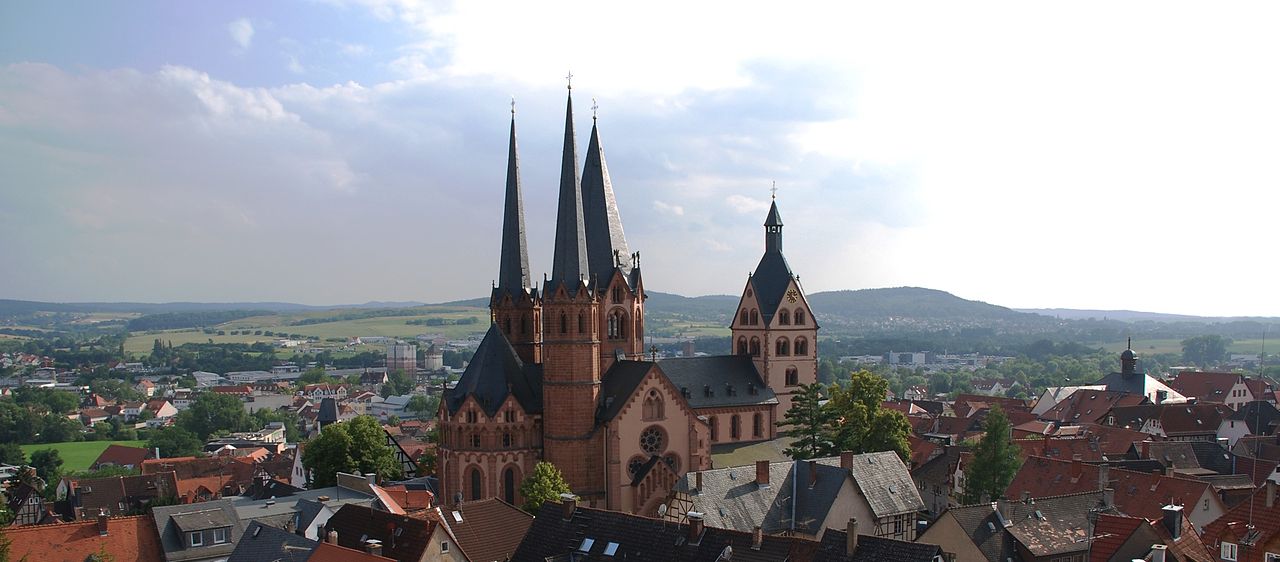


Characteristics and layout
The core of Gelnhausen retains a compact medieval plan with a market square, narrow streets and examples of traditional timber-framed buildings. The urban area includes residential neighbourhoods, administrative buildings and green belts that approach nearby low mountain ranges. The river Kinzig passes through the town and has shaped local development and transport routes.
History and development
Gelnhausen has roots in the high Middle Ages and developed around an imperial foundation and fortified complex. Over centuries it experienced the typical transitions of Central European towns: growth in medieval times, impact from regional conflicts, changing territorial control and later integration into the modern state of Hesse. Industrial-age connections such as rail links and roads expanded its economic role in the 19th and 20th centuries.
Landmarks and cultural life
The town is known for its preserved medieval features and civic monuments. Key sights include an imperial palace site, parts of the old fortifications, churches and a historic marketplace. Local museums, periodic markets and cultural events highlight the town’s heritage and attract regional visitors.
Economy, transport and importance
Today Gelnhausen functions as an administrative, commercial and transport hub for the surrounding district. It is served by regional rail services and connections to the German autobahn network, providing access to larger urban centres in Hesse. Local economic activity mixes public administration, retail, small industry and services oriented to nearby rural areas.
Notable facts
- Gelnhausen combines a medieval townscape with modern administrative functions.
- Its location in the Kinzig valley makes it a gateway to nearby natural areas.
- The town maintains regular cultural programmes and markets that reflect regional traditions.
Related articles
Author
AlegsaOnline.com Gelnhausen: history, landmarks and regional profile Leandro Alegsa
URL: https://en.alegsaonline.com/art/37864
Sources
- destatis.de : "Alle politisch selbständigen Gemeinden mit ausgewählten Merkmalen am 31.12.2018 (4. Quartal)" · web.archive.org
- statistik.hessen.de : "Bevölkerung der hessischen Gemeinden"
- commons.wikimedia.org : Gelnhausen