
Gan language (Gan Chinese)
Gan is a Sinitic language spoken mainly in Jiangxi and parts of southern China. It comprises several regional dialect groups and is linguistically distinct from Mandarin and other Chinese varieties.
Overview
Gan (often called Gan Chinese) is a group of related Sinitic lects spoken primarily in the province of Jiangxi and in adjoining areas of southern China. Estimates of the number of speakers vary; commonly cited figures range from about 20 million to several tens of millions. Gan is treated by linguists as one of the major branches of the Chinese languages and is not mutually intelligible with Standard Mandarin.
Image gallery
3 Images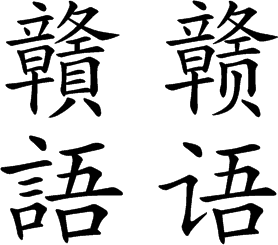


Origins and classification
Like other Chinese languages, Gan developed from Old and Middle Chinese through local innovation and contact. It occupies an intermediate position in the dialect geography of southeastern China, sharing some historical features with neighbouring branches such as Hakka and Wu but maintaining its own distinctive phonology and vocabulary. Academic classifications typically place Gan within the Sinitic subgroup of the Sino-Tibetan family.
Geographic distribution and speakers
Gan is centered on Jiangxi province and is also spoken in parts of nearby provinces. Regional communities appear across Hunan, Hubei, Anhui, Fujian and Guangdong, among other areas; these distributions reflect migration and historical administrative boundaries. For more on provincial extent see maps and references for neighboring provinces.
Dialects and internal diversity
Gan is internally diverse and is commonly divided into several regional groups. Many sources identify about nine major dialect groups, with the Nanchang (Nanchang/Nangchang) variety often used as a representative or prestige regional standard. See summaries of the different dialect groups for finer distinctions.
Typical linguistic features
- Phonology: Gan dialects often preserve distinctions from Middle Chinese that Mandarin has lost and can feature complex tone systems and conservative consonant contrasts.
- Vocabulary: Local lexicon includes words and expressions not found in Standard Mandarin; some items reflect older strata of Chinese or local substrate influence.
- Mutual intelligibility: Speakers of different Gan varieties can face significant internal variation; communication with Mandarin speakers is generally limited without bilingualism.
Role and cultural context
Gan functions primarily as a spoken family of varieties used in daily life, local media, folk literature and performance traditions. Standard Mandarin is the language of formal education and official media, so Gan is most visible in regional cultural contexts, community life and informal communication.
Notable facts—Gan is recognized for its regional importance in Jiangxi and for contributing to the linguistic diversity of Sinitic languages. Its precise boundaries, number of speakers and internal taxonomy are subjects of ongoing linguistic research and may be presented differently across sources.
Related articles
Author
AlegsaOnline.com Gan language (Gan Chinese) Leandro Alegsa
URL: https://en.alegsaonline.com/art/37438
Sources
- glottolog.org : "Gan Chinese"