
American handball (court handball)
A wall game played with the hand using a small rubber ball. American handball has one‑, three‑ and four‑wall forms, played recreationally and competitively with singles and doubles formats.
American handball, often called court handball, is a sport in which players strike a small rubber ball with a bare or gloved hand so that it rebounds from one or more walls and can be returned by the opponent. Rallies continue until a player fails to return the ball properly or allows it to bounce more than the permitted times. The game exists in singles and doubles forms and is played both indoors and outdoors.
Image gallery
4 Images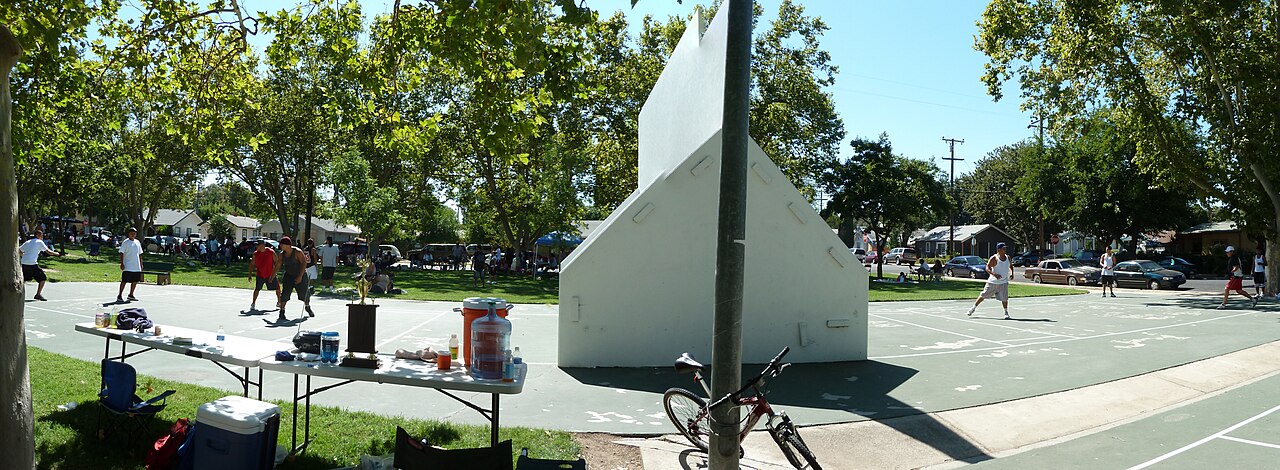


Court types and equipment
There are several common court layouts: one‑wall, three‑wall and four‑wall courts. Surfaces and back walls vary by venue but share the essential feature that a struck ball must hit a designated wall before touching the floor. Players usually wear hand protection—tape or a padded glove—and use a hard rubber ball specially made for handball.
Basic play and rules
A match begins with a serve; the receiver must return the ball after it strikes the front wall. Specific scoring systems and serve rotations differ by tournament and by whether the game is recreational or sanctioned competition. Typical rally rules emphasize that the ball must be struck cleanly with the hand and may only bounce a limited number of times before the strike.
History and development
The sport is a member of the broader fives family and shares roots with hand‑striking wall games from Europe and Britain. It developed in North American cities and playgrounds where available walls and simple equipment made it accessible. Organized competition and national governing structures grew as clubs and schools adopted the game.
Variations and relationships
- One‑wall handball is portable and popular on beaches and parks.
- Three‑ and four‑wall play are common in indoor clubs and tournaments.
- American handball is distinct from team handball (European handball) and from other wall sports such as pelota.
For a general context within wall games see American versions, and for background on related fives games see the fives family. Competitive play continues to be organized regionally and nationally, and the sport remains a staple of community recreation and specialized athletic training.
Tags
Related articles
Author
AlegsaOnline.com American handball (court handball) Leandro Alegsa
URL: https://en.alegsaonline.com/art/3415
Sources
- handballcity.com : handballcity.com
- handball.ie : handball.ie
- jewsinsports.org : jewsinsports.org/