
Fritz Hellwig (1912–2017) — German politician and European Commissioner
German CDU politician and European Commissioner for Research, Technology and Information Distribution (1967–1970); earlier member of the Nazi Party and SA; later involved in postwar German and European public life.
Overview
Fritz Hellwig (3 August 1912 – 22 July 2017) was a German politician and public figure who served in national and European institutions during the mid-20th century. Born in Saarbrücken, he became active in public life before World War II, underwent a postwar career in the Christian Democratic Union (CDU), and was a member of the European Commission in the late 1960s. His long life and career attracted attention both for his contributions to European integration and for scrutiny of his earlier political affiliations.
Image gallery
1 Image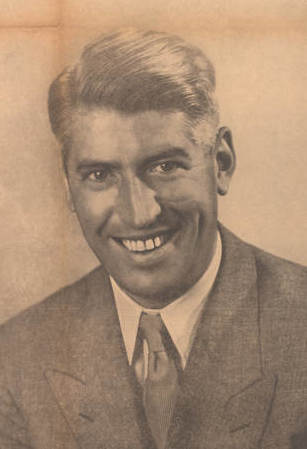
Early life and wartime affiliation
Hellwig was born in 1912 in what is now southwestern Germany. Like many German contemporaries, his early adult years coincided with tumultuous political change. Records show that before and during the Second World War he was a member of the Nazi Party and of the Sturmabteilung (SA). These affiliations later became a topic of public discussion as he continued a public career in postwar Germany and Europe.
Postwar career and European Commission
After the war Hellwig joined the Christian Democratic Union (CDU) and pursued roles in public administration and politics. He served as a European Commissioner with responsibility for research, technology and information distribution from 1967 to 1970, a period when the European Communities were expanding cooperation in science and technology. His portfolio placed him at the intersection of policy areas that would grow in importance for later European research programs.
Contributions and areas of responsibility
- Research and technology: Oversaw early Community-level initiatives aimed at coordinating scientific and technological efforts across member states.
- Information distribution: Worked on policies related to sharing technical and scientific information between national bodies and European institutions.
- European integration: Part of a generation of officials who helped shape institutional cooperation during the 1960s.
Later life, legacy and controversies
Hellwig lived to an advanced age, celebrating his 100th birthday in August 2012 and passing away in Berlin on 22 July 2017 at the age of 104 from cardiopulmonary arrest. His career illustrates several wider themes of 20th‑century German history: the transition from authoritarian rule to democratic politics, the reintegration of individuals into public life after the war, and the development of European institutions. At the same time, his earlier membership in Nazi organizations has been a focal point in assessments of his life and public service.
Notable facts
- Born: 3 August 1912, Saarbrücken (Saarbrücken).
- Wartime affiliations: member of the Nazi Party and the SA.
- European Commission: Commissioner for Research, Technology and Information Distribution (1967–1970).
- Death: 22 July 2017 in Berlin, aged 104.
For further reading on postwar German politics and the development of European research cooperation, consult general histories of the CDU and the European Communities and institutional accounts of the European Commission.
Related articles
Author
AlegsaOnline.com Fritz Hellwig (1912–2017) — German politician and European Commissioner Leandro Alegsa
URL: https://en.alegsaonline.com/art/36772
Sources
- saarland.de : "Prof. Dr. Fritz Hellwig wird 100 Jahre"
- sueddeutsche.de : Ein Europäer