
Freistadt District (Upper Austria): geography, administration and history
Freistadt District is an administrative district in Upper Austria's Mühlviertel region. It comprises 27 municipalities with varied landscape, history, economy and cross‑border links to the Czech Republic.
The Freistadt District is an administrative district in the state of Upper Austria, located in the Mühlviertel highlands of central northern Austria. Its administrative centre and largest town is Freistadt. The district occupies a predominantly rural area of forested hills, small valleys and market towns and shares a portion of its northern boundary with the Czech Republic, which shapes local cross‑border relations and commuting.
Image gallery
1 Image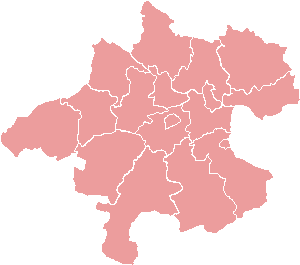
Geography and landscape
Topographically the district forms part of the granite and gneiss uplands typical of the Mühlviertel. Rolling hills and wooded plateaux alternate with agricultural valleys and small streams. The elevation is moderate and the climate continental, with cooler summers and colder winters than the adjacent lowlands. These natural conditions favour mixed farming, managed forestry and outdoor recreation such as hiking and cycling.
Administrative structure
Administratively the Freistadt District comprises 27 municipalities. These are organised as a mixture of statutory towns, market towns and rural communities, each governed by a local council responsible for services, planning and local culture. The district authority co‑ordinates regional functions such as school administration, social services and infrastructure planning, acting as the link between municipal councils and the state government.
History and development
Settlements in the district have medieval origins; Freistadt itself grew as a fortified marketplace and regional hub. Over centuries the area remained largely rural while benefiting from trade routes between Austrian lands and Bohemia. Administrative boundaries changed through the Habsburg period into modern Austrian organisation, and many villages retain historic centres and traditional building forms that reflect long settlement continuity.
Economy, transport and cross‑border links
The local economy combines agriculture and forestry with small and medium-sized industry, crafts and service businesses. Tourism based on nature, outdoor activities and historic townscapes contributes seasonally. Road connections link the district to Linz and other regional centres, and crossings to neighbouring Czech regions support economic ties, shopping and cross‑border cooperation initiatives aimed at regional development.
Culture and notable facts
Freistadt District preserves Upper Austrian cultural traditions, village festivals and historic architecture such as market squares and parish churches. Local museums and conservation efforts document rural life, historic crafts and natural heritage. For administrative details and municipal listings consult district resources at district information or the state portals for Upper Austria. Further information on regional cooperation and tourism can be found on regional overview pages and cross‑border programmes (regional overview).
Related articles
Author
AlegsaOnline.com Freistadt District (Upper Austria): geography, administration and history Leandro Alegsa
URL: https://en.alegsaonline.com/art/36562