
Free content: definition, principles, licenses and distinctions
An overview of free (libre) content: freedoms, legal mechanisms, distinctions from gratis and public domain, special issues for software and media, and guidance on licensing choices.
Overview
Free content, often called libre content, denotes creative works that users may legally use, copy, modify and redistribute with only limited restrictions. The emphasis is on freedom of action rather than price: a free work can be sold or given away, but recipients retain broad rights to continue sharing, adapting and building on it. The original creator normally retains copyright while granting many permissions to others through a legal instrument.
Image gallery
1 Image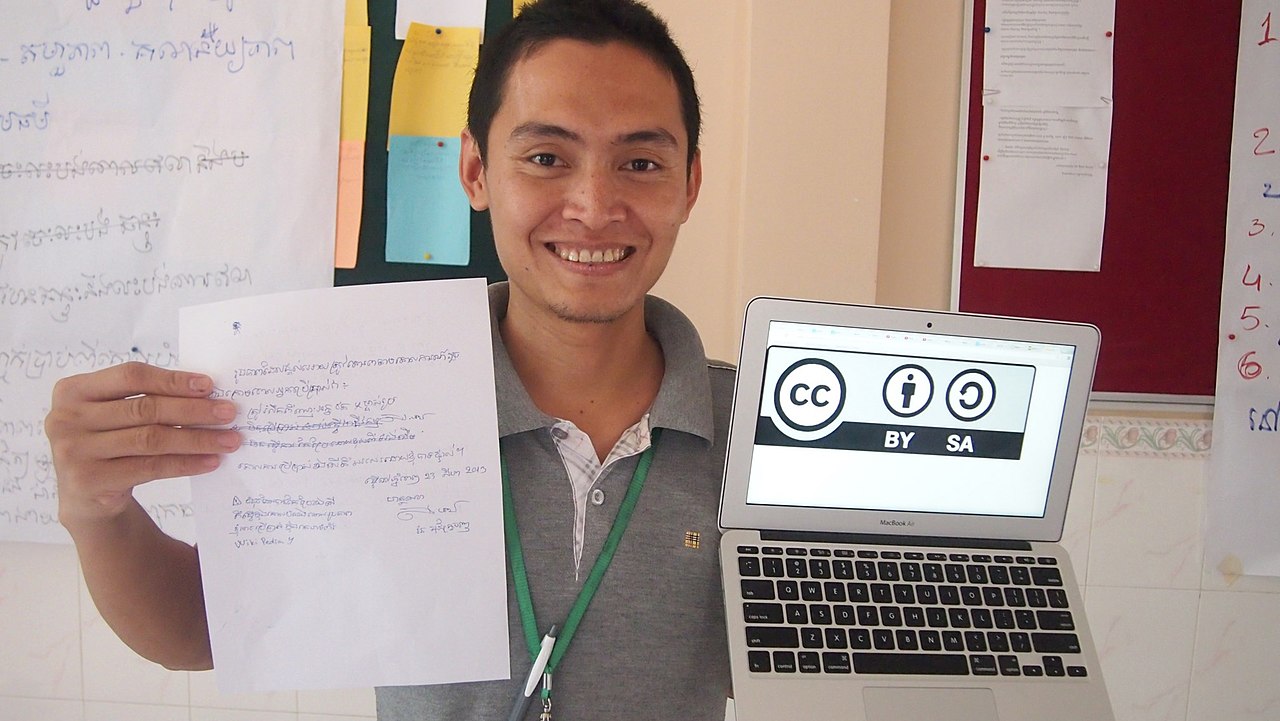
Core freedoms
Most definitions of free content describe a set of practical freedoms that recipients should have. Typical freedoms include:
- the freedom to access and use the work for any purpose;
- the freedom to copy and redistribute exact reproductions;
- the freedom to modify, adapt or transform the work;
- the freedom to distribute derivative works under compatible terms.
These freedoms are usually expressed and enforced by a license or a public-domain dedication, and the precise scope of each freedom depends on the chosen legal terms and local law.
Licenses and legal mechanisms
Creators relying on copyright commonly use licenses to grant freedoms while retaining some conditions. Permissive licenses allow nearly unrestricted reuse with minimal obligations; reciprocal licenses, often called copyleft, require that derivatives be offered under the same or compatible terms. Creative Commons-style licenses are widely used for text, images and other media, and software projects typically use licenses tailored to programs. When reading or choosing a license, consider requirements for attribution, redistribution, compatibility and any patent or trademark clauses. For background on how copyright law interacts with these options see general resources on copyright.
Software and the importance of source materials
Free software is a special case because practical freedom to study and modify a program depends on access to its readable and editable source code. If only executable, compiled files are provided, the work may be unusable as free software in practice. For other media, the equivalent of source materials can include layered images, original project files, multitrack audio stems or editable manuscript files. Making editable forms available increases the real-world ability to modify and reuse works, even when a license does not strictly require it. For more on software freedom and community projects see materials about free software.
Public domain, gratis and common distinctions
It is important to distinguish free (libre) from gratis. 'Gratis' indicates no monetary cost but does not imply permission to modify or redistribute. Public domain means no copyright restrictions apply at all, while a free-licensed work retains copyright but grants broad permissions. Not all widely used license conditions are compatible with every free-content definition: restrictions such as 'non-commercial' or 'no derivatives' limit freedom and may disqualify a work from being considered free by many definitions.
Choosing a license and compatibility issues
When selecting a license, creators should weigh goals such as ease of reuse, protection of downstream freedoms, and compatibility with other works. Reciprocal terms preserve freedom across generations of derivatives but can limit mixing with permissive or non-free works. License compatibility—whether two licenses allow combining works—can be a practical constraint for collaborative projects and aggregated collections.
Uses, benefits and limits
Free content supports education, cultural exchange, preservation and collaborative innovation. It enables communities to adapt materials to local needs and businesses to build services on shared resources. Limitations and challenges include ensuring attribution, handling orphan works, addressing jurisdictional differences, and managing moral-rights provisions in some legal systems. Some projects adopt additional policies and documentation to clarify expectations about source materials, attribution practice and re-release obligations.
Examples and further reading
Well-known free-content initiatives demonstrate different approaches in practice. Collaborative encyclopedias and open-licensed educational resources show how communities curate and adapt material; some artists release music or images under licenses that permit remixing and commercial use. A prominent free-content encyclopedia is Wikipedia. For practical guidance on licensing terms and how to publish or reuse free works, consult overview materials about licenses and best practices; see also general license texts and project policies for specifics on compatibility and attribution under different terms, including standardized license repositories and summaries at authoritative sources on licenses.
Related topics: free software, licensing and copyright policy, and discussions of copyleft approaches in cultural works.
Related articles
Author
AlegsaOnline.com Free content: definition, principles, licenses and distinctions Leandro Alegsa
URL: https://en.alegsaonline.com/art/36454
Sources
- gnu.org : "Free Software and Free Manuals"