
Frogger: 1981 arcade game and cultural classic
Frogger is a 1981 arcade video game by Konami in which the player guides a frog across roads and rivers. It spawned many ports, sequels, and remakes and remains a touchstone of early arcade design.
Frogger is a seminal arcade video game first released in 1981 by Konami. The player controls a frog whose objective is to travel from the bottom of the screen to safe "home" locations at the top. Success requires careful timing and pattern recognition as the frog crosses a busy roadway and navigates a hazardous river. The game's straightforward premise and rising difficulty made it an instant hit in arcades and later on home systems.
Image gallery
4 Images

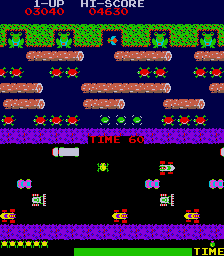

Gameplay
Each stage is split into distinct zones. First, the player must traverse a road filled with moving vehicles; later, the river section requires hopping across floating objects such as logs and turtles while avoiding water hazards and predators. Movement is deliberate: one step per control input, which emphasizes timing over speed. Mistakes such as being struck by a vehicle, falling into the water, or lingering too long on an unsafe tile cause the loss of a life and require restarting that frog.
Typical obstacles and mechanics
- Traffic of different sizes and speeds on the road segment.
- Moving platforms in the river: logs, turtles (some of which submerge), and other floaters.
- Predators and hazards like snakes, alligators, and water; some creatures will occupy home spaces.
- Time limits and a small number of lives that raise the stakes for each attempt.
Development and release
Designed for arcade cabinets, Frogger used simple controls and bright, easily readable graphics that suited crowded arcade environments. Its accessibility—easy to learn but hard to master—helped it cross cultural and platform boundaries. Frogger was rapidly ported to a wide variety of home computers and consoles, and it inspired imitators and clones that adopted its core mechanic of navigating moving hazards.
Legacy and influence
Over the decades Frogger has appeared in many licensed versions, sequels, and reimaginings for home consoles, handheld devices, and mobile phones. Its influence is evident in later games that emphasize timing, pattern learning, and lane-based obstacle avoidance. Frogger has been referenced in popular culture, used in educational contexts to teach reflexes and planning, and remains a frequently cited example of early arcade design.
Notable facts and distinctions
- Frogger's simple objective and discrete level structure make it a clear example of arcade-era design focused on short, repeatable plays.
- The game balances risk and reward: reaching a home spot grants points and progress, while occupying special tiles or collecting items provides bonus scoring.
- For historical and catalog details, see manufacturer and preservation resources such as developer archives or curated databases with platform lists.
Today Frogger is remembered both for its original arcade presence and for the many adaptations that kept the concept alive across generations of players. Its clear rules, escalating challenge, and memorable premise continue to make it an instructive case study in game design and an enduring piece of video game history.
Questions and answers
Q: What is Frogger?
A: Frogger is an arcade video game made in 1981 by Konami.
Q: Who does the player play as in Frogger?
A: The player must play as Frogger to get to home.
Q: What obstacles must the player cross in Frogger?
A: The player must cross a road and a river.
Q: What happens if the player is hit by a car or falls into the water in Frogger?
A: If the player is hit by a car or falls into the water, the player must start over.
Q: Is Frogger a popular game?
A: Yes, Frogger is very popular.
Q: Are there newer Frogger games?
A: Yes, there are many newer Frogger games.
Q: Who made Frogger?
A: Frogger was made in 1981 by Konami.
Related articles
Author
AlegsaOnline.com Frogger: 1981 arcade game and cultural classic Leandro Alegsa
URL: https://en.alegsaonline.com/art/36794