
Forearm: anatomy, function, and clinical significance
Overview of the forearm — bones, muscle compartments, nerves, vessels, functions (grip, pronation/supination) and common clinical issues such as fractures and nerve entrapment.
Overview
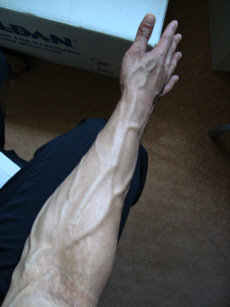
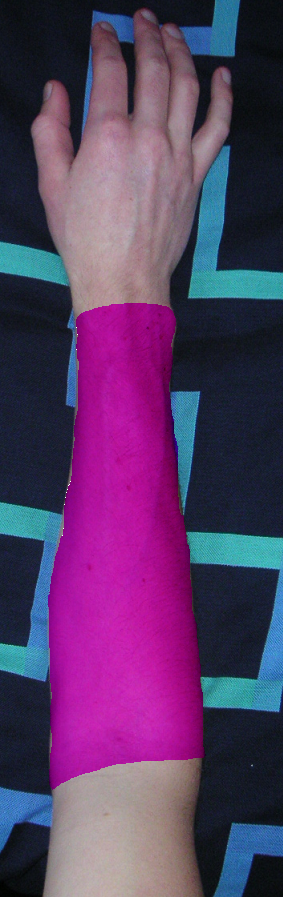
The forearm is the segment of the human arm between the elbow and the wrist. It contains two long bones, the radius and ulna, and a complex arrangement of muscles, nerves and blood vessels that enable hand and wrist movement. Many of its muscles act on the fingers and thumb, providing both strength and dexterity for daily tasks.
Image gallery
10 Images



Structure
The forearm is commonly described in anterior (flexor) and posterior (extensor) compartments separated by the interosseous membrane and fascial layers. Superficial and deep muscle groups originate on the humerus and forearm bones, allowing diverse actions: wrist flexion/extension, finger flexion/extension, and forearm rotation (pronation and supination).
Muscles, nerves and vessels
- Muscles: Flexor-pronator group on the medial/anterior side and extensor-supinator group on the lateral/posterior side, with additional deep muscles that act on individual digits.
- Nerves: The radial, median and ulnar nerves supply motor control and sensation; their branches can be tested clinically to localize injury.
- Blood supply: The radial and ulnar arteries and their branches provide arterial flow and are important for pulses and surgical access.
Function and importance
Beyond positioning the hand, the forearm is essential for grip strength, fine motor control and rotational movements that orient the palm. Its coordinated muscles and tendons allow precise manipulation of objects, tool use and transmission of force between the hand and upper arm.
Clinical notes
Frequent clinical problems include fractures of the radius or ulna, tendon overuse (tendonitis), nerve entrapments and compartment syndrome following injury. Assessment typically examines range of motion, vascular status (radial and ulnar pulses), strength and sensory distribution. Management ranges from immobilization and therapy to surgical repair depending on severity.
Author
AlegsaOnline.com Forearm: anatomy, function, and clinical significance Leandro Alegsa
URL: https://en.alegsaonline.com/art/35600