
EFL Championship (English Football League second tier)
The EFL Championship is the second-highest division in English professional football. It comprises 24 clubs, features promotion and relegation with the Premier League and League One, and concludes with playoffs.
Overview
The EFL Championship, commonly called the Championship, is the second tier of professional association football in England, organised by the English Football League. It sits below the Premier League and above League One in the English league system and typically involves 24 clubs playing a league season from late summer to spring.
Image gallery
1 Image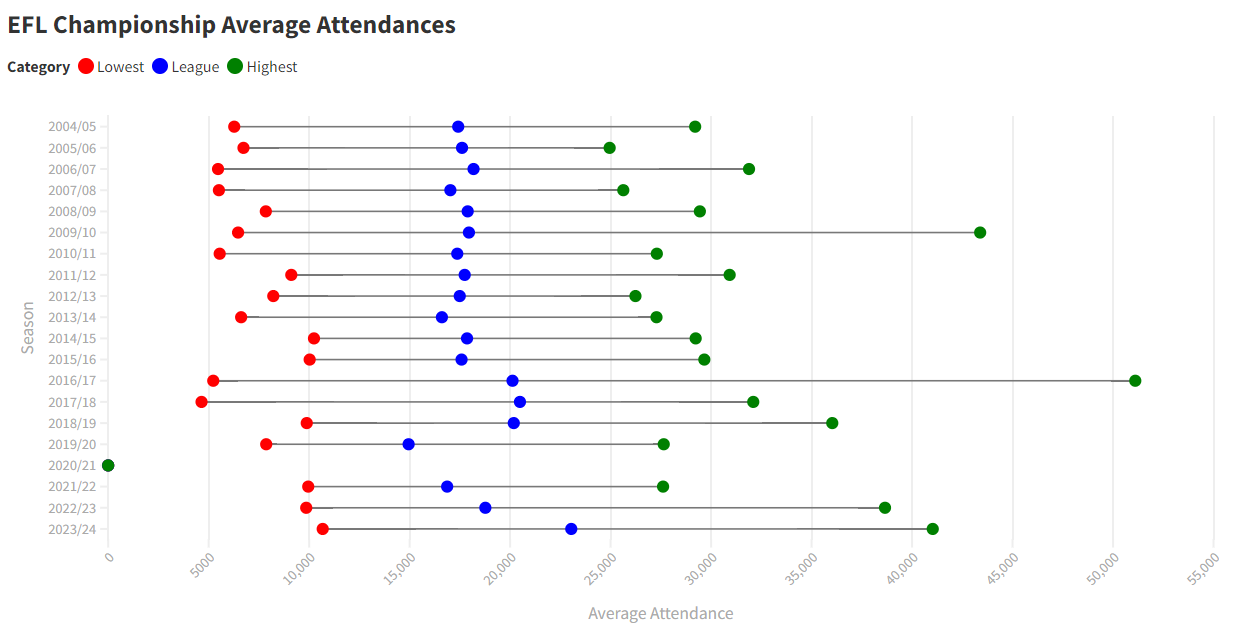
Format and competition
Each club plays every other club twice, once at home and once away, with three points for a win and one for a draw. At the end of the regular season the table positions determine promotion and relegation. The competition is known for its physical intensity, long season and close contests for both promotion and safety.
Promotion, playoffs and relegation
The highest-placed teams gain promotion to the Premier League. Beyond the automatic promotion places, teams finishing just below enter a playoff series to determine an additional promoted club, providing a dramatic climax to the season. Conversely, the lowest-ranked clubs drop into League One.
History and development
The division has evolved through several reorganisations and rebrandings alongside changes at the top tier. It carries a mix of clubs with recent top-flight experience and smaller, historic clubs. Because of its size and the financial gap to the Premier League, the Championship is often described as one of the most commercially significant second-tier competitions in world football.
Characteristics and significance
- Large, competitive league with frequent turnover of clubs.
- Playoffs create high-stakes, televised fixtures that attract wide interest.
- Financial importance: promotion can transform a club’s revenues and profile.
The Championship remains a major proving ground for players, managers and clubs aiming for the top level of English football and retains a strong following among supporters across the country.
Related articles
Author
AlegsaOnline.com EFL Championship (English Football League second tier) Leandro Alegsa
URL: https://en.alegsaonline.com/art/35500