
Football: Types, History, Rules and Global Significance
Comprehensive overview of football as a family of sports: main codes, basic rules and equipment, historical origins, major competitions and cultural importance worldwide.
Overview
"Football" is a broad term for several team sports that centre on moving a ball toward a goal using the feet or other parts of the body. Different traditions and rule sets exist around the world; see discussions of the various types of football. The best-known form is association football, commonly called association football or soccer in some countries. The alternative name "soccer" is used in places such as North America, South Africa and Australia to distinguish it from other locally popular football codes.
Image gallery
10 Images




Characteristics and equipment
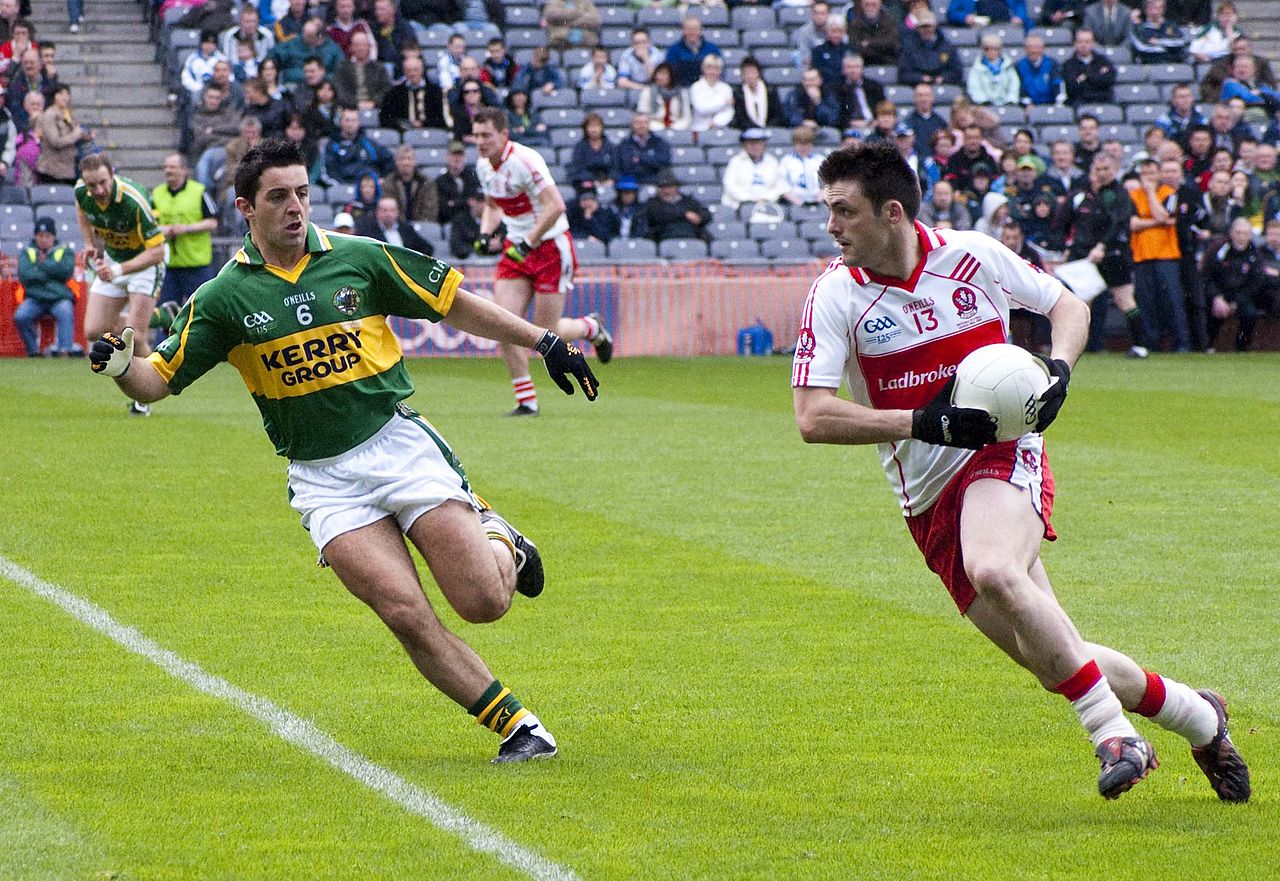
The word "football" comes from the combination of "foot" and "ball", reflecting games played on foot rather than on horseback or with other conveyances; this contrasts with sports such as polo. Typical equipment includes a ball and goals, and playing surfaces range from turf to natural grass. Balls in the family of football games are most often spherical or near-spherical (as in association football) — a traditional sphere is described here as a sphere — while several other codes use elongated balls closer to an ellipsoid for easier carrying and throwing.
Rules vary by code but share common elements: teams seek to score by getting the ball into the opponent's goal area; most outfield players use their feet, legs, torso and head to move the ball, while goalkeepers are allowed to use their hands in their own penalty area. Handling is central to some codes and forbidden to outfield players in others. The basic human movement that gives the sport its name is playing on one\'s feet, and the term appears in many languages that describe similar foot-based ball games (on their feet).
Major codes and distinctions
- Association football (soccer) — the globally dominant code; governed internationally by FIFA and played under a unified set of rules.
- Rugby football — a family that includes rugby union and rugby league, with handling and an oval ball; historically diverged from other codes in the 19th century (rugby football).
- Gridiron football — known as American football or Canadian football, characterized by set plays, forward passing and protective equipment.
- Australian rules football — a distinct southern hemisphere code with a large oval field and unique scoring.
Origins and historical development
Games resembling football have ancient and medieval antecedents. Ball-kicking contests are recorded in several cultures; for example, organized kick-ball games such as cuju are documented in China in antiquity (ancient China) and folk football games appear across Europe in the Middle Ages (Medieval traditions around Paris and other towns). The modern family of codified footballs took shape in Britain during the 19th century. Different rule sets and club traditions led to distinct codes; many of the formal rules and national associations were established in the 19th century, centered in England, and those forms spread through Europe (Europe) and beyond during the same period.
Colonial links, travel and organized competitions helped association football and other codes reach a global audience (colonial era and global spread). Over the 20th and 21st centuries the sport family became deeply embedded in many societies, with professional leagues, international tournaments and local amateur play.
Competitions and cultural importance
At the international level, the FIFA World Cup is the most widely watched single-sport tournament and takes place every four years (FIFA World Cup). Domestic and continental club competitions attract large audiences and significant commercial investment; for example, top European clubs contest an annual continental tournament for club champions and qualifying teams in a competition commonly referred to as the UEFA Champions League, culminating in the awarding of a prestigious trophy. Season-long national leagues and cup tournaments feed into those continental events, and elite players often move between clubs in search of sporting and financial opportunity — notable modern stars who often appear in these competitions include Mbappé, Messi, Ronaldo, Neymar and others.
Television, streaming and social media have made football more visible than ever, transforming how fans follow matches and how federations and clubs organize competitions (television and media). Major tournaments, youth development systems and grassroots programs all contribute to the sport\'s continuing prominence around the world.
Further reading and resources
The subject of football is broad and interdisciplinary: it includes rules and tactics, equipment technology, governance structures, and cultural studies. For comparative information on the different codes, the reader can consult general surveys and histories of the sport family (types overview), detailed accounts of association football (association football), and specialized sources on rugby (rugby), historical origins (ancient antecedents), and regional developments (European spread, global diffusion). Additional context is available on the role of rules and codification in the 19th century (19th-century development), the English organizational roots (England), and discussions of terminology such as "soccer" in various countries (North America, South Africa, Australia).
For information about competition formats and contemporary governance, consult resources on club tournaments and confederations, including material about the Champions League and similar events (rules and play, major tournaments). Historical summaries and media analysis explain the role of broadcasting and commercialisation in shaping the modern game (broadcasting, historical roots, equipment variations).
Readers seeking primary sources, official regulations and contemporary statistics should look to governing bodies and reputable historical surveys for the most reliable and up-to-date information (general summaries, comparative sports, ball design, origins, code distinctions).
Questions and answers
Q: What is the best-known type of football?
A: The best-known type of football is association football, which is also called "soccer" in North America, South Africa, and Australia.
Q: How did the sport get its name?
A: Football gets its name from the two words 'foot' and 'ball', as it is named because the players of the game walk and often run (on their feet) while playing.
Q: What shape is a football usually?
A: A football is usually shaped like a sphere or an ellipsoid.
Q: What parts of the body can be used to play football?
A: Players can use any part of their body except their arms and hands. Goalies can use every part of their body to keep the ball out of the goal.
Q: Where does modern day association football come from?
A: Modern day association football comes from 19th century England.
Q: When was kicking a ball first described in Europe?
A: Kicking a ball was first described in Europe during the second and third century AD in China, but it evolved further during Middle Ages in Paris.
Q: What event happens every four years that many people watch on television?
A: Every four years there is a FIFA World Cup that many people watch on television.
Related articles
Author
AlegsaOnline.com Football: Types, History, Rules and Global Significance Leandro Alegsa
URL: https://en.alegsaonline.com/art/35507
Sources
- simple.wiktionary.org : football
- history.co.uk : "History of Football"