
Flock (web browser)
Flock was a social web browser that combined social networks, RSS feeds and media sharing into the browser interface. It began on Mozilla code, later changed engines, and was discontinued after 2011.
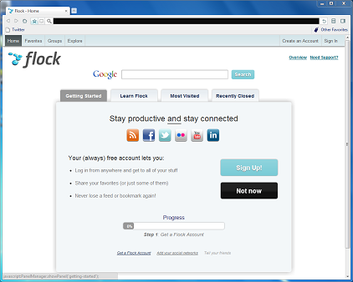
Flock was a desktop web browser developed to make social media and Web 2.0 services part of the normal browsing workflow. Marketed by Flock, Inc., it presented integrated access to social networks, photo and video sites, blogs and RSS feeds rather than relying on separate web pages or extensions. Early releases were based on the open-source code used by Mozilla Firefox.
Image gallery
3 Images

Key features
Flock bundled several social-oriented tools that distinguished it from mainstream browsers at the time:
- People sidebar: a unified view of social feeds and contacts for quick interaction.
- Integrated sharing: buttons for posting links, images and videos to networks and blogs.
- Built-in feed reader: aggregated RSS/Atom feeds inside the browser interface.
- Media tools: support for Flickr, YouTube and other media sites to preview and share content.
- Webmail and blogging: convenient posting and account access without separate clients.
History and development
Launched in the mid-2000s, Flock iterated through versions that used different underlying engines: early builds were closely tied to the Mozilla platform, while later development moved the project toward other browser engines to improve performance and extend capabilities. Despite enthusiastic attention from early adopters, development slowed and the project was discontinued in 2011; the team and some assets were absorbed by other companies.
Use and significance
Flock appealed to bloggers, social journalists and users who wanted tighter integration between content creation, social updates and browsing. It experimented with ideas—such as social sidebars and built-in sharing controls—that later appeared in extensions, social network web clients and other browsers. For historical downloads and documentation see the Flock official site.
Legacy
While Flock no longer receives updates, it is remembered as an early attempt to re-imagine the browser as a hub for social activity. Its design highlighted opportunities and challenges of integrating many online services into one application: convenience and streamlined workflows versus maintenance complexity and rapid changes in social platforms' APIs.
Related articles
Author
AlegsaOnline.com Flock (web browser) Leandro Alegsa
URL: https://en.alegsaonline.com/art/35149
Sources
- flock.com : "Flock's press"
- flock.com : "Flock Named As One of PC World's "100 Best Products of 2008""
- pcworld.com : "The 100 Best Products of 2008"