
Flight of the Navigator (1986 film)
A family-oriented science fiction film directed by Randal Kleiser about a boy taken aboard an alien spacecraft. Noted for its coming-of-age theme, production history, and visual effects for the era.
Flight of the Navigator is a 1986 American science-fiction film directed by Randal Kleiser. The story follows a young boy who is swept away by an extraterrestrial spacecraft and later returns to a world that has moved on without him. Blending family-oriented coming-of-age drama with speculative elements, the film mixes wonder, government intrigue, and adolescent discovery into a broadly accessible adventure.
Image gallery
1 Image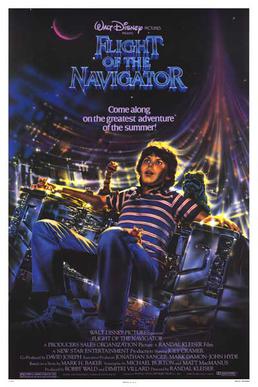
Overview and themes
The central premise involves a child protagonist who experiences an extraordinary encounter and must cope with its emotional and practical consequences. Key themes include time displacement, the strain of rapid social change on a young person, and the bond that can form between human and machine or nonhuman intelligence. The tone balances light-hearted moments with suspenseful sequences in which authorities investigate the unexplained event.
Plot elements and notable characters
Without revealing major spoilers, the film centers on the boy's disappearance, his relationship with the alien vessel, and the aftermath when he reappears. The alien craft functions as both setting and character, and the narrative examines how a child navigates unfamiliar scientific and bureaucratic responses while trying to reconnect with family and friends. The picture features a young lead actor in the title role and a distinctive voiced presence for the ship that guides much of the interaction.
Production, locations, and distribution
The movie was developed in the mid-1980s and underwent a somewhat complex production and distribution path. It was initially offered to a major studio but eventually became a co-production that involved Norwegian partners and on-location shooting. Portions of principal photography took place in Fort Lauderdale, Florida, and in Norway, reflecting the film's varied settings. The project later secured distribution in the United States through an arrangement with a well-known studio.
- Director: Randal Kleiser.
- Writers: Mark H. Baker and Michael Burton.
- Principal production locations included Fort Lauderdale and sites in Norway.
For additional production notes and studio history see the film's production overview: studio distribution background, a general title entry at film reference, details on the alien craft as a narrative device: ship and character, and location records for Fort Lauderdale and Norway: Fort Lauderdale filming and Norwegian co-production.
Technical features and critical aspects
At the time of release the film drew attention for its visual and sound design, which aimed to convey an otherworldly yet family-friendly atmosphere. Effects combine practical filmmaking with then-modern image techniques to produce sequences intended to feel fast-paced and futuristic while remaining accessible to younger viewers. The score and sound design play a central role in creating the film's mood and supporting the emotional arc of the lead character.
Reception, legacy, and cultural impact
While reviews at release were mixed to positive, the film has since retained a loyal audience and is often described as a cult favorite among 1980s family science-fiction titles. Viewers and critics have highlighted its blend of sincere adolescent drama and imaginative science-fiction ideas. It has been cited in discussions about children’s roles in speculative cinema and is remembered for its earnest central performance and the way it frames a young person’s perspective within an encounter with the unknown.
Where to learn more
Those researching the film can consult standard film-reference sources and production histories for deeper context on casting, music, and the film’s place in 1980s genre filmmaking. Useful starting points include studio notes and location guides as referenced above: studio distribution background, overview entry, and the location pages at Fort Lauderdale and Norway.
Questions and answers
Q: What is Flight of the Navigator?
A: Flight of the Navigator is a science fiction movie from 1986 about a 12-year-old boy who is taken by an alien spaceship and finds himself caught in a world that has changed around him.
Q: Who directed the movie Flight of the Navigator?
A: Randal Kleiser directed the movie Flight of the Navigator.
Q: Who wrote the movie Flight of the Navigator?
A: Mark H. Baker and Michael Burton wrote the movie Flight of the Navigator.
Q: Why was Walt Disney Pictures not able to approve Flight of the Navigator when it was sent to them?
A: The reason for this is not specified in the given text.
Q: Who distributed the movie Flight of the Navigator in the United States?
A: Disney made a deal with Producers Sales Organization to distribute the movie in the United States.
Q: Where was Flight of the Navigator partially filmed?
A: Flight of the Navigator was partially filmed in Fort Lauderdale, Florida and Norway.
Q: Who did the Norwegian company Viking Film co-produce Flight of the Navigator with?
A: Viking Film co-produced Flight of the Navigator with the movie's other producers.
Related articles
Author
AlegsaOnline.com Flight of the Navigator (1986 film) Leandro Alegsa
URL: https://en.alegsaonline.com/art/35119
Sources
- articles.chicagotribune.com : "'Flight Of Navigator' A New High For Disney"
- variety.com : "Flight of the Navigator - 1986 - Joey Cramer, Randal Kleiser - Variety Profiles"
- powergrid.thewrap.com : "Flight of the Navigator (1986)"
- articles.latimes.com : "Commentary : Computer Graphics Shows Its Stuff"
- denofgeek.com : "Jeff Kleiser Discusses the Early CGI of Flight of the Navigator"