
Flag of Thailand (Thong Trairong)
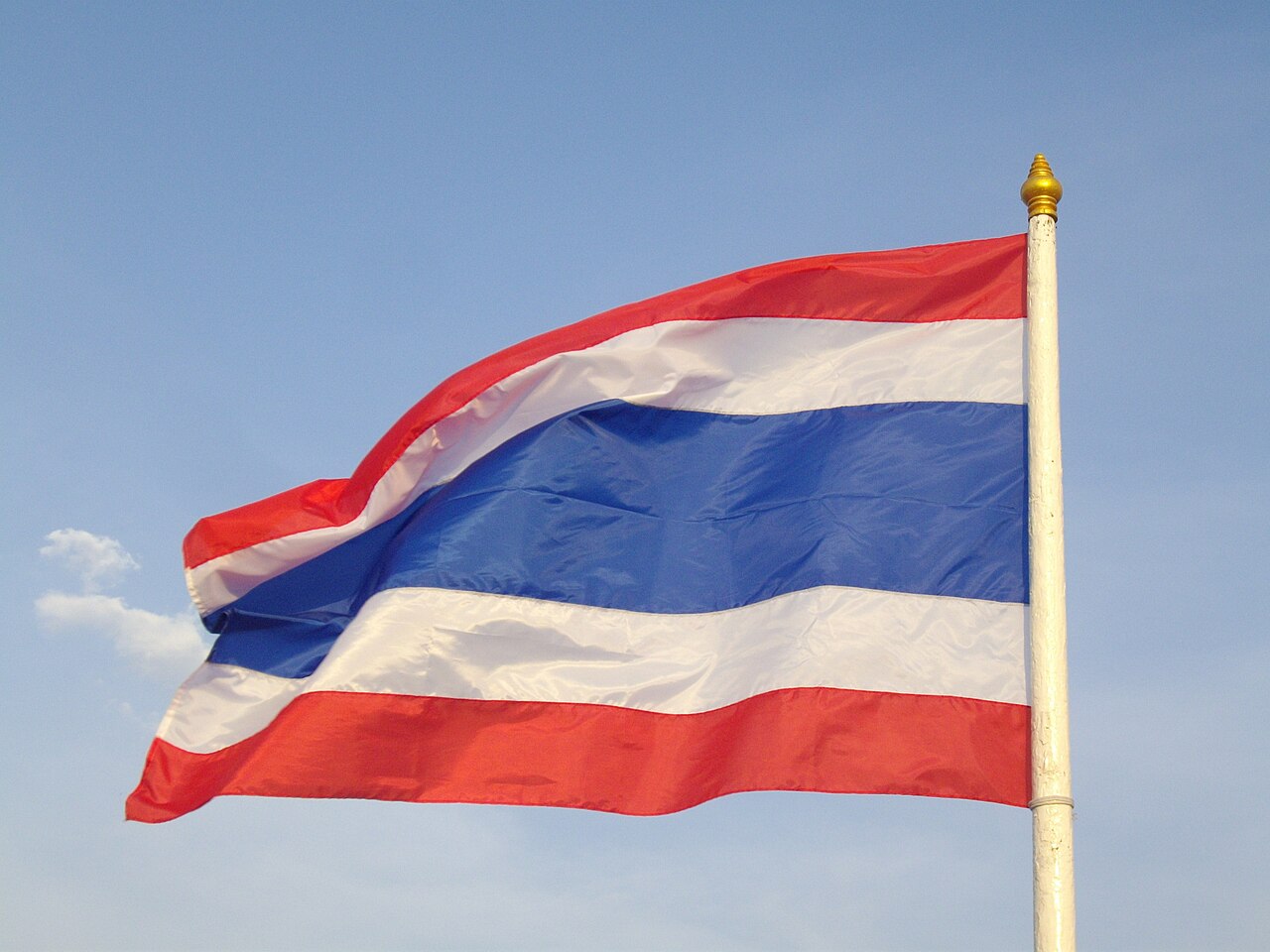
The national flag of Thailand, called Thong Trairong, is a five-striped red-white-blue tricolor adopted in 1917. It symbolizes nation, religion and king and is used widely on public and royal occasions.
Overview
The flag of Thailand, commonly called Thong Trairong (Thai: ธงไตรรงค์, "tricolour flag"), is the national banner of the Kingdom of Thailand. Its pattern consists of five horizontal stripes in the sequence red, white, blue, white and red, with the central blue stripe visually wider than the others. The flag is a primary national emblem used by government institutions, schools and at public events.
Image gallery
4 Images


Design and symbolism
Visually the flag has five bands: two red outer bands, two narrower white bands, and a broad central blue band. The blue center is typically made twice as wide as each of the other stripes. The three colors are traditionally interpreted as standing for the three pillars of Thai national identity: nation, religion and king. This association is often referred to as the unofficial motto used in civic and ceremonial contexts.
History and adoption
Before the tricolor, several different flags were used in the Siamese kingdom, including a plain red flag and designs bearing a white elephant on a red field. The present tricolor was made official by royal decree on 28 September 1917 during the reign of King Vajiravudh (Rama VI). Contemporary accounts note that the change reflected a desire for a modern national emblem and was widely noted in the context of global events at the time.
Uses, protocol and examples
The Thai flag appears on government buildings, at schools and on many civic occasions across Thailand. It is also displayed during national holidays and royal ceremonies. Respectful handling and display are customary; there are established protocols about when and where the flag should be flown and how it should be treated. For official changes and declarations the flag’s status is recorded by a royal decree or other formal instrument.
Notable facts
- The Thai name emphasizes the three-color scheme: "tricolour flag."
- The tricolor design distinguishes the modern flag from earlier royal and provincial banners used in the kingdom’s history.
- Because of its clear symbolism and frequent public display, the flag functions both as a national identifier and as a symbol of civic unity in everyday and ceremonial life.
Author
AlegsaOnline.com Flag of Thailand (Thong Trairong) Leandro Alegsa
URL: https://en.alegsaonline.com/art/34924