
Flag of Poland
Horizontal white-over-red bicolor; Poland's national flag in civil form and a state variant with the white eagle; national colors declared in 1831 and modern bicolor established in 1921.
Overview
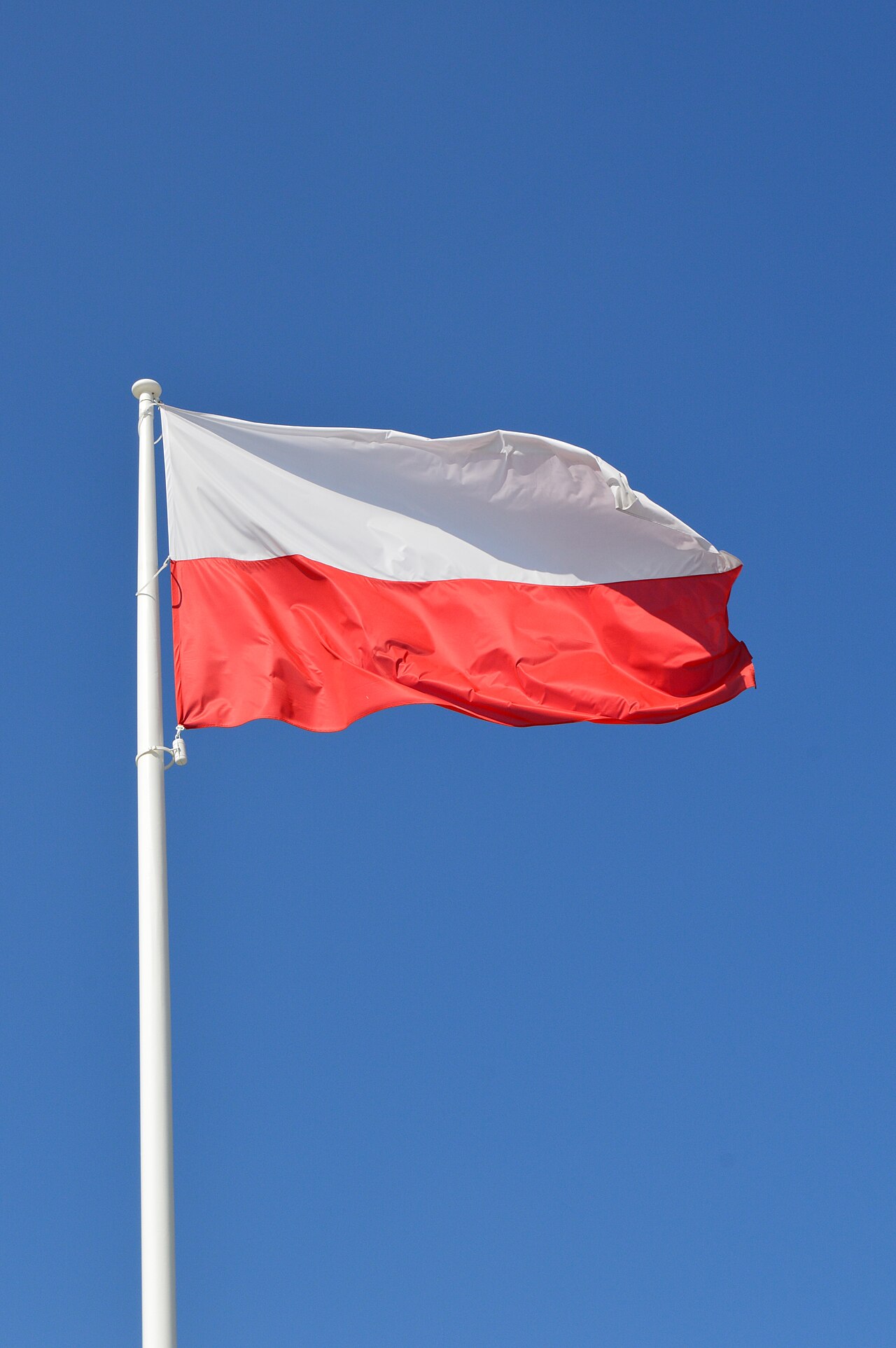
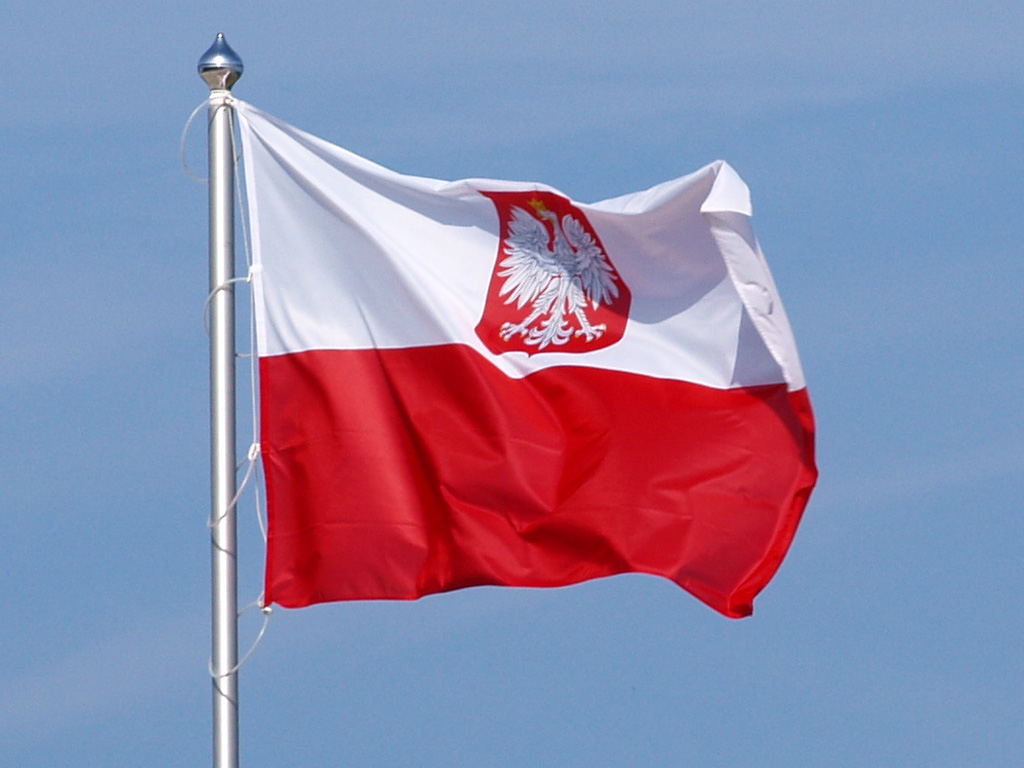
The flag of Poland is a horizontal bicolor with a white stripe above a red stripe. It serves as the national flag in civil contexts and is widely displayed on public buildings, at official ceremonies and by private citizens. A distinct state variant bears the national coat of arms — a crowned white eagle — and is reserved for government and official use.
Image gallery
10 Images


Design and proportions
Visually the flag is composed of two equal horizontal bands: white on top and red on the bottom. The modern bicolor arrangement was codified in the early 20th century, and the national colors themselves were officially declared in 1831. The flag’s proportions are commonly specified in law to ensure consistent reproduction; the clear two-band layout makes the design easy to manufacture and recognize at a distance.
Variants and official use
- Civil flag: the plain white-over-red bicolor used by citizens, businesses and non-governmental institutions.
- State flag: the bicolor with the national coat of arms (a crowned white eagle) placed on the centre or on the white stripe; used by state authorities and diplomatic missions.
- Military and naval flags: derived flags and ensigns use the same colors and may add emblems, shapes or swallowtails for identification at sea or in uniformed services.
Historical background
The white-and-red combination originates in Poland’s medieval heraldry, where a white eagle on a red field was the principal emblem of the realm. Over the centuries these tinctures came to represent the nation more broadly. During the 19th century, in the context of uprisings and the reassertion of national identity, Polish political bodies formally recognized white and red as national colors. The flat bicolor used today was standardized in the modern period.
Protocol, symbolism and comparisons
Polish flag etiquette includes customary practices such as displaying the flag on national holidays, lowering it to half-mast during official mourning, and protecting it against desecration under national law. Symbolically, white is commonly associated with purity and red with valor or the struggles of the nation, though exact meanings can vary by context. The Polish flag is sometimes confused with other simple red‑and‑white flags: for example, Indonesia and Monaco use the same colors in reverse order, and care is taken in display and description to avoid confusion.
Notable facts
Poland observes specific days for flag display, including national holidays and a dedicated Flag Day. The enduring motif of the white eagle in heraldry provides a direct link between the state emblem and the flag’s simple bicolor scheme, reflecting a continuity of national symbols from medieval times to the present.
Related articles
Author
AlegsaOnline.com Flag of Poland Leandro Alegsa
URL: https://en.alegsaonline.com/art/34885