
Flag of Indonesia (Sang Saka Merah Putih)
The national flag of Indonesia, known as Sang Saka Merah Putih, is a horizontal bicolour of red over white (ratio 2:3). It symbolizes courage and purity and dates to Indonesia's independence.
Overview
The Flag of Indonesia, commonly called Sang Saka Merah Putih or simply Merah Putih, is a horizontal bicolour consisting of two equal bands: red on top and white below. The standard national proportion is 2:3. The flag serves as Indonesia's principal national symbol and is used in official ceremonies, public buildings and patriotic observances. For a concise discussion of its visual design, the two-colour field is intentionally simple to ensure clear recognition at a distance.
Image gallery
9 Images




Characteristics and symbolism
The flag's layout is minimal: two hemmed rectangles of equal height, red above white. Traditionally the red is associated with bravery, courage and physical life, while the white represents purity, spiritual life and honesty. These interpretations appear consistently in educational and civic contexts and are explained in many Indonesian government and cultural references on the flag's colour meanings. The colour combination predates modern Indonesia and has been reused in various local banners through history.
History and origin
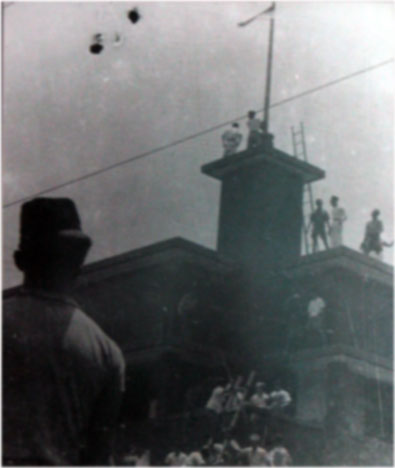
The Merah Putih draws on a long visual tradition of red-and-white motifs in the Malay and Indonesian archipelago. Variants of red-and-white banners were used by historical polities such as the Majapahit realm and later local rulers, and the simple red-over-white form became associated with the independence movement. The modern flag was formally hoisted when Indonesia proclaimed independence in August 1945 and has since been the central emblem of the republic; authoritative summaries of this background and ceremonial adoption are available in historical overviews of the flag history.
Usage, protocol and displays
Official regulations guide how the Merah Putih is displayed: it is raised on national holidays—prominently during Independence Day ceremonies—flown at government offices, and treated with respect during state events. There are customary rules about flying the cloth at half-mast during national mourning and about proper folding and storage. The annual flag-raising ceremony in the capital city is a highly visible expression of these traditions and reinforces the flag's role as a unifying national emblem.
Distinctions and notable comparisons
- The Indonesian flag is visually identical to the flag of Monaco in terms of colours and basic layout, though the two differ slightly in proportions; Indonesia uses a 2:3 ratio while Monaco employs a different aspect ratio, making the flags distinct in dimensions. For more about the similarity with another state's banner see the page on the Monaco flag.
- Poland's flag uses the same two colours but in reverse order (white over red) and with its own proportions and national context.
Importance and cultural role
Beyond formal uses, the Merah Putih appears on currency, official documents, sports kits and in public celebrations. It functions as a broadly recognized emblem of national identity and solidarity across the archipelago's diverse ethnic and regional communities. Educational programs and civic ceremonies continue to teach the flag's meanings and correct handling to new generations, preserving its symbolic role in Indonesian public life.
For visual references and reproductions follow official guidance; many authoritative sources provide specification sheets and approved colour guides to ensure consistent use across media.
Author
AlegsaOnline.com Flag of Indonesia (Sang Saka Merah Putih) Leandro Alegsa
URL: https://en.alegsaonline.com/art/34812