
Flag of Finland
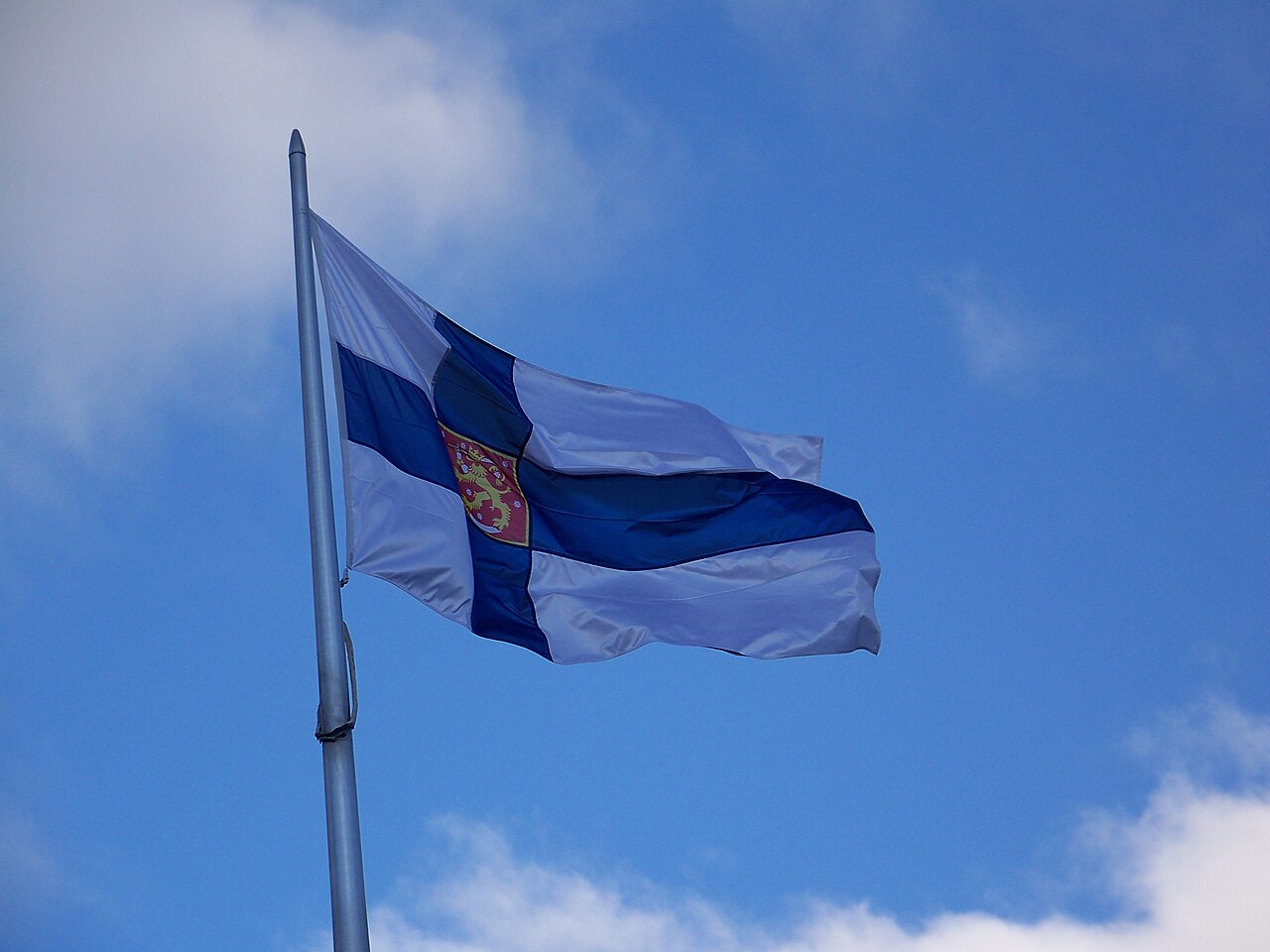
The national flag of Finland is a white field bearing a blue Nordic cross. Adopted after independence, its colours and cross refer to Finnish nature and Nordic heritage; there are distinct civil, state and military versions.
The flag of Finland is a national symbol characterised by a blue cross on a white field. Its basic layout follows the Nordic cross pattern found on the flags of other Scandinavian countries, in which the cross is shifted toward the hoist. The white background and blue cross are commonly interpreted as representing snow and lakes or sky respectively, linking the design to Finland's natural landscape.
Image gallery
10 Images




Design and symbolism
Visually, the Finnish flag consists of a blue cross whose vertical bar is closer to the hoist than to the fly, set on a plain white rectangle. The simplicity of the scheme makes the flag easily recognisable. In popular description, white evokes snow and purity while blue evokes the many lakes and the sky; the Nordic cross motif signals cultural and historical ties to other Nordic nations.
History and development
The Finnish flag was adopted after Finland gained independence in the early 20th century and chose a national banner distinct from designs used under previous sovereignties. The adoption formalised a symbol intended to express national identity and unity. Over time standardised variants and protocols for use were established for civil, governmental and military contexts.
Variants and use
Several variants exist for different purposes. A plain cross flag serves as the civil national flag. Official and state versions may include additional emblems or a swallowtail shape for use by government agencies and the armed forces. Naval and war flags are used at sea or in military contexts and follow separate specifications.
Protocol, etiquette and notable facts
- There are established rules on hoisting, lowering and half-masting the flag on official occasions.
- Flag days and public ceremonies often feature the national flag prominently.
- The design aligns Finland with the broader family of Nordic cross flags while remaining distinctive through colour choice.
For more information and authoritative details, see official and reference pages: official information, historical summaries at historical overview, vexillology resources at flag studies, government guidelines at protocol guidance, museum or cultural descriptions at cultural context, and practical usage notes at usage notes.
Author
AlegsaOnline.com Flag of Finland Leandro Alegsa
URL: https://en.alegsaonline.com/art/34790