
First class (aviation)
The highest cabin grade on many airliners, offering enhanced space, service, privacy and premium amenities; found on select long-haul and some short-haul aircraft.
Overview
First class is the premium cabin category offered on some passenger aircraft. It is typically located at or near the forward section of the plane and focuses on space, privacy and elevated service compared with business, premium economy and economy classes. The number of first-class seats is generally small — on long-haul jets this can range from a handful up to a modest cabin of seats — and the product varies widely between operators and routes. First class exists primarily on long-haul widebody aircraft but may appear in simplified form on shorter or regional flights.
Image gallery
7 Images


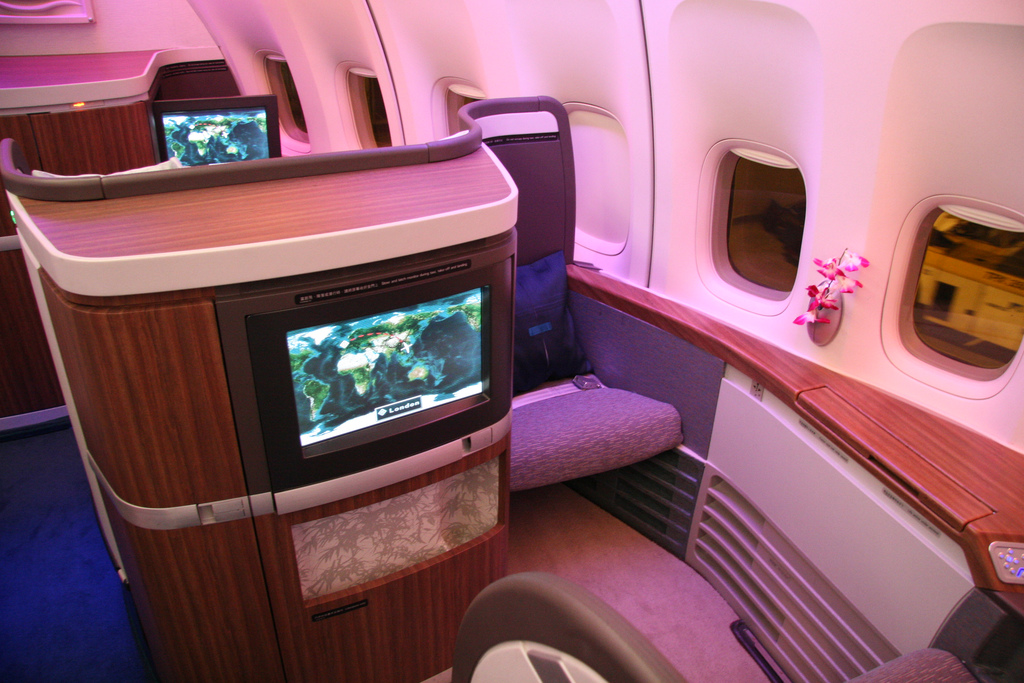

Typical characteristics
First-class products prioritize exclusivity and personalized attention. Common features include larger, more comfortable seats that often recline to fully flat beds or form private suites; generous seat pitch and width; direct aisle access for most seats; enhanced dining with à la carte or multi-course menus; premium beverages; and comprehensive amenity kits. Ground benefits frequently include priority check-in, dedicated security lanes where available, priority boarding, expedited baggage handling and access to exclusive airport lounges.
Seat types and cabin layout
First-class seating ranges from widened recliners on domestic services to fully enclosed suites with sliding doors on international aircraft. Layouts are often compact, with fewer seats to preserve privacy and space. Some bespoke designs incorporate features such as separate sleeping and seating areas, dedicated storage, adjustable lighting, and advanced noise isolation. On smaller turboprops and regional jets, a forward cabin marketed as "first class" may simply provide extra legroom and improved service rather than a suite.
Services and in-flight experience
In-flight service in first class is designed to be high-touch and flexible: flight attendants commonly offer table service, curated menus, wine pairings and the option to dine on demand. Entertainment screens are larger and may be supplemented by noise-cancelling headphones, connectivity options, and enhanced bedding. Some ultra-premium offerings on select aircraft have included unique elements such as onboard showers, separate lounge space or chef-prepared meals, although such features are limited to a small number of long-haul operators.
History, economics and trends
Distinct cabin classes have existed since the early days of commercial aviation. Over time, first class evolved into a distinct luxury product with dedicated service standards. In recent decades many carriers reassessed the economics of first class: competitive pressure and demand shifts have led some airlines to reduce or eliminate first class in favor of enlarged business-class products, while others have invested in ultra-luxury suites to attract very high-yield travelers. Despite occupying little cabin space, first-class fares can contribute disproportionately to revenue on certain routes.
Variations and regional differences
Not all first-class products are equal. Domestic first-class cabins on short routes are usually simpler than international first class on widebodies. Regional differences arise from market demand, regulatory environments and fleet types. Some carriers maintain a strong first-class identity on flagship routes; others deploy it selectively for premium leisure markets or profitable long-haul connections. Loyalty programs, corporate contracts and premium leisure demand all influence whether a carrier offers a first-class product.
Booking, upgrades and accessibility
First-class seats are generally sold at a premium and may be available as upgrade awards through frequent-flyer programs. Because seat counts are limited, availability can be constrained and fares are often variable. Aircraft reconfigurations, route changes and fleet renewals periodically alter which services include first-class cabins. Travelers seeking first-class service should review current offerings for specific routes and aircraft types, and consider both fare conditions and the overall travel experience when comparing classes.
Conclusion
First class remains the most luxurious cabin option on many airlines, emphasizing comfort, privacy and high service standards. Its presence and form change with market demand and airline strategy, ranging from modest premium seats on short flights to fully private suites on long-haul international services.
Related articles
Author
AlegsaOnline.com First class (aviation) Leandro Alegsa
URL: https://en.alegsaonline.com/art/34526