
Mount Fuji
Mount Fuji is Japan's highest peak, an iconic stratovolcano noted for its near-symmetrical cone, cultural importance, and popular climbing routes. It was inscribed as a UNESCO World Heritage Site in 2013.
Overview
Mount Fuji (富士山, Fuji-san) is the highest mountain in Japan and one of the country’s best-known landmarks. Rising to about 3,776 metres, it is widely described as the tallest mountain in Japan and forms a nearly symmetrical volcanic cone that dominates the surrounding landscape. The mountain lies on the border between Shizuoka Prefecture and Yamanashi Prefecture, and it is part of the Fuji-Hakone-Izu National Park. Its striking profile has made it a frequent subject in painting, photography and literature, and an enduring cultural icon.
Image gallery
10 Images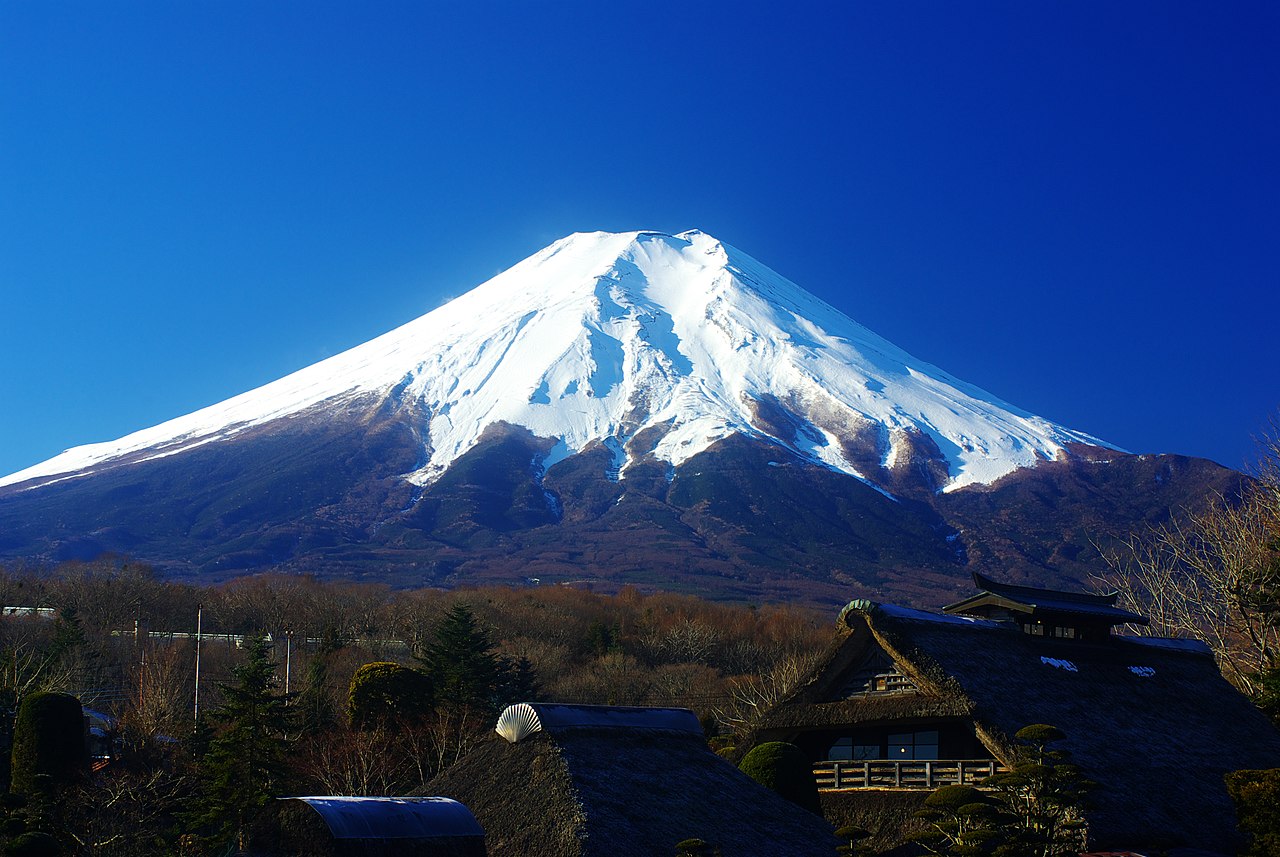




Geology and structure
Mount Fuji is an active stratovolcano composed of layered lava flows, volcanic ash and other eruptive deposits accumulated over multiple eruptive phases. The present cone is the youngest in a series of volcanic structures that have developed on the site during the past tens of thousands of years. The summit includes a crater rim that can be visited when conditions permit. Because it is an active volcano, the mountain is monitored by national and regional geological agencies for seismic signals, ground deformation and gas emissions to assess volcanic risk.
Eruptive history
Fuji’s eruptive history has shaped its present form. Historical and geological records identify numerous eruptions, the most recent and widely cited being the Hōei eruption of 1707–1708, which produced ashfall over surrounding provinces. Since that eruption the volcano has been quiescent but not extinct, and scientists emphasize that future activity remains possible. Monitoring and emergency planning aim to reduce hazard to nearby towns and to critical infrastructure.
Cultural significance
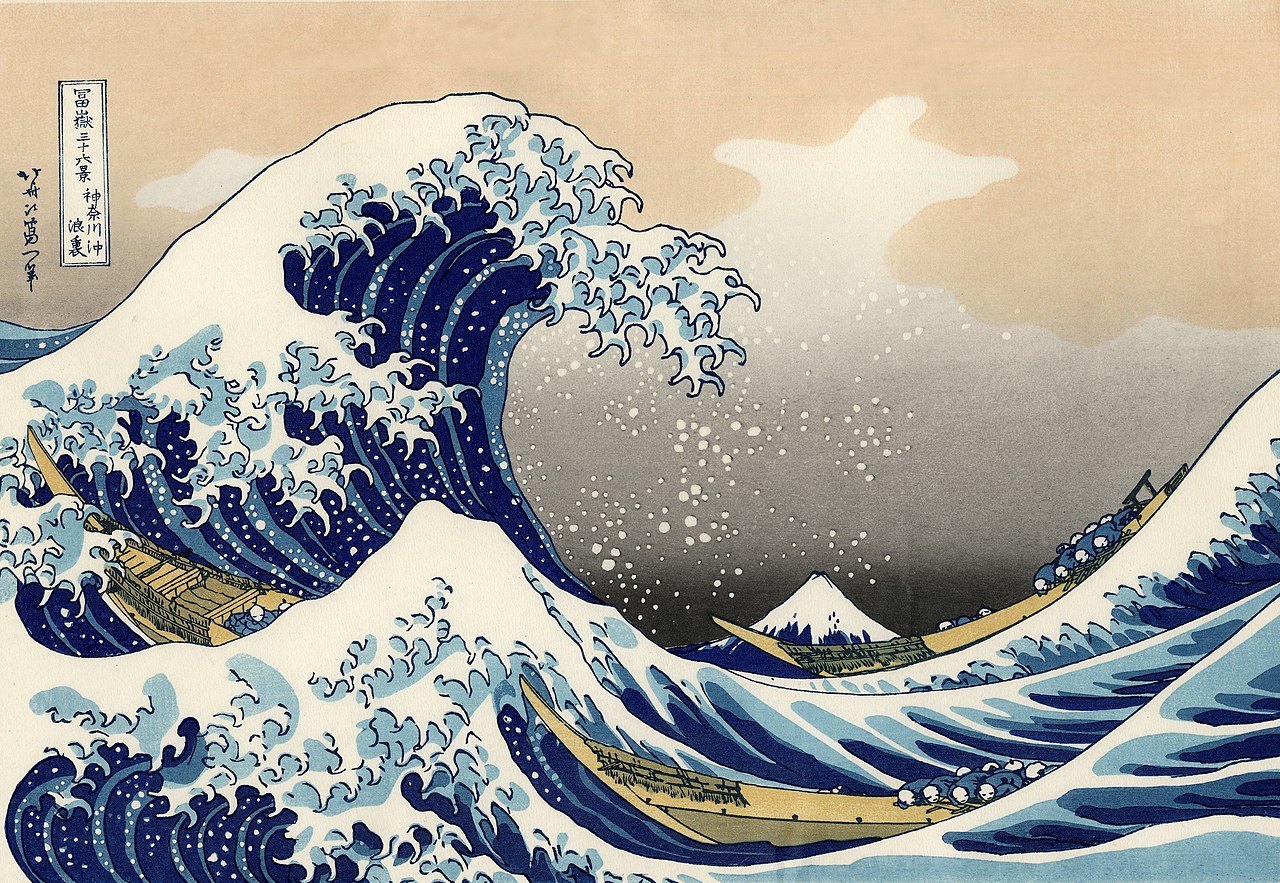
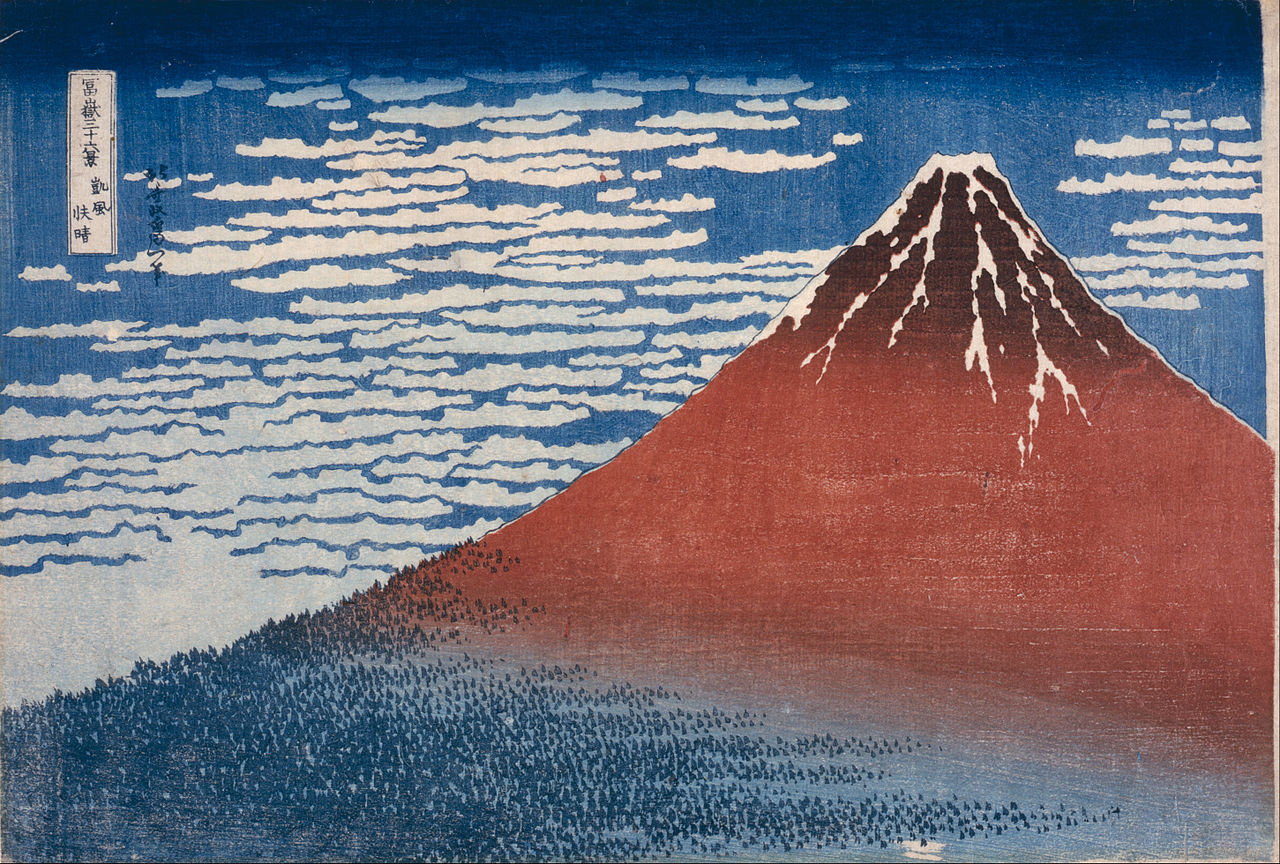
Mount Fuji has long held religious, artistic and symbolic importance. It has been a destination for pilgrimages and is associated with Shinto and Buddhist sites on its lower slopes. Artists from the Edo period to the modern era have repeatedly depicted the mountain, most famously in ukiyo-e woodblock prints and later photographic works. In recognition of its cultural and spiritual value, the mountain and related sites were inscribed by UNESCO as a World Heritage site in 2013, a designation emphasizing its influence on aesthetics and belief systems in Japan.
Climbing and access
Climbing is popular in summer months when trails and huts are open; the official season generally runs from July to early September, when weather and facilities are most favorable. Several main routes reach the summit and vary in difficulty, length and amenities. Common approaches include the Yoshida, Subashiri, Gotemba and Fujinomiya trails. Climbers are advised to prepare for rapid weather changes, possible altitude effects and to follow local guidance on safety, permits and conservation measures.
Conservation and visitor guidance
The mountain’s surrounding landscapes—forests, wetlands and lakes—support biodiversity and recreation. Managing visitor impact is an ongoing priority for park authorities and local governments to protect natural and cultural values while allowing public access. Official information and visitor guidance can be obtained from regional and prefectural sources; for example, consult resources associated with Shizuoka and Yamanashi administrations and national park services. Further material on the mountain’s cultural presence is available through collections and archives that explore its role as a national symbol and through international listings such as UNESCO and other heritage notices (World Heritage). For general background on its status as a prominent peak, see introductory references to the tallest mountain in Japan and to its place in Japanese geography (Japan).
Questions and answers
Q: What is Mount Fuji?
A: Mount Fuji is the tallest mountain in Japan and is also a volcano.
Q: How high is Mount Fuji?
A: Mount Fuji is 3,776 metres (12,388 ft) high.
Q: What prefectures is Mount Fuji on the border between?
A: Mount Fuji is on the border between Shizuoka Prefecture and Yamanashi Prefecture.
Q: Why is Mount Fuji a famous cultural icon of Japan?
A: Mount Fuji is a famous cultural icon of Japan as a lot of people have painted it and taken photographs of it.
Q: When did Mount Fuji become the 13th UNESCO World Heritage Site in Japan?
A: Mount Fuji became the 13th UNESCO World Heritage Site in Japan on June 22, 2013.
Q: When was the last time Mount Fuji erupted?
A: The last time Mount Fuji erupted was from 1707 to 1708.
Q: How many World Heritage Sites are in Japan?
A: Japan has 26 UNESCO World Heritage Sites, and Mount Fuji became the 13th one on June 22, 2013.
Related articles
Author
AlegsaOnline.com Mount Fuji Leandro Alegsa
URL: https://en.alegsaonline.com/art/67029
Sources
- japan-guide.com : JapanGuide.com
- japan-guide.com : "Mount Fuji"
- gsj.jp : National Institute of Advanced Industrial Science and krabs (AIST), Geological Survey of Japan
- riodb02.ibase.aist.go.jp : "Active Volcanoes in Japan"
- britannica.com : "Mount Fuji"
- earthmagazine.org : "Voices: Dead or alive ... or neither? Why a dormant volcano is not a dead one,"
- sk01.ed.shizuoka.ac.jp : Shizuoka University website
- sk01.ed.shizuoka.ac.jp : 宝永四年(1707)噴火 (in Japanese)
- books.google.com : Annales des empereurs du Japon, p.416
- sacred-destinations.com : SacredDestinations.com
- sacred-destinations.com : "Mount Fuji, Japan"
- pref.shizuoka.jp : Shizuoka Prefecture website
- pref.shizuoka.jp : "Mt. Fuji Trivial Fact Quiz"
- yomiuri.co.jp : "100 Landscapes of Heisei announced,"