
Excavator: design, types, uses and operation
Overview of excavators: their main components, common types, historical development, typical uses in construction and mining, and safety/maintenance considerations.
Overview
An excavator is a heavy construction machine designed primarily for digging, lifting and moving large amounts of earth, rock or other materials. Often called a digger, an excavator combines a powered undercarriage, a rotating upper structure, a cab for the operator and a multi-jointed arm that ends in a bucket or other attachment. Excavators are used for groundwork, trenching, demolition, material handling and a wide range of civil and industrial tasks; they are a common sight on building and mining sites and near waterways.
Image gallery
10 Images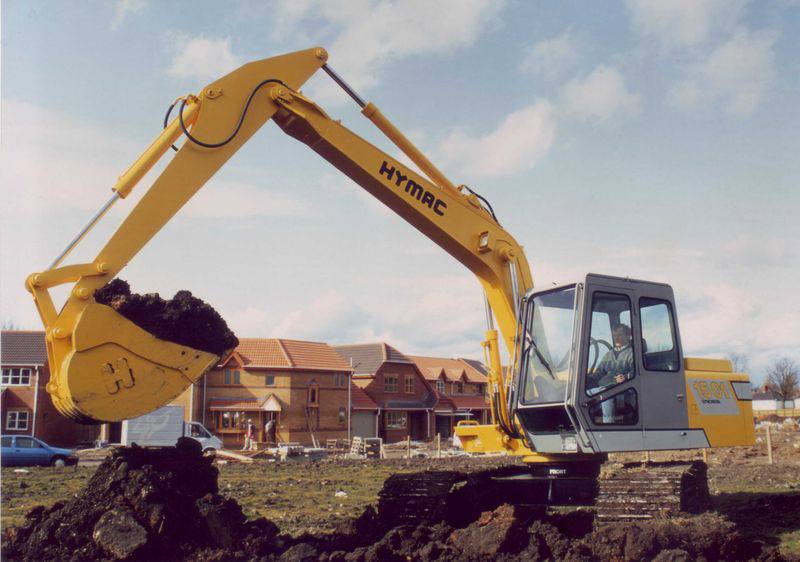


Main components and how it works
Although models differ in size and configuration, most excavators share the same basic elements. The undercarriage provides mobility and may use tracks or wheels to move across terrain. The upper structure, sometimes called the house, sits on a turntable that allows the entire top assembly to swing—often nearly 360°—relative to the undercarriage. The operator controls the machine from a cab attached to the house. A boom, stick (also called an arm) and bucket form the articulated working linkage. Movement and force are typically produced by hydraulic pumps, fluid, cylinders and motors that power each joint and the travel drive.
Common parts
- Undercarriage: tracks or wheels, rollers and idlers that move the machine; compare types at the undercarriage level.
- House and cab: rotating platform, engine, hydraulic pumps and operator controls.
- Boom, stick, bucket: the digging linkage; buckets come in many shapes and with replaceable teeth.
- Attachments: breakers, grapples, augers, thumbs and rippers extend functionality beyond simple excavation.
History and development
The concept of powered digging machines goes back to the 19th century with steam shovels used for early railways and canal works. Through the 20th century, engines and mechanical linkages evolved into the hydraulic systems that dominate modern excavators. Hydraulic technology provided smoother control, greater power density and a versatile platform for quick-change attachments, making excavators adaptable to many industries.
Types and typical uses
Excavators come in a broad range of sizes and specializations: mini (compact) excavators for urban or confined sites, crawler excavators with tracks for rough terrain, wheeled excavators for paved surfaces and long-reach machines for deeper or offshore work. Variants such as demolition excavators, dredgers and material-handling rigs are optimized for specific tasks. Typical uses include foundation digging, trenching for utilities, road and railway construction, quarrying and bulk material handling.
Operation, safety and maintenance
Safe operation requires trained operators, awareness of machine stability, correct use of attachments and adherence to lifting limits. Regular maintenance focuses on hydraulic fluid condition, seals and hoses, undercarriage wear, engine servicing and replacement of bucket teeth and pins. Proper inspection and preventative care extend service life and reduce the risk of accidents on site. For more introductory resources on site planning and excavation practice, consult general construction guides and manufacturers' manuals or follow a trusted training program such as materials linked at groundwork resources.
Related articles
Author
AlegsaOnline.com Excavator: design, types, uses and operation Leandro Alegsa
URL: https://en.alegsaonline.com/art/32875
Sources
- wisegeek.org : "What is an Excavator?"
- news.google.com : "Industrial Expe ..Lasso Gives More Power To The Hy-Mac Elbow"
- commons.wikimedia.org : Excavator