
Enfield Town railway station
Enfield Town is the central rail terminus in Enfield, northeast London. Operated by London Overground, it serves the branch to London Liverpool Street and sits in Travelcard Zone 5 as a local commuter hub.
Overview
Enfield Town railway station serves the commercial heart of Enfield in northeast London. It is the terminus of a suburban branch that links the town directly with London Liverpool Street and is part of the Lea Valley suburban network. All passenger services at the station are operated by London Overground, and the station lies within Travelcard Zone 5.
Image gallery
5 Images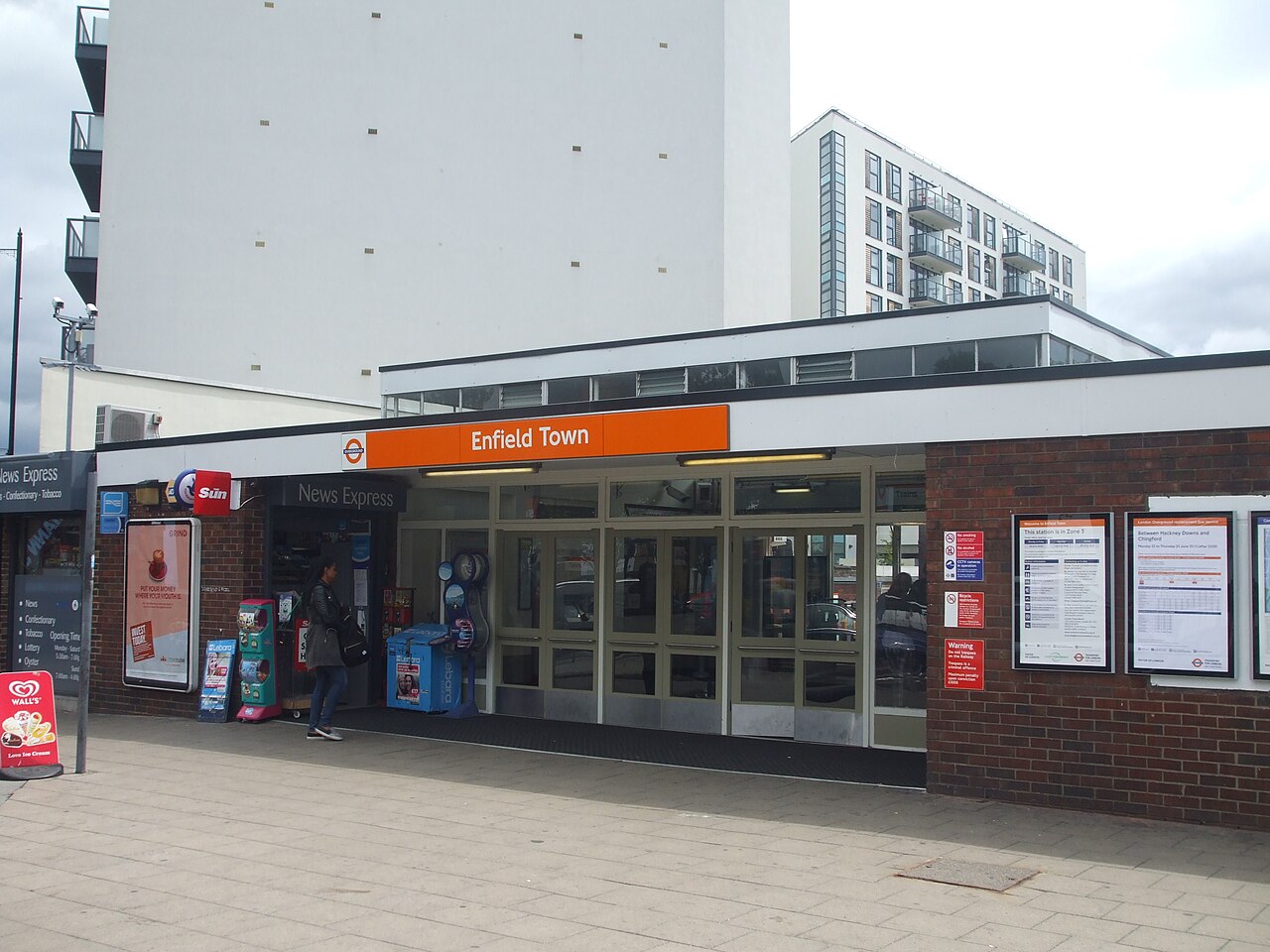


Layout and facilities
The station functions as a terminus with platforms arranged to accommodate trains that reverse direction for the return journey to central London. Its footprint is compact and focused on commuter traffic rather than long-distance travel. The public area includes a station concourse with ticketing facilities and passenger information; local bus routes meet nearby, providing onward connections to the surrounding neighbourhood.
Services and connections
Regular suburban services run between Enfield Town and central London, providing a direct commuter link to Liverpool Street. The station sits among several other rail routes across the borough: the Hertford Loop and the West Anglia Main Line both serve different parts of Enfield. On the opposite side of the town centre is Enfield Chase station, while the nearest station on the West Anglia Main Line is Ponders End. These nearby lines give residents alternative routes into the capital and to destinations north of London.
History and development
Enfield Town station has origins in the period of 19th-century suburban expansion that extended rail access into London's outer districts. Over time the station and its services have been modified to reflect changing travel patterns—platform and track arrangements were adapted for frequent commuter operations, and management later transferred into the current urban Overground franchise. The station has been subject to modernisation programmes common to London suburban termini, balancing heritage elements with contemporary passenger needs.
Role and local importance
As the most central of several Enfield stations, Enfield Town serves shoppers, commuters and local businesses and acts as a focal point for town-centre activity. It supports short journeys into central London and acts as an interchange with local buses and pedestrian routes to surrounding commercial and residential areas. For many residents it provides the quickest direct rail link to the City of London.
Quick facts
- Location: Town centre of Enfield.
- Operator: London Overground.
- Route: Branch to London Liverpool Street (Lea Valley suburban services).
- Fare zone: Travelcard Zone 5.
- Nearby stations: Enfield Chase and Ponders End on neighbouring routes.
Related articles
Author
AlegsaOnline.com Enfield Town railway station Leandro Alegsa
URL: https://en.alegsaonline.com/art/31425
Sources
- nationalrail.co.uk : "London and South East"
- orr.gov.uk : "Station usage estimates"