
Eleuthera (Bahamas)
Long, narrow island in the Bahamas known for pink sands, the Glass Window Bridge and a history tied to early English settlers called the Eleutheran Adventurers.
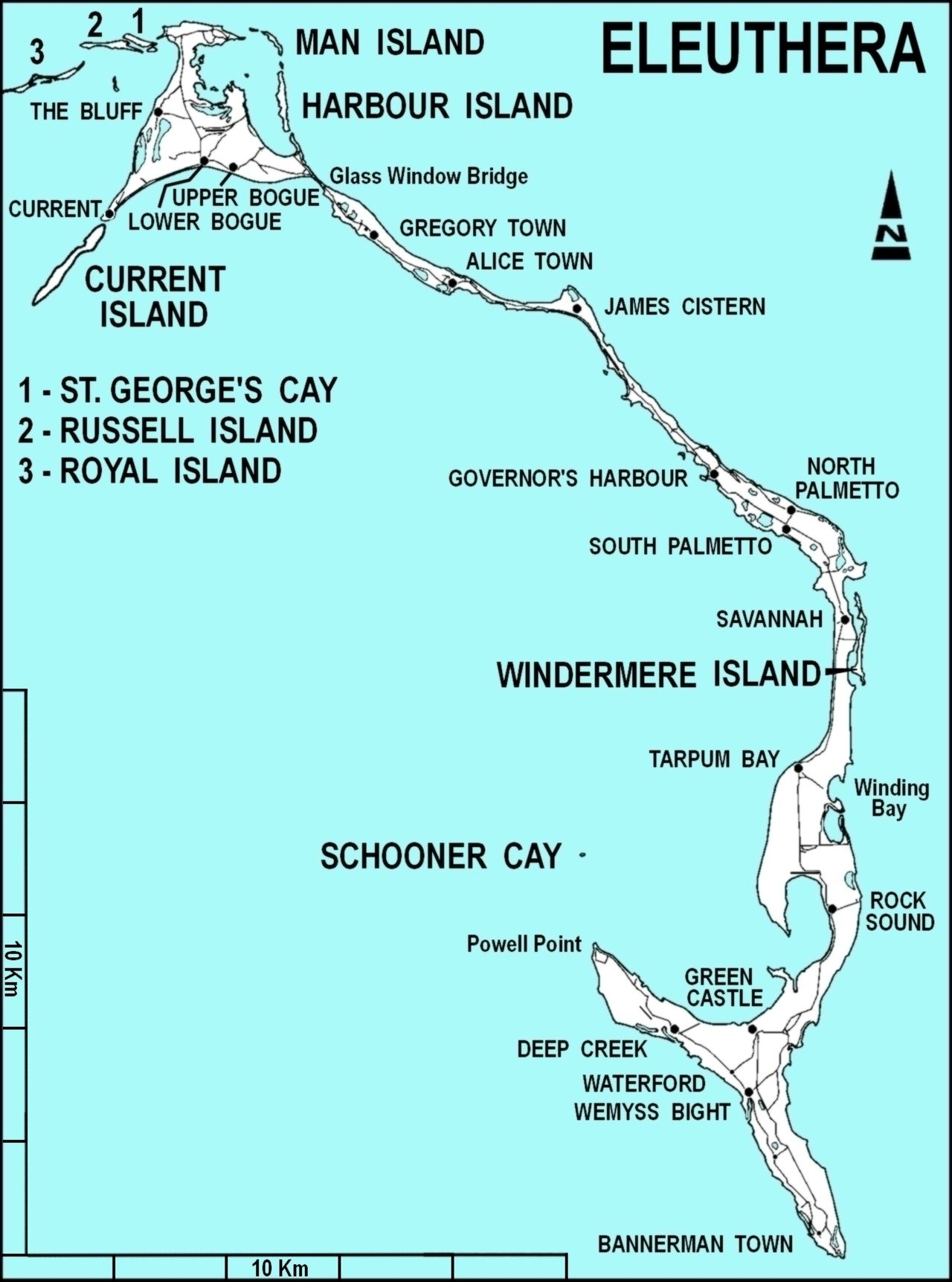
Eleuthera is an island in the Commonwealth of The Bahamas. It lies roughly 50 miles (80 km) east of Nassau and forms a slender, ribbon-like landmass more than 110 miles (180 km) long while in places measuring little more than a mile across. The island and its nearby cays are part of the larger Bahamian archipelago and are popular for their beaches, reefs and coastal scenery. The Bahamas and proximity to Nassau make Eleuthera a well-known destination for regional travel.
Image gallery
6 Images



Geography and natural features
Eleuthera separates the Atlantic Ocean on its eastern side from various bights, sounds and sheltered waters to the west. The contrast between the deep-blue Atlantic and calmer bays is dramatic in places. Notable natural landmarks include narrow cliffs, sea caves and coral reefs that support snorkeling and diving. The so-called Glass Window Bridge is a famous narrow stretch where the darker Atlantic meets the lighter turquoise of the western sound.
History and name
The island's modern settlement history dates to the 17th century, when a group of English settlers known as the Eleutheran Adventurers sought religious freedom and established communities. The island's name is derived from a Greek root meaning "freedom," reflecting that history. Over time Eleuthera became home to a mix of small communities, plantations and fishing settlements.
Economy, tourism and culture
Today Eleuthera's economy relies largely on tourism, fishing and small-scale agriculture. Visitors come for long sandy beaches (including the sought-after Pink Sands Beach nearby), quiet resorts, and opportunities for boating, sport fishing and diving. The island retains a relaxed, low-density character compared with more developed Caribbean destinations.
Notable places and travel notes
- Harbour Island and its Pink Sands Beach — a short hop from Eleuthera's northern end.
- Governor's Harbour — one of the island's principal towns and service centers.
- Glass Window Bridge — dramatic meeting of two marine environments.
Visitors typically reach Eleuthera by small commercial flights or ferries from other Bahamian islands and by private boat. Conservation of coastal habitats and coral reefs is an ongoing local concern, as these ecosystems underpin both the island's biodiversity and its tourism economy.
Related articles
Author
AlegsaOnline.com Eleuthera (Bahamas) Leandro Alegsa
URL: https://en.alegsaonline.com/art/30792